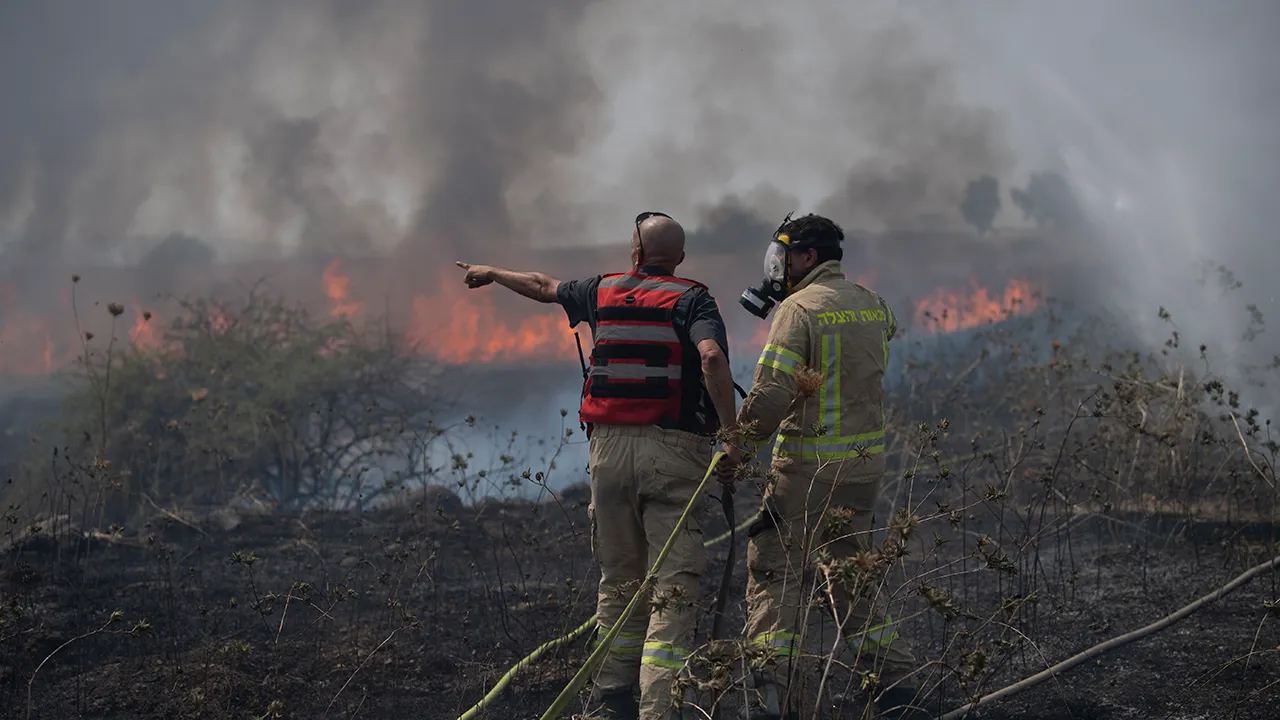
Lebanese Hezbollah has launched approximately 50 rockets at northern Israel in a new military escalation, reflecting the increasing tensions in the region. The attack, which occurred within hours, comes at a sensitive time as fears of escalating conflict between the two sides grow.
This escalation occurs amid the tense atmosphere in the region, where clashes between Israeli forces and Palestinian factions in Gaza are intensifying, raising concerns about the outbreak of a full-scale war.
Details of the Incident
Local sources reported that Hezbollah's rockets targeted several areas in northern Israel, prompting the activation of the Israeli air defense system. There were no immediate reports of casualties or significant damage, but the attack caused panic among the residents.
This attack follows a series of mutual threats between Hezbollah and Israel, with the group asserting on several occasions its readiness to respond to any aggressions. Additionally, this escalation comes after a period of relative calm along the Lebanese-Israeli border, complicating the security situation in the region.
Background & Context
Historically, the Lebanese-Israeli border has witnessed numerous clashes, especially since the 2006 war. Hezbollah, regarded as one of the prominent armed factions in Lebanon, enjoys significant popular support and considers itself a defender of Lebanon's sovereignty against Israeli aggressions.
In recent years, tensions between Hezbollah and Israel have escalated, particularly after Hezbollah's involvement in the Syrian conflict and its support for the Syrian regime. This dynamic has made the Lebanese-Israeli border a potential flashpoint, where any confrontation could lead to greater escalation.
Impact & Consequences
This escalation could provoke military responses from the Israeli side, raising fears of a new war in the region. Israel may launch airstrikes or military operations against Hezbollah positions in Lebanon, which could increase the suffering of civilians on both sides.
Moreover, this escalation may affect the security situation in Lebanon, as it could increase pressure on the Lebanese government to deal with the aftermath of the attack. At the same time, it may lead to increased popular support for Hezbollah in Lebanon, as many view the group as the defender of the country against Israeli aggressions.
Regional Significance
This escalation underscores the ongoing tensions in the region, with growing fears of new conflicts erupting. Neighboring Arab countries are closely monitoring the situation, as any military escalation could impact the stability of the entire region.
In light of these circumstances, the international community must intervene to calm the situation and prevent the conflict from worsening. Any military escalation could lead to severe humanitarian consequences, particularly amid the economic and social crises many countries in the region are facing.