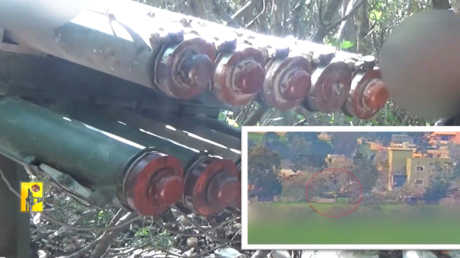
On Wednesday, Hezbollah executed 61 military operations against Israel, utilizing a range of advanced weaponry such as rockets, drones, and artillery. These operations are part of what the party describes as a defense of Lebanon and its people in the face of repeated Israeli aggressions.
These operations coincide with escalating tensions in the region, as Hezbollah seeks to bolster its military position against Israeli threats. The party confirmed in a statement that these operations reflect its readiness to defend Lebanese sovereignty, indicating that the military escalation is a response to Israeli attacks targeting Lebanese territory.
Details of the Operations
Hezbollah reported that the operations included targeting Israeli military sites, as well as countering warplanes. The party employed advanced techniques in executing these operations, reflecting the evolution of its military capabilities. It also noted that these operations are part of a long-term strategy to confront increasing Israeli threats.
The operations involved the use of qualitative rockets and drones, showcasing the party's ability to conduct complex operations under current conditions. These operations were carried out in various areas along the Lebanese-Israeli border, indicating good coordination among the party's different units.
Background & Context
Historically, the Lebanese-Israeli border has experienced ongoing tensions, with several rounds of conflict between Hezbollah and Israel. Since the 2006 war, Hezbollah has sought to enhance its military and tactical capabilities, making it one of the prominent actors in the regional conflict. Additionally, the political situation in Lebanon, including economic and social crises, has contributed to escalating tensions with Israel.
In recent years, Israeli aggressions against Lebanese territory have increased, prompting Hezbollah to take proactive measures to defend Lebanon's sovereignty. Recent events have shown that the party is prepared to respond forcefully to any aggressions, complicating the security situation in the region.
Impact & Consequences
These operations could lead to a greater escalation in the conflict between Hezbollah and Israel, threatening the stability of the region as a whole. Furthermore, the military escalation may impact relations between Lebanon and neighboring countries, affecting the political situation within Lebanon.
Moreover, these operations could lead to increased popular support for Hezbollah in Lebanon, as many view the party as a defender of national sovereignty. However, the military escalation may raise concerns within the international community, which seeks to achieve stability in the region.
Regional Significance
Hezbollah's military operations against Israel are part of a broader conflict in the region, involving several regional and international actors. These operations may increase tensions in neighboring countries, such as Syria and Palestine, where military and political interests intersect.
Additionally, the military escalation could affect peace efforts in the region, as the international community strives to find peaceful solutions to ongoing disputes. In this context, military operations could undermine de-escalation efforts, further complicating the political landscape in the Middle East.
In conclusion, Hezbollah's military operations against Israel highlight the rising tensions in the region, necessitating close monitoring by the international community. The situation in Lebanon and Israel poses a significant challenge to regional security and requires comprehensive solutions that address the roots of the conflict.