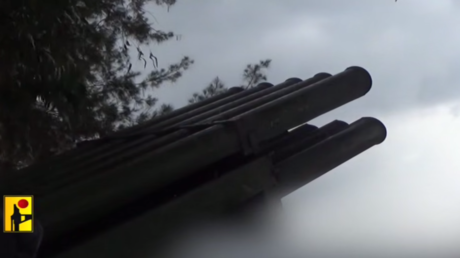
On Tuesday, Hezbollah executed more than 40 military operations against Israeli targets, employing a variety of weapons including missiles, drones, and artillery. These operations are described by the group as a defense of Lebanon and its people, amid escalating tensions in the region.
The operations announced by Hezbollah included targeting Israeli military sites, utilizing missiles such as Wave Khaibar 2 and Destruction Hormuz 450, in addition to destroying an Israeli tank. These actions reflect the group's strategy in countering Israeli threats and demonstrate its capability to execute complex operations under current circumstances.
Details of the Operations
The operations were distributed across several border areas, with reports indicating Hezbollah's use of new tactics in targeting Israeli forces. The group noted that these operations are a response to repeated Israeli assaults on Lebanese territory, which have resulted in casualties and damage.
Reports also indicated that the operations included the use of drones, highlighting the evolution of Hezbollah's military capabilities. These drones, employed for reconnaissance and attack, suggest that the group has significantly invested in developing its military arsenal to confront Israeli challenges.
Background & Context
These operations come at a sensitive time for the region, as relations between Lebanon and Israel are increasingly strained. For years, Hezbollah has adopted a policy of responding to any Israeli aggressions, positioning itself as the defender of Lebanon against external threats. The Lebanese-Israeli border has witnessed numerous military incidents in recent years, heightening tensions between the two sides.
Despite international pressures, Hezbollah maintains substantial military capabilities, making it a key player in the regional security equation. These operations occur within the context of an ongoing conflict between regional powers, with each side striving to bolster its military and political standing.
Impact & Consequences
Hezbollah's recent operations underscore the rising tensions in the region and may provoke reactions from the Israeli side. These operations are expected to escalate the conflict, potentially leading to greater military escalation in the future. Additionally, these events could impact stability in Lebanon, possibly eliciting negative reactions from the international community.
Moreover, the continuation of these operations may strengthen Hezbollah's internal position, as many view it as the defender of Lebanese sovereignty. However, military escalation could place Lebanon in a difficult position, especially given the economic and political pressures it faces.
Regional Significance
Hezbollah's military operations are part of the broader conflict in the Middle East, where regional and international interests intersect. These events could affect relations between Arab countries and Israel, potentially leading to shifts in regional alliances. Furthermore, military escalation may impact peace efforts in the region and complicate situations in neighboring countries.
Ultimately, the situations in Lebanon and Israel remain under scrutiny, as the international community watches the developments with concern. The continuation of military operations could lead to widespread repercussions, not only for Lebanon but for the entire region.