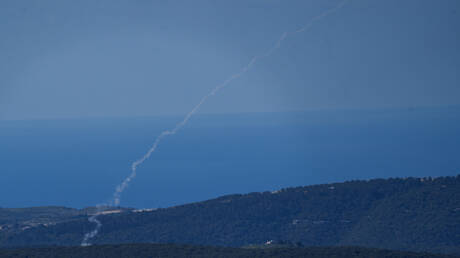
On Sunday morning, the Lebanese group Hezbollah executed a series of rocket attacks targeting Israeli military sites and gatherings in southern Lebanon, marking a new escalation in military tensions between the two sides. These attacks follow intensive airstrikes carried out by Israeli warplanes on several villages in the area the previous night.
These developments are part of an ongoing escalation in the conflict between Hezbollah and Israel, with clashes intensifying recently, raising concerns about the potential for further deterioration in the region.
Details of the Incident
Local sources reported that Hezbollah targeted several Israeli military sites with rockets, resulting in material damage; however, no injuries among Israeli soldiers have been reported so far. In response, Israeli warplanes retaliated with airstrikes on Hezbollah positions, targeting its gathering points in the southern villages.
This escalation comes at a sensitive time, as the region is experiencing increasing political and military tensions, complicating the security situation in both Lebanon and Israel.
Background & Context
Historically, the Lebanese-Israeli border has witnessed numerous clashes, especially following the 2006 war that led to a deterioration in relations between Hezbollah and Israel. Since then, there have been periods of relative calm, but tensions remain, with both sides exchanging accusations of provocation and aggression.
In recent years, Hezbollah's military activities have increased, particularly with Iranian support, prompting Israel to take precautionary measures, including launching preemptive strikes on sites believed to be affiliated with Hezbollah.
Impact & Consequences
These events are indicative of a potential escalation in the conflict, which could lead to larger military responses from both sides. If these attacks continue, we may witness a widespread military escalation, which will impact regional security and increase the suffering of civilians in Lebanon.
Additionally, these developments may affect international relations in the region, as major powers, including the United States and Russia, closely monitor the situation, which could lead to diplomatic or military interventions.
Regional Significance
The repercussions of this escalation extend beyond Lebanese borders, as it could affect stability in neighboring countries such as Syria and Palestine. Any military escalation may also lead to an influx of refugees into neighboring countries, increasing pressure on these nations.
Ultimately, the situation in southern Lebanon remains complex, with military and political dimensions intertwining, necessitating international efforts to find peaceful solutions to avoid further escalation.