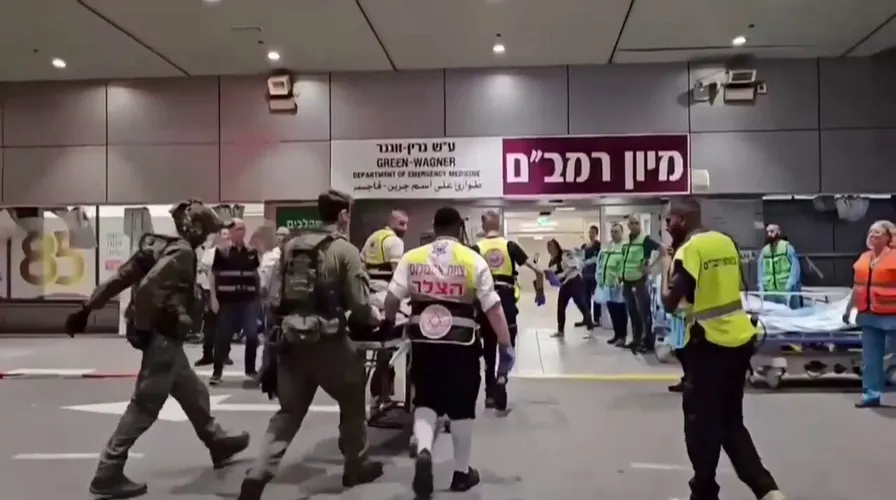
Hezbollah announced on Thursday that it had launched rockets toward northern Israel in retaliation for what it described as an Israeli breach of the ceasefire agreement. The party stated in a press release that this attack is a defense of Lebanon and its people, pointing to the targeting of the Israeli enemy on the town of Yater in southern Lebanon.
These developments come at a sensitive time, as a meeting between the ambassadors of Lebanon and Israel is expected to take place in the U.S. capital, Washington, raising questions about the future of relations between the two countries amid recent military escalations. Hezbollah indicated that these operations are part of its right to defend Lebanese territory against any aggressions.
Details of the Event
In an official statement, Hezbollah clarified that the rocket attack targeted the Israeli settlement of Shatula, as part of its reactions to what it termed repeated Israeli aggressions. The party affirmed that this step is in line with its commitment to defending Lebanese sovereignty, especially following the attacks on the town of Yater.
This military escalation occurs at a time when the security situation in the region is increasingly tense, with fears of a large-scale conflict between Hezbollah and Israel on the rise. Some news reports have expressed concern that this escalation could lead to a greater intensification of hostilities between the two sides.
Background & Context
Historically, the Lebanese-Israeli border has always been a theater of tensions and disputes. Since the end of the 2006 war, there have been numerous attempts at calming the situation, yet repeated violations by both sides have disrupted these ceasefires. Recently, there has been an increase in the intensity of statements and military operations, raising concerns about the possibility of a new war.
It is noteworthy that Hezbollah considers itself a defender of Lebanon and emphasizes its right to respond to any aggressions. Meanwhile, Israel continues to assert the necessity of protecting its national security, complicating the situation in the region further.
Impact & Consequences
This escalation could lead to serious repercussions for regional security, potentially igniting a new conflict in a region already suffering from multiple crises. If the escalation continues, international powers may intervene for mediation, which could alter the dynamics of the conflict in the area.
Moreover, the military escalation may affect relations between Arab countries and Israel, especially given the normalization attempts witnessed by some nations in recent years. This could lead to a setback in peace efforts and widen the gap between the involved parties.
Regional Significance
Considering the regional dimensions, any escalation between Hezbollah and Israel could impact stability in neighboring countries, such as Syria and Palestine. This escalation may also negatively affect peace efforts in the region and exacerbate divisions among various factions.
In conclusion, the situation in the region remains tense, necessitating intensive diplomatic efforts to avoid further escalation. Recent events highlight the need for dialogue and understanding among the involved parties to ensure lasting peace in the area.