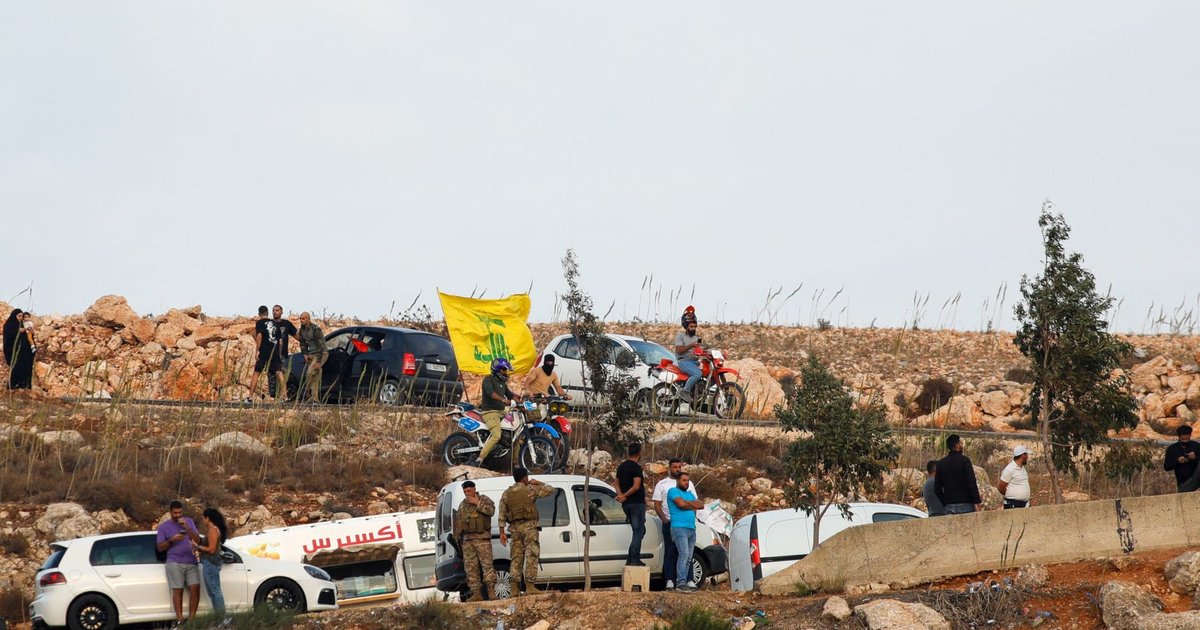
In a new escalation of border tensions, the Lebanese Hezbollah has announced a series of attacks against Israeli military sites in the northern region of the country. The party reported, through statements posted on social media, that it targeted an airbase in the Miron area, in addition to several other military facilities near Ramot Naftali, using missiles and drones.
The attacks also included missile launches toward northern Israeli communities such as Manara and Zar'it, marking a significant escalation that could increase the intensity of the conflict between the two parties and open the door to more extensive military confrontations.
These developments come amid a complex historical context that has seen Lebanon and Israel experience numerous armed conflicts along their border since 2000, the year of Israel's withdrawal from Lebanon. Since then, Israel has sought to reinforce its security along the northern border, while Hezbollah views itself as a resistance force defending Lebanon's sovereignty and considers Israel's presence a continuous threat.
Recent events highlight the rise of regional tensions at a time when the area is suffering from multiple crises, including economic and political instability in Lebanon and Syria, as well as the challenges Israel faces in its relations with the Palestinians and neighboring Arab states.
The announcement of this attack also comes as the United States and international peace mediators attempt to resume peace negotiations between the Palestinians and Israelis, which could be significantly affected by the military escalation from Hezbollah.
On another front, the roots of this escalation trace back to the continuous objections from Hezbollah regarding Israeli military operations on the border, which the party views as blatant violations of Lebanese sovereignty. Amid worsening economic and social conditions in Lebanon, Hezbollah continues to seek to maintain its popularity through internal military actions that showcase its strength.
The implications of this escalation could be far-reaching, with Israel likely to respond militarily in a widespread manner, raising the possibility of a new war that could directly affect the lives of civilians on both sides. The international community responds to such tensions cautiously, as major powers do not want to see additional escalations in a region already rife with conflicts.
Thus, recent events raise questions about how to manage crises in the region and whether there are genuine opportunities for peace and negotiation, or if military escalation will continue, increasing pressure on the governments of both Lebanon and Israel. This attack may serve as a dual warning from Hezbollah to Israel and the international community not to overlook the party's strategic ambitions and defensive inclinations.
Consequently, Arab countries and the international community must closely monitor developments along the Lebanon-Israel border and the potential implications for regional security and stability. A comprehensive diplomatic dialogue is an urgent necessity to avoid a larger escalation and comprehensive conflict in the near future.