Mahmoud Qamati, a member of Hezbollah's political council, has issued a warning regarding Israel's escalating ambitions towards Lebanon, emphasizing that Israel seeks to dominate the land, air, and water of Lebanon. This statement was made in the context of discussing the openly declared project of 'Greater Israel', raising significant concerns about national sovereignty and regional security.
Qamati pointed out that these ambitions are not new; they date back decades, as Israel has always sought to expand its borders at the expense of neighboring countries. This project, which includes annexing parts of Lebanon and Syria, reflects Israel's expansionist intentions and poses a threat to Arab national security.
Details of the Event
In his remarks, Qamati asserted that Hezbollah will not stand idly by in the face of these threats, stressing the necessity of unifying ranks to confront these dangers. He also noted that Israel is exploiting the political and economic conditions in the region to achieve its goals, which requires Arab nations to take firm stances against these policies.
Qamati also addressed the legal and political dimensions of the 'Greater Israel' project, clarifying that it contradicts international laws and United Nations resolutions that call for respecting the sovereignty of nations and the right of peoples to self-determination.
Background & Context
Historically, relations between Lebanon and Israel have been tense, with the region witnessing numerous armed conflicts. Since the establishment of the State of Israel in 1948, Lebanon has faced several aggressions, the most notable being the Israeli war on Lebanon in 1982. These events have contributed to strengthening Lebanese resistance, represented today by Hezbollah, as a key force in confronting Israeli threats.
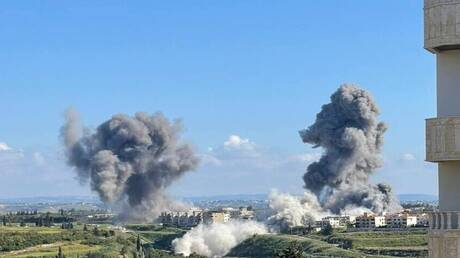
In recent years, tensions in the region have escalated, particularly with the increase in Israeli military activities along the borders. These activities, which include airstrikes and ground provocations, heighten tensions and place the region on the brink of a new conflict.
Impact & Consequences
Qamati's recent statements come at a sensitive time, as fears of a potential military escalation between Lebanon and Israel are growing. If Israel continues to implement its plans, it could lead to a new armed conflict that threatens the stability of the entire region.
Moreover, these developments may affect relations between Arab countries and Israel, potentially prompting some nations to reassess their policies towards Tel Aviv. At the same time, it could lead to strengthening alliances among resistance forces in the region.
Regional Significance
Israeli ambitions are not limited to Lebanon and Syria; they also encompass other Arab countries. These expansionist policies could exacerbate crises in the region and intensify existing conflicts. Furthermore, the continuation of these policies may negatively impact peace and stability efforts in the Middle East.
Ultimately, the current situation requires Arab nations to adopt unified stances to confront Israeli threats and enhance cooperation among themselves to ensure security and stability in the region.