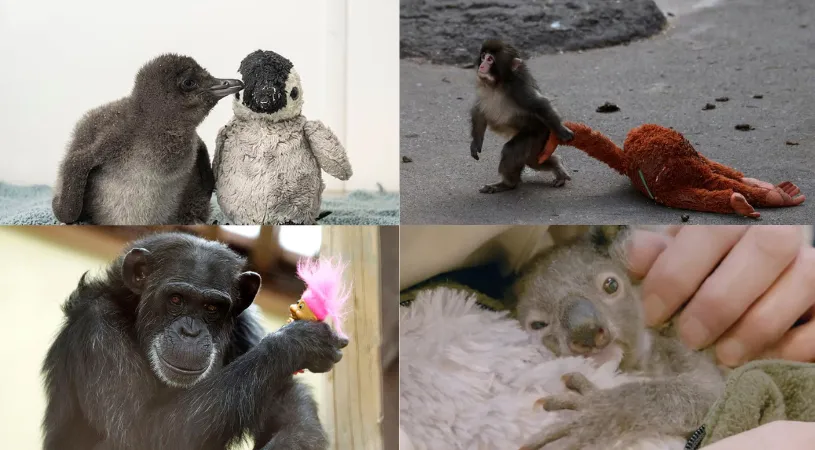
Stories of animals turning to toys shed light on feelings of abandonment and loss. From the monkey 'Bunch' to the penguin 'Henry', the need for affection and security is evident in the animal kingdom. This phenomenon is not new; it reflects a painful reality experienced by many animals who have lost their families or been abandoned by their mothers.
In the Colombian city of Antioquia, a newborn monkey was found on the roadside, with uncertainty surrounding whether its mother had abandoned it or if it had simply strayed away. The rescue process began by providing a stuffed toy in the shape of an elephant, which the monkey clung to in search of warmth and safety, similar to how a newborn clings to its mother. These toys serve as surrogate mothers, given to animals that have lost their mothers to alleviate their anxiety and loneliness.
Details of the Event
Stuffed toys are considered an effective tool in zoos and specialized animal care centers. Animals that are left alone or lose their parents require a source of security, and these toys act as companions for them. For instance, the penguin 'Henry', born in a water park in Britain, was given a toy that closely resembled him, named 'Tom', after his mother abandoned him. These toys have proven effective in calming young animals.
There are numerous examples of animals turning to toys in search of affection. 'Briar', a young lion found alone in California, was provided with a toy dog to feel reassured. Meanwhile, the 35-year-old chimpanzee 'Lizzy' chose a 'Grinch' toy as her companion, carrying it with her everywhere.
Background & Context
This phenomenon traces back to previous studies, where psychologist Harry Harlow noted that young animals, especially monkeys, prefer comfort and security over food. This explains the attachment of young animals to toys that provide them with emotional security. Animals suffering from the loss of their families require psychological support and find in toys a substitute for their absent mothers.
This phenomenon exists worldwide, where toys are used in animal care centers to help them adapt to their new environments. Animals that lose their families often suffer from psychological trauma, making them desperately in need of companions to alleviate their loneliness.
Impact & Consequences
These stories illustrate the profound impact of family loss on animals and how such experiences can affect their behavior and psychology. Animals that turn to toys not only reflect their need for affection but also demonstrate humanity's ability to provide care and support in times of need.
This phenomenon serves as a call to reflect on how we treat animals and the importance of providing a safe and supportive environment for them. The more we understand their psychological needs, the better we can offer appropriate care.
Regional Significance
This phenomenon holds significant implications in the Arab region, where many animals suffer harsh conditions due to environmental changes and wars. Understanding the importance of affection and care in the lives of animals can contribute to improving their circumstances. These stories can inspire greater efforts in animal protection and care.
In conclusion, the stories of love between animals and mothering toys show how care and affection can be the key to alleviating the suffering of vulnerable beings. Providing psychological support to orphaned animals is not just a humanitarian duty but a necessity for maintaining the balance of wildlife.