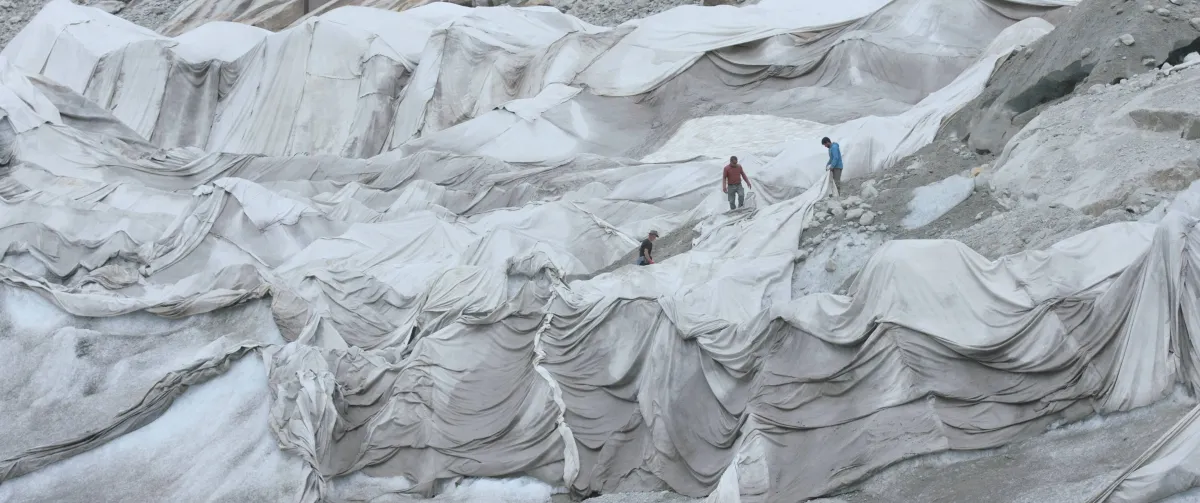
The film 'Compassion' by Spanish director Rafa Molis shines a light on a unique human experience, as it seeks to convey the deep emotions Molis himself felt in front of the glaciers in Iceland. This experience began nearly twenty years ago when Molis first visited the area with his co-director Pepe Andreu, marking a turning point in his perspective on nature.
Molis emphasizes that standing before a glacier was not merely witnessing a natural scene; it felt as if this ice was a living, breathing entity, prompting them to treat it as the true protagonist of the film rather than just a backdrop. This idea has accompanied Molis for many years, especially with the spiritual feeling he experienced in front of the ice, which he likened to the sense of faith he felt in his childhood.
Event Details
The film premiered at the Thessaloniki Documentary Film Festival, telling a true story that dates back over a century, when Flosi Bjornsson and his eight siblings lived in isolation at the foot of one of Iceland's largest glaciers. These siblings dedicated their lives to observing the ice and documenting its transformations, adding a strong human dimension to the film.
In the present day, a photographer returns to the place that witnessed his childhood to rediscover this story, while the ice transforms into a silent hero that narrates, through its cracking sounds, the tale of a world gradually eroding. The film is co-directed by Rafa Molis and Pepe Andreu, reflecting the challenges glaciers face in the context of climate change.
Background & Context
Molis and Andreu's relationship with Iceland deepened during the filming of their previous project, as concerns grew about the fate of glaciers, which scientific indicators suggest are on the verge of disappearing. These fears align with global climate changes affecting the environment, making the film even more significant at this time.
The collaborative directing experience between Molis and Andreu was smooth due to their mutual trust, with each having a clear role in the work while sharing a common vision. This collaboration highlights the importance of teamwork in documentary filmmaking.
Impact & Consequences
The film 'Compassion' aims to raise questions about humanity's role and responsibility towards the environment, with Molis asserting that small actions can hold great value. The film does not offer direct solutions but seeks to inspire the audience to reflect on their impact on the world around them.
Additionally, the film addresses the challenges faced by the crew while filming in a glacial environment, where harsh weather conditions posed significant challenges. The filming process took about two years, allowing them to capture changes in time and weather, emphasizing the idea of continuous transformation that the film conveys.
Regional Significance
The film 'Compassion' represents a call to reflect on environmental issues that concern the entire world, including the Arab region, which faces similar challenges. Highlighting these issues through art and cinema can contribute to raising awareness about the importance of environmental preservation.
In conclusion, 'Compassion' reflects a profound human experience that transcends geographical boundaries, making it a work of art worthy of viewing and contemplation of its deep meanings.