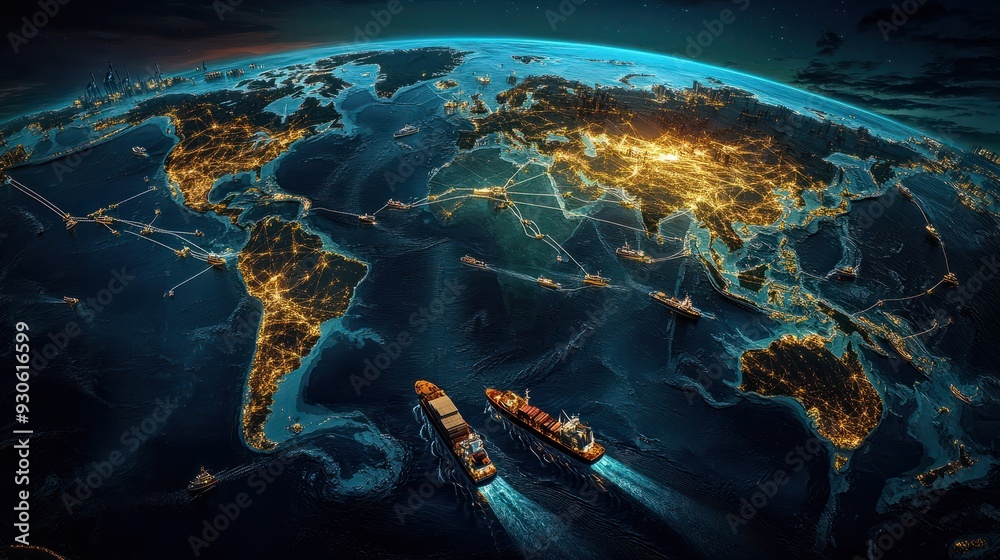
During a government meeting at the presidential palace in Jakarta, Indonesian President Joko Widodo confirmed that around 70% of energy and trade needs in East Asia transit through Indonesian waters, highlighting the country's role as a strategic center in global trade.
Widodo pointed out Indonesia's unique geographical location, which makes it a vital crossing point for many maritime trade routes, emphasizing the importance of enhancing national awareness regarding this strategic position amid increasing international tensions.
Key Maritime Corridors
Widodo highlighted the significance of maritime corridors such as the Malacca Strait and the Sunda Strait, noting that they are not just trade routes but sensitive points that impact the global economy. He also mentioned that the closure of the Strait of Hormuz due to conflicts in the Middle East served as an important lesson for Indonesia about the necessity of protecting these corridors.
He called for effective management of Indonesia's natural resources, stressing that the country possesses immense wealth that could bolster its economic power if properly utilized, which requires fostering national unity in the face of challenges.
Background & Context
Historically, Indonesia has been an important trading hub in Southeast Asia, playing a pivotal role in maritime trade since ancient times. With rising geopolitical tensions, it has become essential for Indonesia to reassess its strategies in managing its resources and maritime corridors.
As one of the largest archipelagic nations in the world, Indonesia comprises over 17,000 islands, making it a key player in maritime trade. However, the country faces challenges including climate change and regional conflicts, necessitating a comprehensive strategic response.
Impact & Consequences
Widodo's statements serve as a call to enhance national stability and Indonesia's defense capabilities. Amid increasing tensions in the Pacific region, these strategies may influence trade relations with other countries, especially those reliant on energy that passes through Indonesian waters.
Moreover, enhancing national awareness regarding Indonesia's geographical importance could contribute to strengthening national identity and increasing public support for government policies, potentially leading to higher foreign investments and economic growth.
Regional Significance
These remarks underscore Indonesia's importance as a strategic center in global trade, affecting security and energy in the region. The country's ability to manage its maritime corridors effectively is crucial for maintaining stability and fostering economic development.
In conclusion, as Indonesia navigates through complex geopolitical landscapes, its role as a critical energy trade hub will be vital for both its national interests and the broader regional economy.