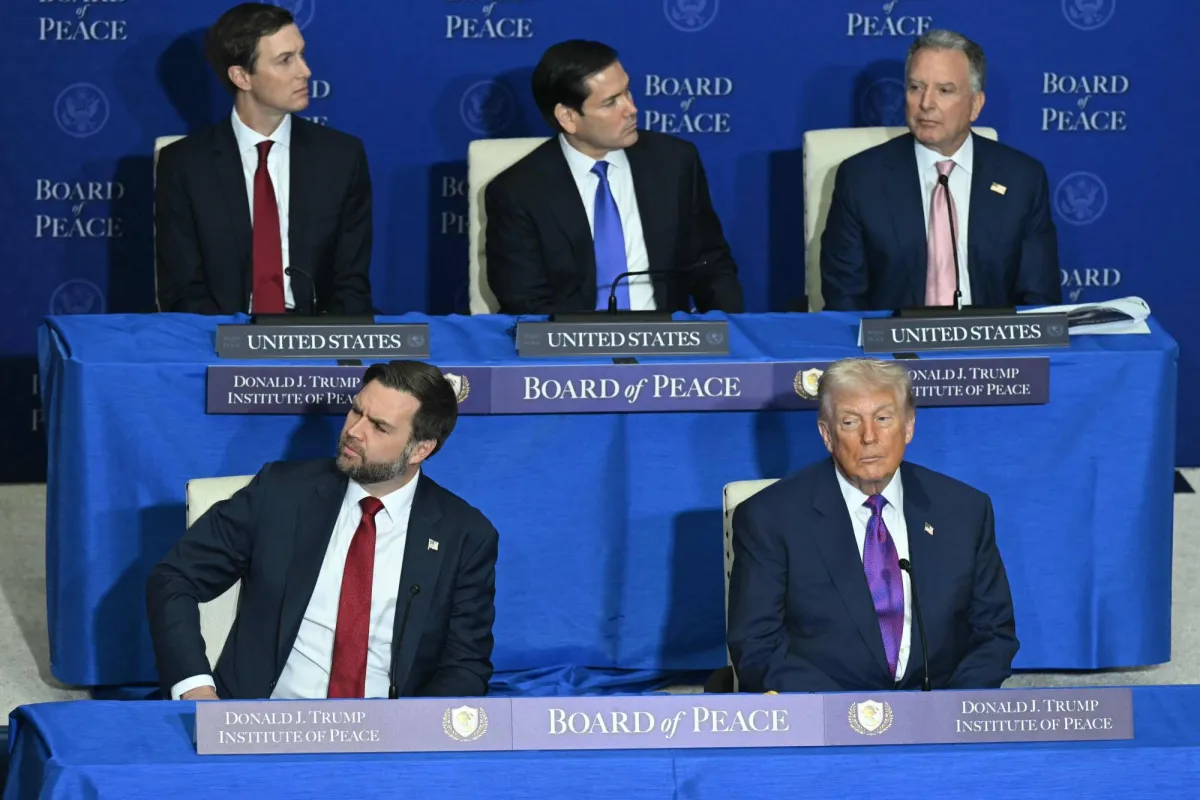
The U.S. administration discusses the continuation of the war in Iran for additional weeks, with Vice President JD Vance emerging as a key player in the diplomatic path that Washington claims to have initiated, which has received a response from Tehran.
Recent U.S. statements have painted a varied picture suggesting a clear division in roles and messages. President Donald Trump spoke about defeating Iran and reiterated his threats, while Secretary of State Marco Rubio confirmed the military campaign would continue for additional weeks. Meanwhile, presidential envoy Steve Witkoff discussed anticipated negotiations this week, making Vance seem more acceptable to some circles as he is viewed as less impulsive towards open wars.
Details of the Situation
Notably, the White House secretly informed its allies that any agreement with Tehran would take time, according to a report from CBS News, which practically means that Washington is not moving towards an imminent ceasefire but rather continuing the war while keeping the door for negotiations slightly ajar.
The rise of JD Vance, known for his reservations about U.S. involvement in Middle Eastern conflicts, does not necessarily mean that the 'doves' have gained the upper hand within the administration, but rather reflects an attempt by Trump to redistribute roles after previous channels faltered. Vance appears to some U.S. officials to be more marketable to the Iranians than envoys Steve Witkoff and Jared Kushner, whose names are associated with failed negotiation rounds.
Context and Background
In this context, it was not surprising that Trump introduced Vance during the recent government meeting as engaged in the negotiation path, or that U.S. leaks suggest he could be the chief negotiator in any potential meeting mediated by Pakistan. However, the significance of Vance lies not only in his persona but in the message he carries. The administration seemingly wants to convey to the Iranians that it has a serious interlocutor, but at the same time, it does not offer a real alternative to the tough conditions it has laid out for Iran.
In other words, the 'facade' is being changed without a fundamental modification in the substance of the U.S. offer. This explains the current paradox: Vance may be a more acceptable interlocutor for the Iranians, but his chances of success remain limited if he enters negotiations carrying practically the same package of conditions that Tehran has previously rejected.
Consequences and Implications
If Vance represents at this moment the face of the 'last chance' for negotiation, then Marco Rubio embodies another camp within the administration. His character is considered one of the most hardline towards Iran, yet he has relatively survived the wave of anger directed at some corners of the Trump administration, as many in Washington still see him as 'the most rational' compared to others.
However, this image does not negate that his dual position, as both Secretary of State and National Security Advisor, reveals a larger problem regarding the decision-making mechanism itself. Instead of leading a broad coordination process among state institutions, it seems that major decisions are being cooked within a narrow circle in the White House, while agencies and ministries are left to catch up later.
Impact on the Arab Region
So far, it is likely that the talk of negotiation does not mean that a settlement is imminent, but rather that Washington is trying to prepare a parallel political path to an ongoing, and possibly escalating, military campaign. The estimates discussing additional weeks of fighting, the talk of 'final strike' options, and the ongoing discussion about targeting strategic structures or islands and sites linked to the Strait of Hormuz, all indicate that the administration is not acting as if it is on the verge of a diplomatic breakthrough, but rather wants to improve negotiation terms through force.
Thus, the more precise question is not whether negotiations are 'possible', but whether both parties believe the time is right for them. From Trump's perspective, as long as he believes that more pressure could yield a better agreement or allow him to declare a clearer victory, he will not rush to present the necessary proposals to establish a ceasefire. From Iran's side, as long as it sees that accepting the current U.S. conditions would be interpreted internally as a humiliating defeat, it will likely prefer to buy time and cling to opposing terms.
In this sense, Vance may indeed be the most suitable figure within the Trump administration to lead any potential negotiation, as he combines proximity to the president with sensitivity to the dangers of long wars.