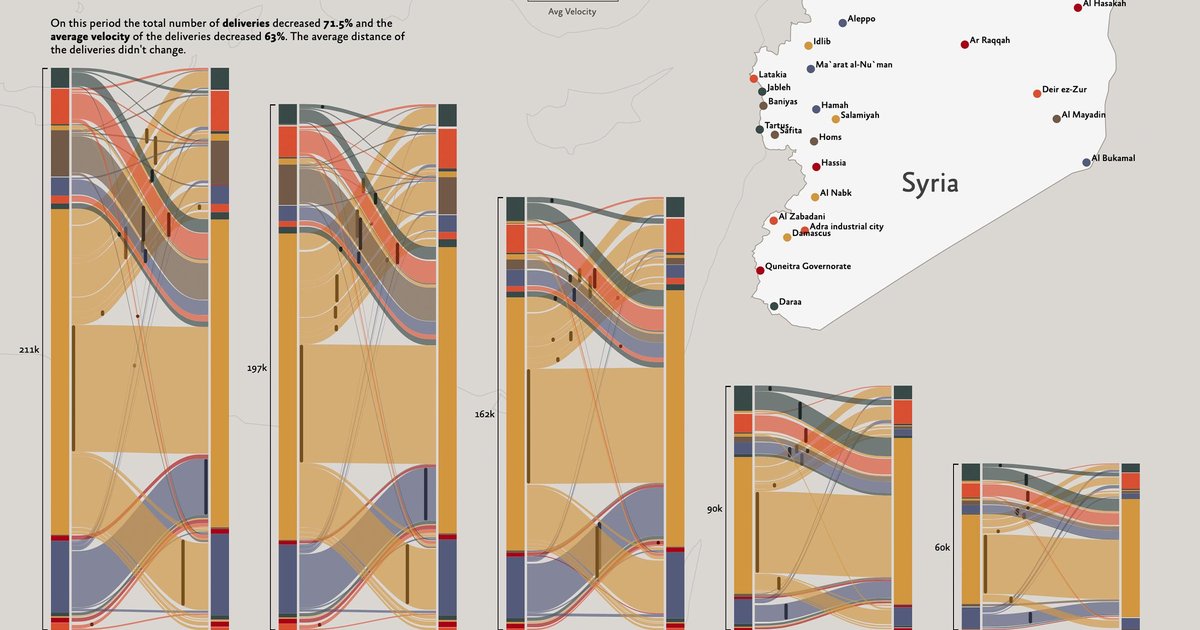
Syria's geography is regaining its strategic role as tensions escalate around the Strait of Hormuz, where international powers are seeking flexible logistical alternatives. This situation reflects the growing ambition to restore Damascus's position as a vital junction in the region.
As conflicts escalate in multiple regions around the world, Syria's role as a potential link between the East and the West becomes more pronounced. The tensions in the Strait of Hormuz, a critical transit point for oil, are prompting countries to look for alternative ways to secure their economic interests.
Details of the Situation
Syria is considered a strategic point in the regional transport network, where it could play a pivotal role in facilitating the movement of goods and energy. In recent years, the country has witnessed radical changes in its political and military landscape, making it a focal point for major powers.
Attention is currently directed towards how this geography can be exploited for economic and political interests. With increasing pressures on the Strait of Hormuz, land and maritime routes through Syria may become more important than ever.
Background & Context
Historically, Syria has been an important trade center, linking the continents of Asia, Europe, and Africa. However, the country has experienced internal and external conflicts that have affected its ability to reclaim this role. Today, with shifting power balances, an opportunity arises for Damascus to regain its stature.
Challenges in the region are increasing, as major powers compete for influence. With rising tensions between the United States and Iran, Syria's importance as a strategic alternative that could contribute to regional stability is growing.
Impact & Consequences
The restoration of Syria's role as a junction could significantly affect regional balances. International powers may find in this country an opportunity to enhance their influence, potentially leading to changes in existing alliances.
Moreover, these dynamics could contribute to improving the economic situation in Syria, as increased trade movement could create job opportunities and enhance the living standards of the population.
Regional Significance
The importance of Syria extends beyond its geographical boundaries, as it could influence the stability of the entire region. With the increasing reliance on alternative transport routes, the landscape of regional trade may change, positively reflecting on neighboring countries.
In conclusion, it appears that Syria's geography could be key to resolving many regional crises, making it a focal point for international powers seeking to secure their interests amid rising tensions.