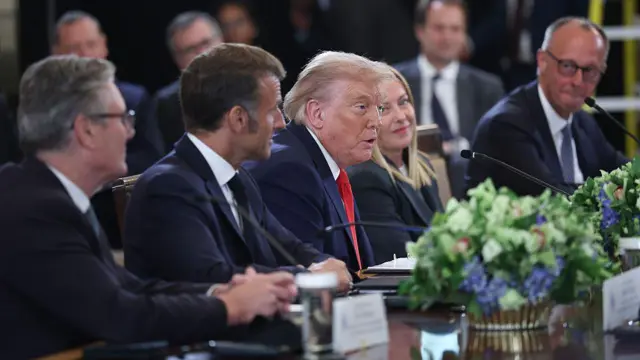
The ongoing US-Israeli war with Iran has become a focal point for global media. The New York Times reported that US President Donald Trump "does not have" a clear plan to address this escalating crisis. Meanwhile, The Telegraph emphasized the importance of the US-European alliance in this context, pointing out the necessity for Europe to act in accordance with these changing dynamics. Additionally, Le Monde discussed the law concerning the execution of Palestinian prisoners, adding a humanitarian and political dimension to the ongoing events.
Concerns are growing over escalating tensions in the Middle East, where Iran is considered a key player in this equation. As US pressure on Tehran continues, challenges are increasing for European countries striving to maintain stability in the region. In this context, there is an urgent need for coordinated efforts between the United States and Europe to confront shared threats.
Details of the Event
The dimensions related to the US-Israeli war with Iran are multifaceted, intertwining political and military interests. Iran is one of the countries seeking to expand its influence in the region, raising concerns among many nations, including the United States and its European allies. In this context, calls are increasing to activate strategic alliances among Western nations to address security challenges.
On the other hand, the Palestinian issue is facing increasing pressure, as laws such as the execution of Palestinian prisoners represent a contentious point that provokes strong reactions on the international stage. These laws are seen as violations of human rights, necessitating international action to pressure Israel to halt these policies.
Background & Context
Historically, US-Iranian relations have experienced significant fluctuations, with tensions beginning since the Islamic Revolution in 1979. Since then, Iran has become a target of US policies in the region, leading to the imposition of economic and military sanctions. In recent years, tensions have intensified with the escalation of Iranian military activities in Iraq and Syria.
On the other hand, Europe is considered a key player in this equation, seeking to maintain regional stability through diplomacy. However, divisions within the European Union regarding how to deal with Iran may hinder coordination efforts. Therefore, enhancing cooperation between the United States and Europe is essential to address security challenges.
Impact & Consequences
The repercussions of the US-Israeli war with Iran extend beyond geographical borders, affecting regional and international security. Increased tensions could lead to the escalation of armed conflicts, threatening stability in the Middle East. Furthermore, continued pressure on Iran may push it to take more aggressive steps, complicating the situation further.
Moreover, controversial laws such as the execution of Palestinian prisoners could exacerbate humanitarian conditions in Palestinian territories, necessitating urgent international action. Consequently, these events pose significant challenges for the international community, which must take decisive stances.
Regional Significance
The ongoing events in the Middle East have a direct impact on Arab countries, reflecting a state of instability. Tensions between the United States and Iran could have negative repercussions on Arab security, necessitating enhanced cooperation among Arab nations to confront these challenges.
Additionally, the Palestinian issue remains at the core of Arab concerns, requiring collective action to support Palestinian rights. Therefore, strengthening regional and international alliances is essential to maintain security and stability in the region.
In conclusion, the US-Israeli war with Iran remains a complex issue that requires the concerted efforts of the international community. European and American countries must work together to address security challenges and ensure human rights in the region.