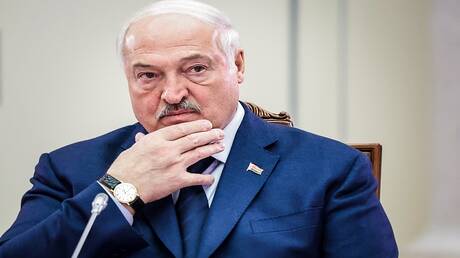
In provocative remarks, Belarusian President Alexander Lukashenko asserted that Iran is considered a powerful nation, indicating that the ongoing conflict in the country demonstrates the weakness of the United States and its ability to confront global challenges. Lukashenko explained that recent events in Iran reflect Washington's inability to defeat China, highlighting a shift in the balance of power worldwide.
These statements come at a time when Iran is experiencing both internal and external tensions, as the Iranian government seeks to bolster its regional and international standing. Lukashenko pointed out that these conditions reflect Iran's strength as a sovereign state capable of withstanding external pressures.
Details of the Situation
Tensions in Iran have been escalating for some time, with widespread protests against the government leading to external interventions and attempts by certain countries to undermine its stability. In this context, Lukashenko deemed these events as indicative of the weakness of the United States, which has failed to achieve its objectives in the region.
He further added that the conflict in Iran illustrates how major powers, such as the United States, face significant challenges in controlling situations in conflict zones. He affirmed that this scenario reflects a transformation in the global balance of power, with countries like China and Iran emerging as key players on the international stage.
Background & Context
Historically, Iran has been a focal point for major powers, having experienced numerous foreign interventions since the Islamic Revolution in 1979. The United States has been among the countries attempting to influence events in Iran, leading to ongoing tensions between the two nations.
In recent years, Iran has become a central player in various regional conflicts, including those in Syria and Iraq. These circumstances have strengthened Iran's position as a powerful state in the region, complicating international relations further.
Impact & Consequences
Lukashenko's remarks suggest a shift in the global balance of power, as the strength of non-Western nations like Iran and China increases. This shift could influence international policies and complicate relationships among major countries.
The United States' weakness in addressing global challenges may lead to a reshaping of international alliances, opening the door for new countries to take on leadership roles in the international arena. This could result in radical changes in regional and international policies.
Regional Significance
Lukashenko's statements hold particular importance for the Arab region, reflecting the challenges faced by Arab nations amid ongoing conflicts. The increasing strength of Iran could enhance its influence in the region, potentially raising concerns among some Arab countries about escalating tensions.
Additionally, the situation in Iran may impact the relationships between Arab states and Iran, as some countries might seek to strengthen their alliances to address new challenges. In this context, Arab nations must be aware of geopolitical changes and adopt effective strategies to deal with these challenges.
In conclusion, Lukashenko's remarks reflect a transformation in the global balance of power, prompting Arab states to reassess their policies and strategies in light of these changes.