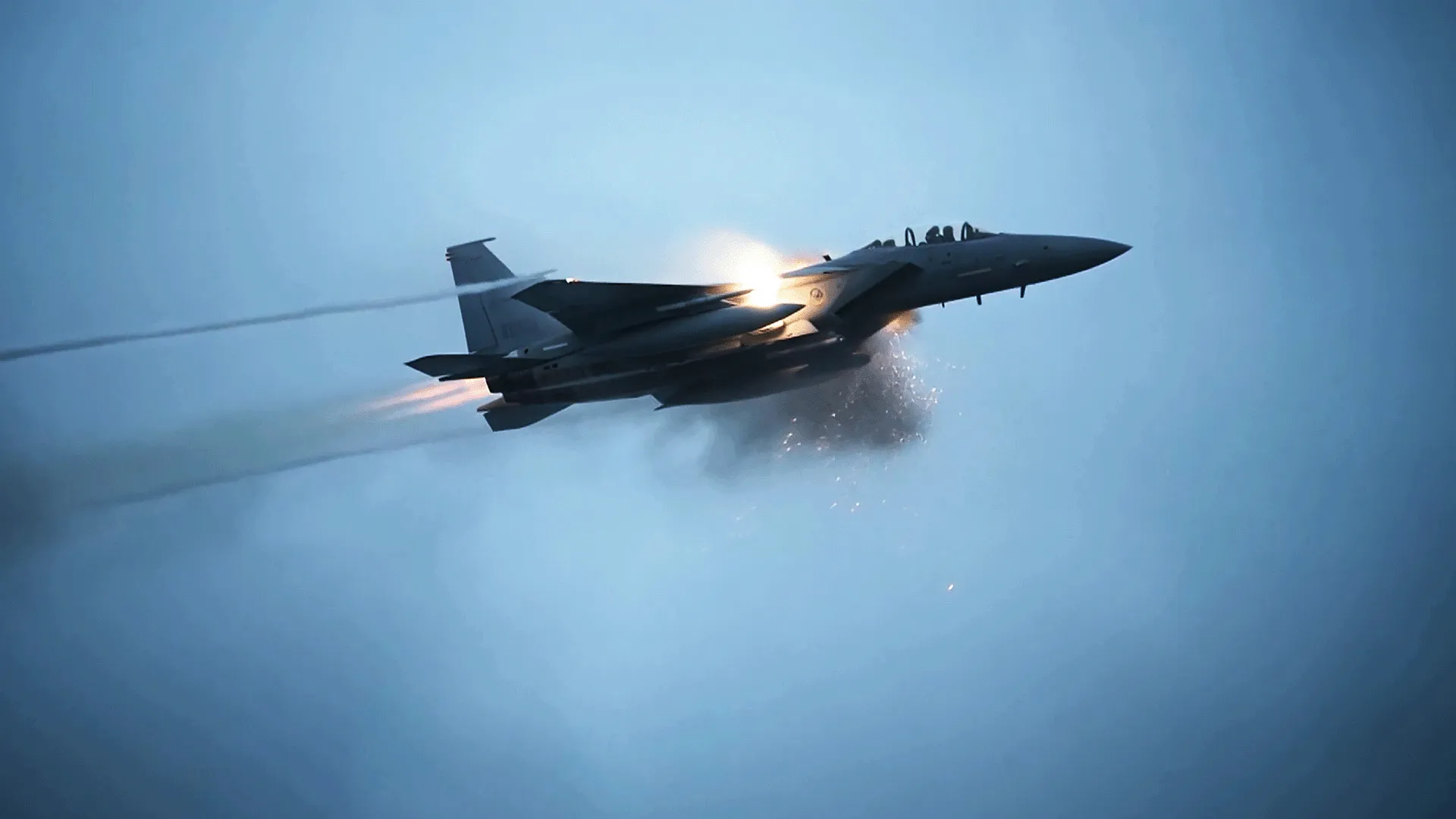
The risks faced by American and Israeli fighter jets in Iran are clearly evident after the downing of two warplanes, according to the Iranian narrative, and one according to the American account. This incident highlights the ongoing challenges these aircraft face despite Washington's assurances of complete control over Iranian airspace.
When a fighter jet crashes in hostile territory, a precise military protocol is activated aimed at rescuing the pilot or crew and protecting technical secrets. According to a report prepared by Ahmad Jarrar for Al Jazeera, the first moments after the crash are critical.
Details of the Incident
In the initial moments of the crash, the aircraft's ejection seat equipped with a warning system sends location coordinates via encrypted communication channels, facilitating rescue teams' access to the pilot. Immediately, search and rescue operations are launched, with elite teams dispatched and supported by military helicopters and fighter jets to secure air cover, aiming to reach the pilot's location as quickly as possible.
When the pilot ejects from the aircraft, he begins to apply survival and evasion training, seeking to conceal himself and avoid detection while moving towards a safe location in anticipation of the rescue teams' arrival. During his descent, he has a better chance of observing the surrounding environment, but his visibility diminishes once he reaches the ground, making movement more perilous.
Background & Context
Historically, the region has witnessed numerous similar incidents reflecting the ongoing tensions between major powers. The downing of warplanes is not a new event; rather, it is a result of complex conflicts where political and military interests intersect. In recent years, military activities in the region have increased, leading to heightened tensions between Iran, the United States, and its allies.
Fighter jets are considered one of the most critical elements of military power, relied upon for executing strategic missions. Therefore, their downing represents a significant blow to military capabilities and necessitates a swift response from the involved forces.
Impact & Consequences
The potential consequences of downing a fighter jet are manifold, as the event turns into a race against time between rescue teams and any hostile forces that may seek to reach the pilot or the wreckage. If securing the crash site proves impossible, a decision is made to destroy it to prevent the leakage of sensitive military technology.
International relations are significantly affected by these incidents, as they may lead to escalating tensions between the involved countries. Furthermore, these events raise international concerns regarding security and stability in the region.
Regional Significance
These incidents are particularly significant for the Arab region, as they reflect the ongoing conflicts and tensions between regional and international powers. The downing of warplanes highlights the security challenges faced by Arab countries and complicates the political landscape in the region.
In conclusion, these incidents serve as a constant reminder of the dangers faced by pilots and soldiers in conflict zones, emphasizing the importance of preparedness and readiness in facing military challenges.