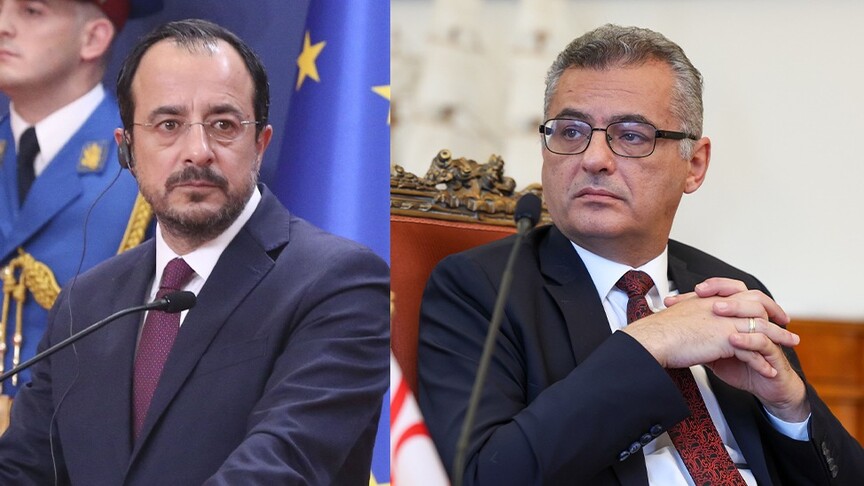
A historic meeting was held between the leaders of the Turkish Cypriots and Greek Cypriots in the buffer zone, where Tufan Erhorman, the Prime Minister of the Turkish Republic of Northern Cyprus, met with Nikos Christodoulides, the President of the Republic of Cyprus, under the auspices of UN special envoy Hasim Diagni. The meeting focused on enhancing dialogue between the two sides and discussing unresolved issues affecting their relations.
This meeting is part of the United Nations' efforts to find peaceful solutions to the decades-long Cyprus conflict. The importance of dialogue as a means to achieve peace and stability in the region was emphasized, as both sides suffer from historical tensions that require comprehensive addressing.
Key Issues Discussed
During the meeting, a range of key issues reflecting the challenges faced by both parties were addressed, including security concerns, natural resources, and citizens' rights. The importance of cooperation in the fields of economy and development was also highlighted, with Erhorman pointing out the necessity of opening new channels of communication between the two sides.
For his part, Christodoulides stressed the importance of constructive dialogue, emphasizing that solutions must be based on mutual respect and shared interests. It was agreed that these meetings should continue periodically to build trust between the two sides.
Background & Context
The history of the Cyprus conflict dates back to 1974, when the island was divided into two parts, with the north controlled by Turkish Cypriots and the south by Greek Cypriots. Since then, the island has witnessed numerous negotiation attempts that have not yielded tangible results. The buffer zone, which separates the two sides, symbolizes the ongoing tensions.
The United Nations has been striving for decades to find a comprehensive solution to the conflict, organizing many conferences and dialogues between the parties, but with little significant progress. This meeting is seen as a positive step towards resuming dialogue and reflects both sides' desire to find peaceful solutions.
Impact & Consequences
If progress is made in these talks, it could contribute to improving relations between Turkish and Greek Cypriots and enhance stability in the region. It may also open the door for new investments and economic cooperation, benefiting both sides. At the same time, the failure of these talks could exacerbate tensions, negatively impacting regional security.
Thus, the outcome of this meeting holds significant implications for the future of the island and its inhabitants, as both communities seek a path toward reconciliation and peace.
Regional Significance
This meeting represents a crucial step towards fostering dialogue and peace in a region that has suffered from conflict for decades. The international community, particularly the United Nations, views these discussions as vital for regional stability and security.
In conclusion, the successful continuation of such meetings could pave the way for a more peaceful coexistence between the Turkish and Greek Cypriots, ultimately contributing to a more stable Eastern Mediterranean.