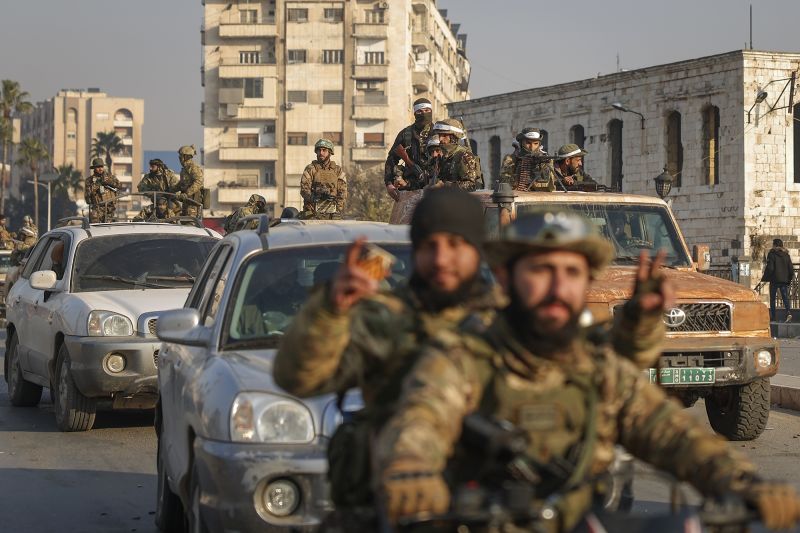
The Syrian community is experiencing a historic moment following the fall of the Assad regime, facing significant challenges such as political vacuum and lack of trust among its components. This phase requires wise leadership to ensure democratic transition and restore confidence.
When an authoritarian regime like Assad's collapses after decades of rule, the community faces a pivotal moment and serious pitfalls. This moment represents a vast vacuum in the political arena, where institutions cease to function for a period, leading to a breakdown of trust among various community components.
Details of the Event
Historically, the Assad regime established its rule through oppression and domination over state institutions, resulting in rampant corruption and chaos. With the fall of this regime, the need to rebuild institutions and enhance trust among citizens becomes evident, requiring significant efforts from all concerned parties.
The challenges manifest in reopening old wounds inflicted by the fallen regime, necessitating a comprehensive approach to address these wounds to ensure past mistakes are not repeated. The critical mass at this stage does not halt the movement of power but prevents collision, making the engineering of democratic transition essential.
Background & Context
Syria has suffered for decades under authoritarian rule, where power controlled all aspects of political and social life. This situation led to a erosion of trust between citizens and the state, complicating the situation after the regime's fall. The vacuum left by the regime's collapse requires the emergence of new forces capable of effectively managing the transitional phase.
Historically, other countries in the region have witnessed similar transformations, where revolutions led to radical changes in political systems. However, these transformations were often accompanied by significant challenges, such as chaos and internal conflicts, necessitating lessons learned from those experiences.
Impact & Consequences
The consequences of the Assad regime's fall extend beyond Syria's borders, affecting regional stability. The potential chaos in the country may lead to a flow of refugees into neighboring countries, increasing pressure on those nations. Additionally, the absence of clear leadership could open the door for extremist groups to exploit the situation.
On the international level, the situation in Syria requires special attention from major powers, as they can play a crucial role in supporting the democratic transition. International support must be conditional on genuine reform processes that ensure human rights and fundamental freedoms.
Regional Significance
What is happening in Syria is of concern to the entire Arab region, as it represents a model for the challenges other countries may face in the event of political changes. Failure to manage the transitional phase could lead to widespread chaos, affecting security and stability in the region.
In conclusion, Syria is in urgent need of a guardian for this transitional phase, characterized by wisdom and the ability to unite factions. The democratic transition requires collective efforts, and priority must be given to restoring trust among the components of Syrian society.