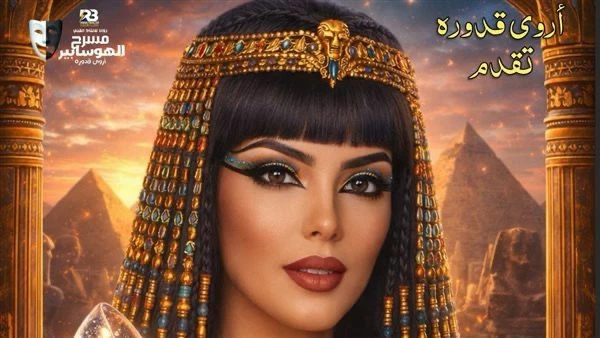
Egyptian actress Hooria Farghaly has announced her anticipated return to the stage with a new play titled 'Egyptian Cinderella Radoubi'. The play will be performed at the Housaibir Theater and comes after the significant success Farghaly achieved in the play 'Rapunzel', highlighting her passion for theatrical art and her desire to present distinguished works to the audience.
In an interview with the newspaper 'Okaz', Farghaly confirmed that the play will give her the opportunity to portray a historical Pharaonic character in Modern Standard Arabic, a dream she has long wished to fulfill on stage. She mentioned that she is currently conducting several rehearsals with the cast in preparation for the upcoming performance, hoping that her performance will impress the audience.
Event Details
The new play is based on the true story of Egypt's Cinderella, presenting its events in a framework that combines drama and comedy, while utilizing Pharaonic costumes that innovatively evoke the atmosphere of Egyptian history. The play is directed by Amr Atef and written by Abdelkader Ibrahim, featuring a cast of artists including Arini Samir, Ahmed Gamal, Ola El-Sayed, Samira Lotfi, and Mohamed Osama.
The play aims to provide a comprehensive artistic experience, combining outstanding acting, music, and dance, making it a unique experience on stage.
Background & Context
Hooria Farghaly is considered one of the most prominent artists in the Egyptian artistic scene, having gained widespread fame through her diverse works in cinema and television. Her return to the stage comes at a time when theatrical art in Egypt is witnessing a notable revival, as many theater companies strive to present new and innovative works that attract audiences.
The Egyptian theater has a long and rich history, having undergone many transformations over the years. With the increasing interest in theatrical art, theatrical performances have become an important platform for artists to express their ideas and experiences.
Impact & Consequences
Hooria Farghaly's return to the stage is a positive step reflecting artists' interest in reviving theatrical art, which may contribute to attracting a new audience to this form of art. Theater is not just a means of entertainment; it is also a tool for expressing social and cultural issues, enhancing its role in society.
Moreover, the success of the play could open new horizons for young artists, as they may draw inspiration from Farghaly's experience and aspire to present their own works, contributing to the development of the artistic scene in Egypt.
Regional Significance
Hooria Farghaly's return to the stage is part of a broader artistic movement occurring in the Arab region, where artists are striving to present works that reflect their cultures and histories. Arab theater faces numerous challenges, but successful experiences like Farghaly's may inspire other artists across various Arab countries.
In light of the social and political changes occurring in the region, the arts, including theater, can play an important role in promoting cultural dialogue and providing new perspectives on contemporary issues.
In conclusion, Hooria Farghaly's return to the stage represents a new opportunity to revive theatrical arts in Egypt and present unique artistic experiences to the audience, reflecting the importance of theater as a means of artistic and cultural expression.