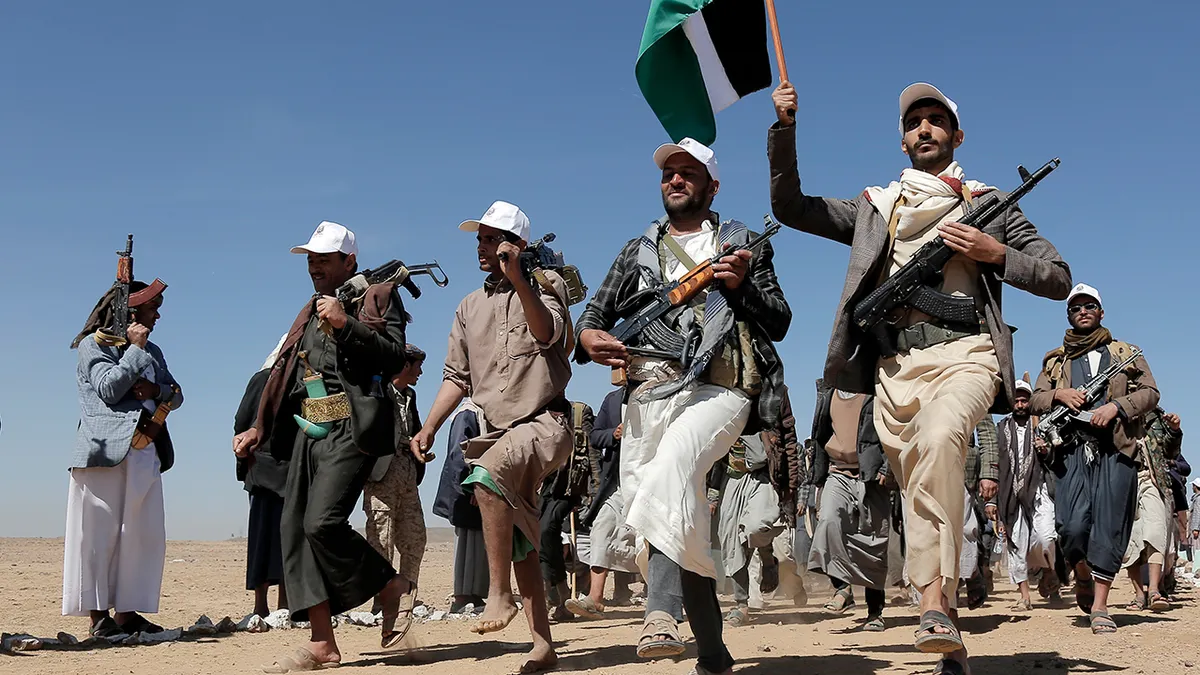
The Houthi group entered the war a month after its outbreak, in a move that reflects a calculated timing aimed at increasing pressure on the United States. This maneuver, seen by some as part of an Iranian strategy, threatens maritime routes and complicates the military situation in the region.
Analyses from the Jerusalem Post and Yedioth Ahronoth indicate that the Houthis' entry at this time was not a mere coincidence, but rather came after a thorough study of the circumstances. Iran chose to wait until involving the Houthis in the conflict became more complicated for the United States, which has begun seeking ways to stop the war instead of expanding it.
Details of the Event
The two newspapers consider that the Houthis did not enter the war from the outset because Iran was distributing its responses across several fronts, including the Gulf, Lebanon, and Iraq. As the scope of the war widened, Iran felt it was time to involve the Red Sea in the equation, reflecting its awareness of the importance of this strategic passage.
The Houthi missile launched towards southern Israel was not merely a military attack but a clear message to the United States. The goal is to complicate the movement of the American fleet in the Red Sea and Bab al-Mandab, especially if former President Donald Trump decides to take military action against Iran.
Context and Background
Historically, the Red Sea region has always been of strategic interest, as it is considered a vital passage for global trade. The Houthis' entry into the war in this context reflects an escalation in the regional conflict and strengthens Iran's position as an influential power in the area.
Analysis indicates that the Houthis possess advanced military capabilities, including anti-ship missiles, drones, and explosive boats, making them a formidable adversary. These capabilities do not mean they can completely close the Red Sea, but they are sufficient to raise the costs of any American military action.
Implications and Effects
The Houthis' entry into the war means that the conflict is no longer confined to the Strait of Hormuz but has extended to include other maritime routes. This development threatens naval fleets and impacts alternative energy lines, further complicating the security situation in the region.
The analysis suggests that the Houthis represent an effective Iranian card, as it is difficult to remove them from the equation. Previous experiences have shown that the battle against them in mountainous terrain has been challenging, which multiplies the costs of any counter-military action.
Impact on the Arab Region
This development in the conflict reflects a shift in regional dynamics, as tensions rise between major powers. The Houthis' entry into the war could lead to greater escalation in the conflict, affecting security and stability in the Arab region.
In conclusion, it appears that the Houthis are not merely a local player but represent part of a broader Iranian strategy aimed at enhancing its influence in the region, necessitating Arab countries to reassess their positions regarding this escalating conflict.