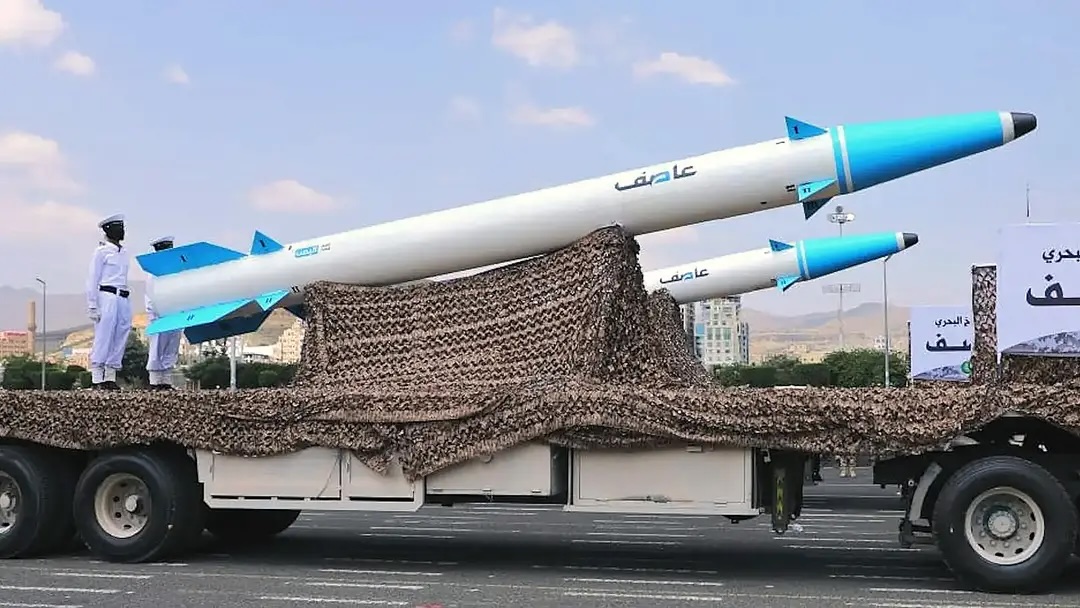
In a new escalation of tensions in the region, the Houthis in Yemen, also known as Ansar Allah, announced the execution of a missile attack on Israel for the second time in one day. This was stated by the Houthi military spokesperson, Brigadier General Yahya Saree, who confirmed that military operations would continue until Israel stops its aggression against Iran and Lebanon.
Saree explained in his statements made to Al-Masirah channel that the attack targeted several key military sites belonging to what they refer to as the 'Zionist enemy' in the occupied Palestinian territories. Describing the operation as part of a 'sacred jihad war,' he emphasized that the Houthis would continue their military operations in the coming days.
Details of the Event
These attacks come at a time when the region is witnessing an escalation in tensions between Iran and Israel, with both countries exchanging accusations of inciting violence. The Houthis indicated that these operations are a response to what they consider Israeli aggressions against Iran and Lebanon, reflecting the increasing regional role of the Houthis in the conflict.
Earlier reports had indicated the Houthis' readiness to intervene in any military conflict that may arise between the United States and Iran, adding a new dimension to the conflict in the region. These statements have raised concerns about a larger escalation that could impact regional security.
Background & Context
Historically, the Houthis are part of the ongoing conflict in Yemen, which erupted in 2014 when they seized control of the capital, Sana'a. Since then, regional and international coalitions have intervened in the conflict, exacerbating the humanitarian situation in the country. The Houthis, supported by Iran, consider themselves part of the resistance axis against Israel, using these attacks as a means to bolster their regional position.
The conflict in Yemen has also significantly affected relations among Arab states, with countries divided between supporters and opponents of the Houthis. This division reflects the political and religious tensions in the region, complicating peace efforts.
Impact & Consequences
The continuation of Houthi attacks on Israel could lead to greater military escalation, as Israel is likely to respond with retaliatory strikes. This escalation could drag the region into a broader conflict, affecting the stability of neighboring countries and increasing civilian suffering.
Moreover, these events may impact relations between Arab states and Iran, as some countries may feel concerned about the rising Iranian influence in the region. At the same time, some countries may use these events to strengthen their alliances against Iran, further increasing regional tensions.
Regional Significance
These events serve as a wake-up call for Arab states, highlighting the need to enhance security and political cooperation to address common challenges. The rising tensions could also affect peace efforts in Yemen, as various parties seek to achieve a political settlement.
In conclusion, the continuation of Houthi attacks on Israel reflects the complexities of the conflict in the region and underscores the importance of dialogue and cooperation among Arab states to confront the increasing security and political challenges.