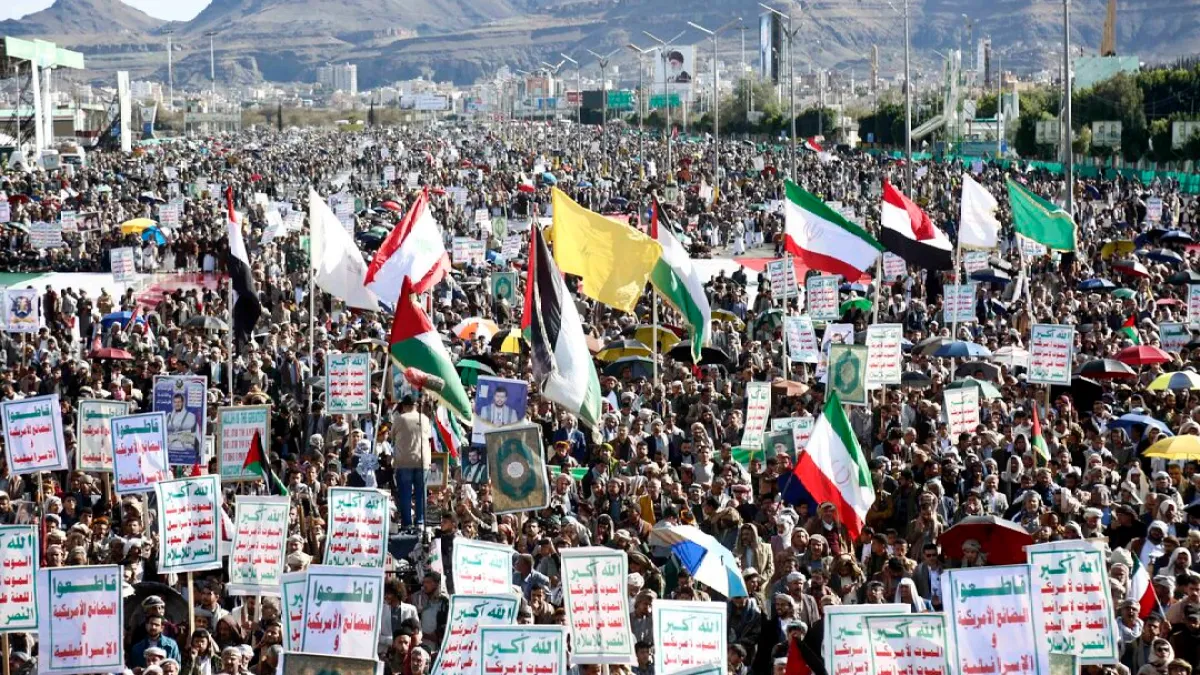
The member of the political bureau of the Houthi movement, Mohammed al-Bukhaiti, stated that the group views its intervention in the ongoing conflict against Israel and the United States as a religious and moral obligation. In statements made to Al Jazeera Mubasher, al-Bukhaiti emphasized that this decision is a "domestic decision of the group" and is not imposed by Iran, noting that Yemen has previously engaged in similar support for the Palestinian cause.
In contrast, Ali al-Sarari, an advisor to the Yemeni Prime Minister, warned that the Houthis' intervention could embroil Yemen in a conflict unrelated to its interests, putting civilians and infrastructure at risk. Al-Sarari stated in an interview with Al Jazeera Mubasher that the government is working to unify legitimate military forces to prevent the Houthis from exploiting the current situation.
Details of the Houthi Intervention
Al-Bukhaiti clarified that the more pressing question is not "why did we intervene now," but rather "why did other Arab and Islamic countries not intervene" to support their brothers in Gaza, Lebanon, and Iran. He indicated that the group's intervention came after crossing "red lines" in the first round against Israel and the U.S., with the decision to intervene made following a direct American threat against Yemen.
He also pointed out that their intervention occurred before the October 7 deadline due to the escalation of the Israeli blockade on Gaza, which prevented the entry of food supplies. He affirmed that this intervention is part of an internal vision of the group, despite its ties to the alliance with Iran.
Background & Context
Historically, the region has witnessed escalating tensions between Iran and Israel, with Iran considering the Houthi group a strategic ally in the struggle against what it describes as American and Israeli aggression. This conflict has exacerbated the humanitarian situation in Yemen, where the Yemeni people suffer from multiple crises due to the ongoing war.
The Houthis have also utilized these crises as an opportunity to bolster their position domestically, seeking to portray themselves as defenders of Arab and Islamic causes. However, their intervention in the conflict may complicate the situation further in Yemen and expose civilians to additional risks.
Impact & Consequences
The Yemeni government warns that the Houthis' intervention in the conflict could lead to a new military escalation, increasing civilian suffering. Al-Sarari noted that the Houthis' launching of missiles towards Israel would not have a significant impact on the ground but would provoke aggression and amplify risks to civilians.
He also accused the Houthis of attempting to exploit the current situation to carry out aggression against Yemeni areas, which could drag the government into an internal conflict. He stressed that the legitimate government cannot link its confrontation with the Houthis to the Iranian-Israeli confrontation, emphasizing the need to safeguard Yemen's interests and protect civilians.
Regional Significance
This development reflects the rising tensions in the region, with increasing fears of new conflicts that could affect the stability of neighboring countries. The Houthis' intervention in the conflict may strengthen their position domestically, but at the same time, it could exacerbate humanitarian crises in Yemen.
Ultimately, the situation in Yemen remains complex, with political and military dimensions intertwined with humanitarian aspects, necessitating urgent action from the international community to protect civilians and ensure regional stability.