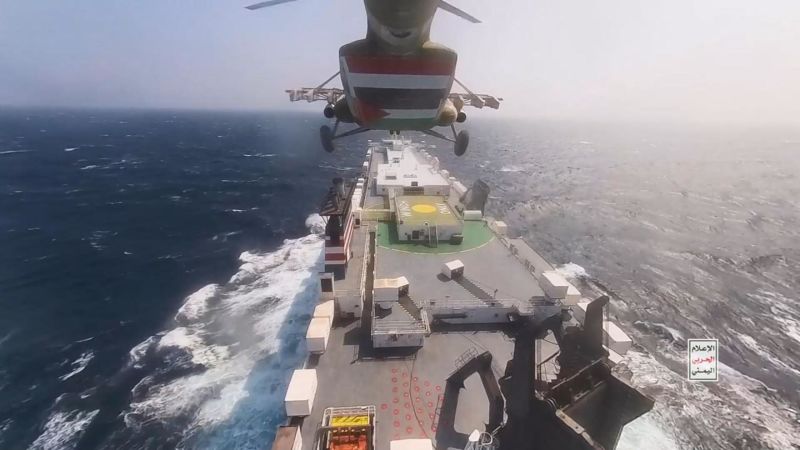
In an unprecedented move, the Iranian-aligned Houthi group from Yemen has launched missiles at Israel, placing it at the center of the conflict known as the 'Iran War.' This escalation raises questions about its implications for regional security and international navigation.
These events come at a time when the region is witnessing increasing tensions, as Iran seeks to bolster its influence in the Middle East by supporting armed militias. The Houthis have indicated that this attack is a response to what they perceive as Israeli aggression against their positions.
Details of the Incident
The Houthi group announced in an official statement that it has launched several missiles towards Israeli territory, asserting that this attack is part of its support for resistance against what it describes as Israeli aggression. This announcement has elicited varied reactions in political and military circles, with some considering it a dangerous escalation that could lead to an expansion of the conflict in the region.
In contrast, Israel has not issued any official statement regarding the attack, but it may take countermeasures to protect its territory. It is noteworthy that the Houthis have previously launched attacks on Saudi targets, but this marks the first time they have directly targeted Israel.
Background & Context
Historically, the Houthi group has been linked to Iran since the outbreak of the conflict in Yemen in 2015. The group has received military and logistical support from Tehran, making it one of the most prominent Iranian-backed militias in the region. In recent years, the region has witnessed a rise in tensions between Iran and Israel, with both countries exchanging accusations of inciting violence.
This escalation is part of the broader conflict between Iran and its allies on one side, and Israel and Gulf states on the other. The region has seen numerous reciprocal attacks, complicating the security situation further.
Impact & Consequences
The Houthis' entry into the conflict against Israel could have serious implications for regional security. Attacks on Israel may provoke military responses from Tel Aviv, potentially leading to military escalation in the region. Additionally, this escalation could affect international navigation in the Red Sea, which is considered one of the most important maritime corridors in the world.
Moreover, this development may increase tensions between Gulf states and Iran, as Gulf countries might feel threatened by the rising influence of the Iranian-backed Houthis. This situation could negatively impact peace efforts in Yemen, where involved parties are seeking a political solution to the ongoing conflict.
Regional Significance
This escalation serves as a wake-up call for countries in the region, highlighting the need to enhance security cooperation to address increasing threats. Furthermore, this development may affect relations between Arab states and Iran, with some countries potentially adopting a more hardline stance towards Tehran.
In conclusion, the Houthis' involvement in the conflict against Israel presents a new challenge to regional security and reflects the complexities of conflicts in the Middle East. The current situation requires Arab states to take proactive steps to ensure regional stability and protect their interests.