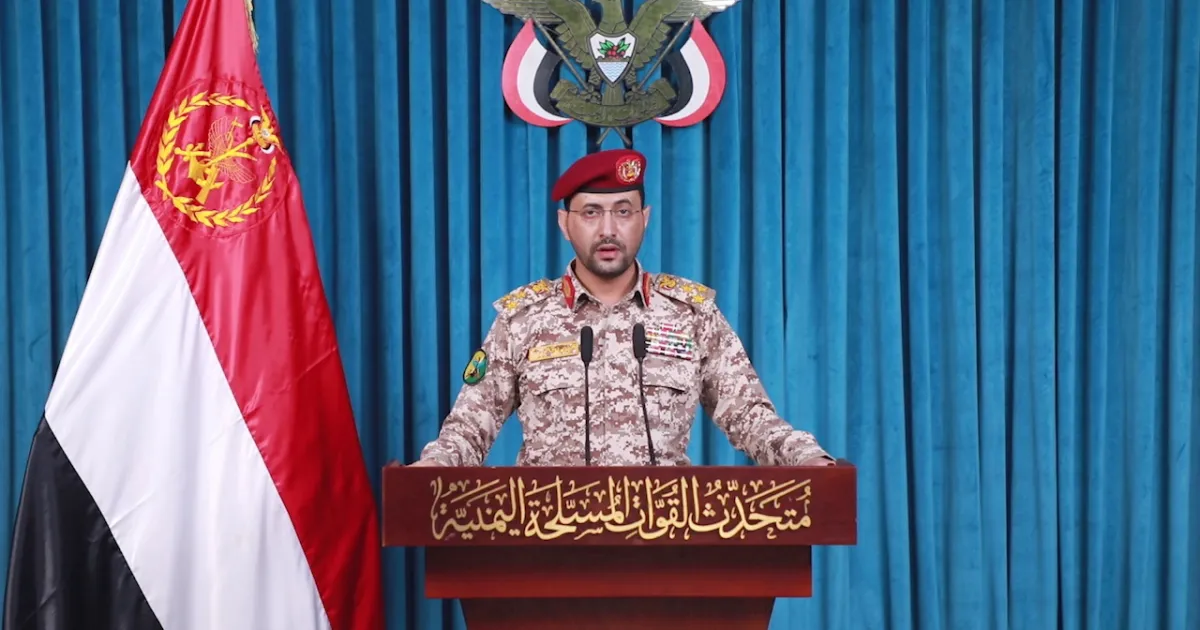
The Houthi group announced on Monday the execution of a joint military operation with the Iranian Revolutionary Guard and Hezbollah, targeting vital and military sites in Eilat on the Red Sea. The operation utilized a batch of cruise missiles and drones, and military spokesperson Yahya Saree indicated that the operation successfully achieved its goals.
In a statement broadcast on television, Saree confirmed that this operation was carried out in coordination with the Iranian armed forces and elements from Hezbollah, noting that the operation comes as part of support for the axis of jihad and resistance in Iran, Lebanon, Iraq, and Palestine. He also stated that this step is in the context of confronting what he described as the Zionist scheme aimed at reshaping the region.
Details of the Operation
Saree explained that the Houthis are monitoring what he termed the "steadfastness of the Iranian people" in the face of attacks, praising the role of the Iranian armed forces and the Revolutionary Guard, as well as the resistance forces in Lebanon and Iraq. He affirmed that these parties are thwarting the enemy's plans in the region, reflecting the close coordination between these groups.
The military spokesperson added that the Houthis will continue their military operations, stating that what he referred to as the "sacred jihad battle" will persist until victory is achieved. These statements come at a sensitive time, as tensions in the region escalate due to ongoing conflicts.
Background & Context
This operation is considered part of the ongoing escalation in the regional conflict, where the Houthis have engaged in the ongoing war in support of Iran, which has been subjected to intense American and Israeli attacks since February 28. These attacks have resulted in thousands of casualties, in addition to the assassinations of prominent political and military leaders.
The Houthi group seeks to strengthen its position in the region through these military operations, reflecting the strategic orientations adopted by Iran and its allies in facing external pressures. Moreover, these operations reflect the increasing tensions between Iran and Israel, which could lead to further escalation in the future.
Impact & Consequences
This operation could have wide-ranging effects on regional stability, as it may provoke military responses from the Israeli side, increasing tensions in the region. Additionally, this escalation could affect relations between Arab states and Iran, especially given the current circumstances in the region.
Furthermore, these operations may enhance the ties between the Houthis and their allies in the region, complicating the security landscape. The continuation of these operations could lead to greater military escalation, threatening both regional and international security.
Regional Significance
This operation serves as a clear message from the Houthis and their allies that they are prepared to confront the challenges they face. This escalation may impact the national security of neighboring Arab states and heighten fears of escalating conflicts in the region.
At the same time, these events may lead to a reassessment of strategies by some Arab states in dealing with Iran and its allies, reflecting the ongoing challenges faced by the region amid multiple conflicts.