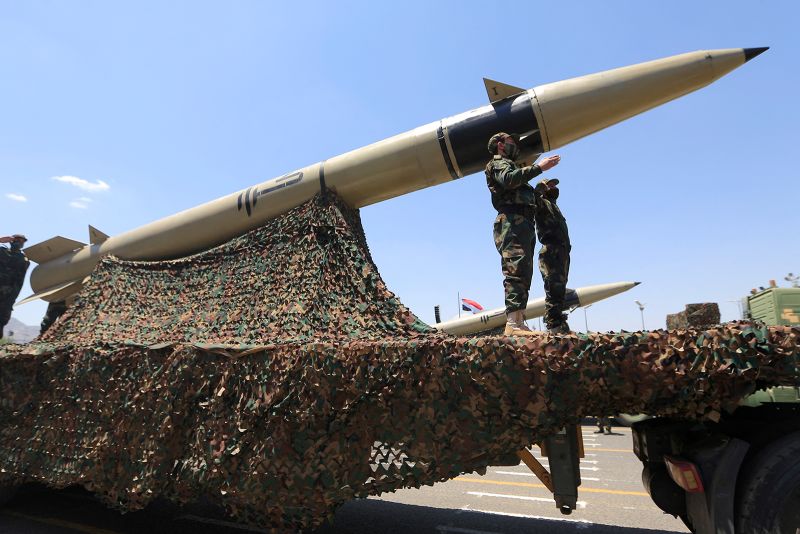
Houthi forces launched missiles towards southern Israel, marking the first attack of its kind since the ceasefire announcement between Hamas and Israel. The attack, which took place yesterday, occurs at a sensitive time as the involved parties seek to restore calm after weeks of violent conflict.
Initial reports indicate that the missiles were launched from Yemen, targeting areas close to the Israeli border. While significant damage has not been reported, the attack reflects escalating tensions in the region and raises questions about the stability of the security situation in the Middle East.
Details of the Attack
The Houthi attack on southern Israel follows a period of relative calm, during which conditions had improved after the ceasefire reached between Hamas and Israel. The Houthis, who are considered allies of Iran, may have intended to send a message that they remain capable of conducting military operations despite the tense situation in Yemen.
The Israeli army announced that it detected the missiles and successfully intercepted them before they reached their targets. They also confirmed that such attacks would not affect their defensive strategies, but noted that such actions could lead to greater escalation in the region.
Background & Context
Historically, relations between the Houthis and Israel have been marked by increasing tensions, especially after Iran demonstrated its support for the Houthis in their conflict against the Yemeni government. The Houthis, who control large parts of Yemen, consider themselves part of the resistance axis against Israel, using missiles as a means to pressure their adversaries.
In recent years, the region has witnessed a rise in military actions, with Hamas having previously launched missiles at Israel, leading to military responses from the Israeli side. The Houthi attacks may also reflect a desire to expand the conflict to include other countries in the region.
Impact & Consequences
The Houthi attack could lead to heightened tensions in the region and complicate peace efforts. This attack may also impact relations between Iran and its allies on one side, and Israel and Western countries on the other. Analysis suggests that such actions could provoke military responses from Israel, increasing the likelihood of a larger conflict.
Moreover, the escalation in Yemen could affect the humanitarian situation there, as the Yemeni people suffer from a dire humanitarian crisis. Any military escalation could exacerbate humanitarian conditions, necessitating international intervention.
Regional Significance
This attack highlights the increasing tensions in the Arab region, where regional and international interests intersect. Neighboring Arab countries, such as Saudi Arabia and the United Arab Emirates, are closely monitoring the situation, as any escalation could affect their security and stability.
Ultimately, there must be international efforts to find peaceful solutions to the conflicts in the region, as the continuation of violence will only lead to further suffering. The stability of the region depends on dialogue and understanding among all involved parties.