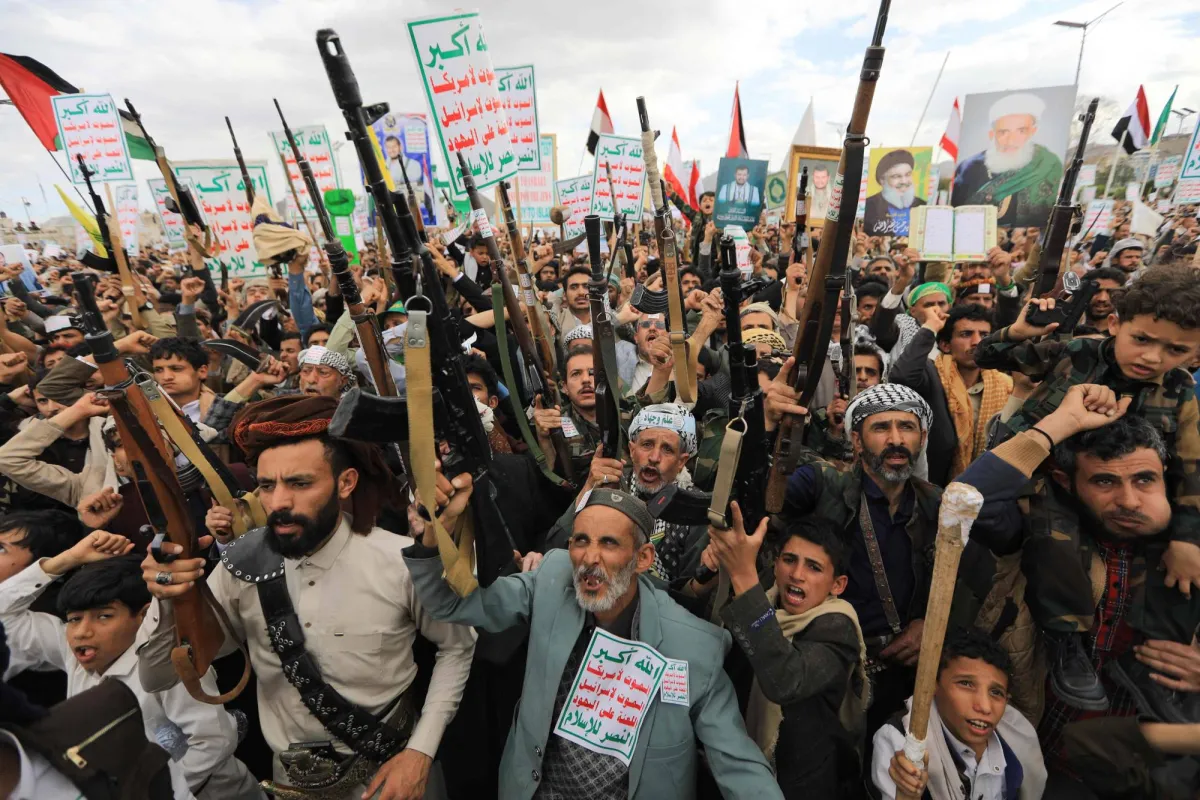
The areas in Yemen controlled by the Houthi group are witnessing a notable increase in spending on ideological events, particularly those related to the anniversary of "Khomeini's Scream." This comes at a time when the humanitarian crisis is worsening unprecedentedly, with millions of Yemenis suffering from hunger, unpaid salaries, and declining essential services.
Amid a sharp economic contraction, the Houthis continue to allocate significant financial resources to fund mobilization activities, including media campaigns, printing slogans, and organizing mass events. This raises questions about spending priorities in regions suffering from one of the worst humanitarian crises in the world.
Event Details
According to informed sources, the Houthi group has allocated nearly one million dollars to finance events commemorating "Khomeini's Scream," as part of its efforts to entrench its ideological discourse and enhance its presence among the youth. The intensive activities have included schools, institutes, and universities, as well as mass festivals and mobilization lectures in several cities under its control.
Over the past few days, Houthi-controlled areas have witnessed more than 150 events related to this occasion, sparking a wave of discontent among residents who believe that priority should be given to addressing pressing living issues, such as the disbursement of stalled salaries and improving electricity and water services.
Background & Context
Residents' testimonies reflect the significant gap between what is spent on mobilization activities and the basic needs of citizens. There are government employees who have not received their salaries for years, while many families rely on debts or sporadic assistance that barely suffices to make ends meet.
The repercussions of the crisis extend beyond daily life, affecting education, health, and job opportunities, forcing many children to drop out of school. Teachers and public sector workers face suffocating living conditions due to salary stoppages and the absence of any tangible economic solutions.
Impact & Consequences
Yemeni observers believe that directing resources toward Houthi events reflects the group's priorities, where ideological and political considerations take precedence over more pressing service and living issues. This pattern of spending, amid limited resources, contributes to deepening existing imbalances and increases pressure on a society suffering from unprecedented levels of poverty.
The United Nations Food and Agriculture Organization warns of the deteriorating food situation in Yemen, indicating that the country faces a real risk of slipping into famine. According to the latest estimates, approximately 18.3 million people are suffering from acute levels of food insecurity.
Regional Significance
This crisis is part of a broader landscape in the region, reflecting the humanitarian and political challenges faced by many Arab countries. There is an urgent need for international support for Yemen, not only through humanitarian aid but also by supporting efforts to rebuild institutions and enhance stability.
In conclusion, the ideological priorities of the Houthis in the face of escalating humanitarian crises signify the challenges facing Yemen. The current situation requires an urgent response from the international community to ensure the provision of basic needs for the population and achieve stability in the country.