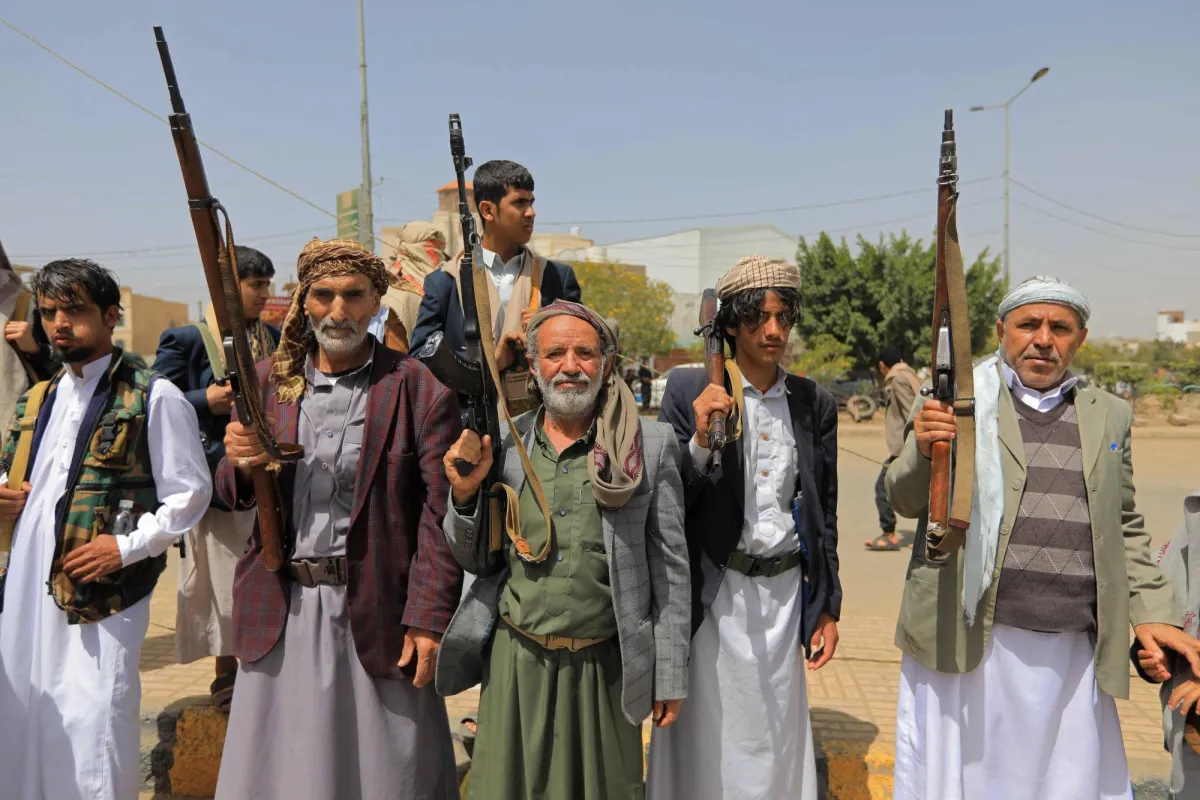
The Houthi group has threatened what it describes as a "gradual escalation" after adopting its fourth attack against Israel, in the context of its growing involvement in the war alongside Iran. This threat follows a week after the Houthis announced their direct engagement in the regional conflict, reflecting increased coordination among Iran-backed factions.
Amid the rising rhetoric from legitimate Yemeni forces, which assert that the decisive battle to reclaim the state from Houthi control is approaching, Israel has announced that it is consulting with Washington regarding its response to the Houthi attacks, despite the limited impact of these attacks compared to the firepower it faces from Iran and Hezbollah.
Details of the Incident
In a televised statement, Houthi military spokesperson Yahya Saree announced that the group's forces executed "a military operation involving a volley of ballistic missiles targeting vital enemy objectives in the occupied Yafa area." Saree confirmed that the operation was conducted "in coordination with our brothers, the fighters in Iran and Hezbollah in Lebanon," claiming that it "successfully achieved its objectives by the grace of God." The group also stated that its military intervention in this battle is a "gradual intervention," indicating that it "will not stop at this level of intervention and will respond to future developments based on the enemy's escalation or de-escalation."
The latest attack is the fourth since the Houthis declared their direct involvement in the regional confrontation, reflecting increased coordination among the Iran-backed axis, which includes not only the Houthis but also Lebanese Hezbollah and armed Iraqi factions. Last Wednesday, the Houthi group claimed responsibility for a third attack towards Israel, while the Israeli army announced that its air defense systems intercepted a missile launched from Yemen "without any injuries or damages reported."
Context and Background
This escalation comes at a time when the region is witnessing increasing tensions, as Iran continues to support the Houthis in Yemen, reflecting Tehran's strategy to enhance its influence in the area. Observers have noted that the maximum these attacks can achieve is merely to distract Israeli air defense systems, which are already under pressure due to the multiple sources of threats from Iran and Hezbollah.
In his first appearance after the announcement of engagement, the group's leader Abdul-Malik al-Houthi delivered an extensive sermon, announcing a shift from political and media support for Iran to "direct operational engagement." Al-Houthi confirmed that his group's attacks are part of the "joint operations of the resistance axis," indicating that the current confrontation is a "duty that transcends geographical borders."
Impact and Consequences
Concerns are growing regarding the implications of this escalation on the fragile economic and security situation in Yemen, as Al-Houthi urged his followers to intensify weekly demonstrations in support of Iran and engage in the war alongside it. He also encouraged them to increase mobilization and gather school students for summer camps, reflecting the group's exploitation of current conditions to strengthen its power.
On the other hand, the statements of Yemeni Presidential Leadership Council member Tariq Saleh confirmed that the "battle for liberation from the Houthi coup is near," indicating that national forces will engage in it with a unified spirit. Saleh emphasized that the blatant Iranian assaults on Gulf states and Jordan have clearly revealed that Tehran's project is nothing but a tool for destruction targeting the Arab nation.
Regional Significance
This escalation poses a threat to regional security, as concerns grow about the potential for the conflict to escalate to new levels. The Houthi movements reflect Iran's strategy to enhance its influence by supporting armed groups in the region, complicating the security landscape in the Middle East.
In conclusion, the situation in Yemen remains complex, with increasing challenges facing the legitimate government amid rising Houthi activities supported by Iran. The continuation of this escalation could exacerbate the humanitarian and economic conditions in the country, necessitating an urgent response from the international community.