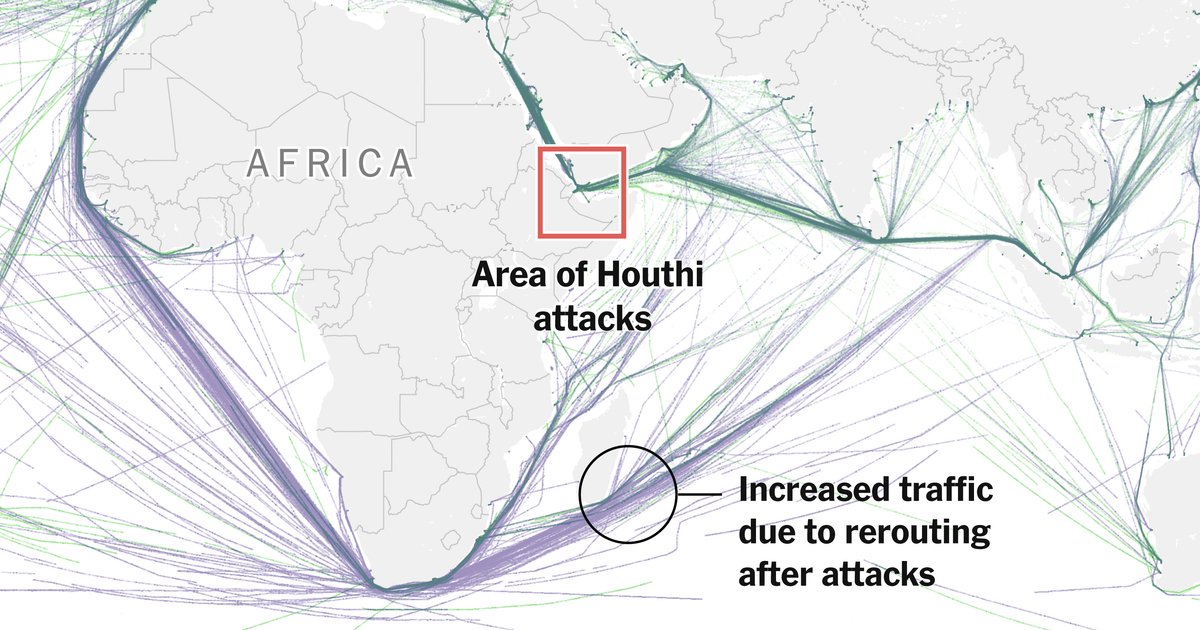
In a new escalation threatening maritime security, the Houthis, backed by Iran, announced the resumption of their attacks on shipping in the Red Sea, which could lead to the closure of one of the world's most important trade routes. This comes after a period of relative calm in Yemen, where the movement has maintained its authority in the capital, Sana'a, and other parts of the country.
In this context, the Houthis launched missiles towards Israel, claiming they were targeting "sensitive military sites." Although the threat posed by the Houthis to Israel is much less than that of Iran, their escalation in the Red Sea represents a greater danger to global trade movement.
Details of the Incident
These developments follow an escalation in the conflict between Hamas and Israel, where the Houthis fired several missiles in support of Hamas after the latter's attacks on Israel on October 7, 2023. However, previous attacks did not cause significant damage to Israel, but the focus now is on the Houthi threat to maritime navigation in the Bab el-Mandeb, the vital passage linking the Red Sea to the Gulf of Aden.
If the Houthis resume their attacks on shipping, it would deal a severe blow to the global economy, especially given the current conditions where global markets are suffering from rising prices and inflation. Closing this vital passage would lead to increased shipping costs and disrupt global supply chains.
Background & Context
Historically, the region has witnessed increasing tensions due to the ongoing conflict in Yemen, where the Houthi group has controlled the capital Sana'a since 2014. This conflict has led to military intervention by the Arab coalition led by Saudi Arabia, complicating the regional situation. In recent years, the Houthis have attempted to expand their military operations, including targeting infrastructure in neighboring Gulf countries such as Saudi Arabia and the UAE.
Despite the military pressures faced by the Houthis from the United States and Israel, they have managed to withstand and continue their operations. This resilience may encourage them to escalate their military activities in the region, potentially exacerbating the situation in Yemen and reigniting the internal conflict.
Impact & Consequences
If the Houthis continue to escalate their attacks, it could lead to a greater escalation in the regional conflict, threatening the stability of the entire region. Major powers such as the United States and Israel are likely to intervene more significantly to stop these attacks, which could lead to greater military escalation in the area.
These developments are significant not only from a military standpoint but also from an economic perspective, as any disruption in shipping movement in the Red Sea will directly affect oil prices and essential goods, increasing pressures on an already challenged global economy.
Regional Significance
For Arab countries, the Houthi escalation poses a direct threat to security and stability in the region. Gulf states, particularly Saudi Arabia and the UAE, may face new challenges in securing their borders and economic interests. Additionally, any military escalation could lead to a flow of refugees from Yemen to neighboring countries, increasing the economic and social burdens on these nations.
In conclusion, the Houthi threat to Red Sea shipping represents a serious development that requires attention from the international community. The continuity of this threat could lead to greater escalation in the regional conflict, jeopardizing security and stability in the Middle East.