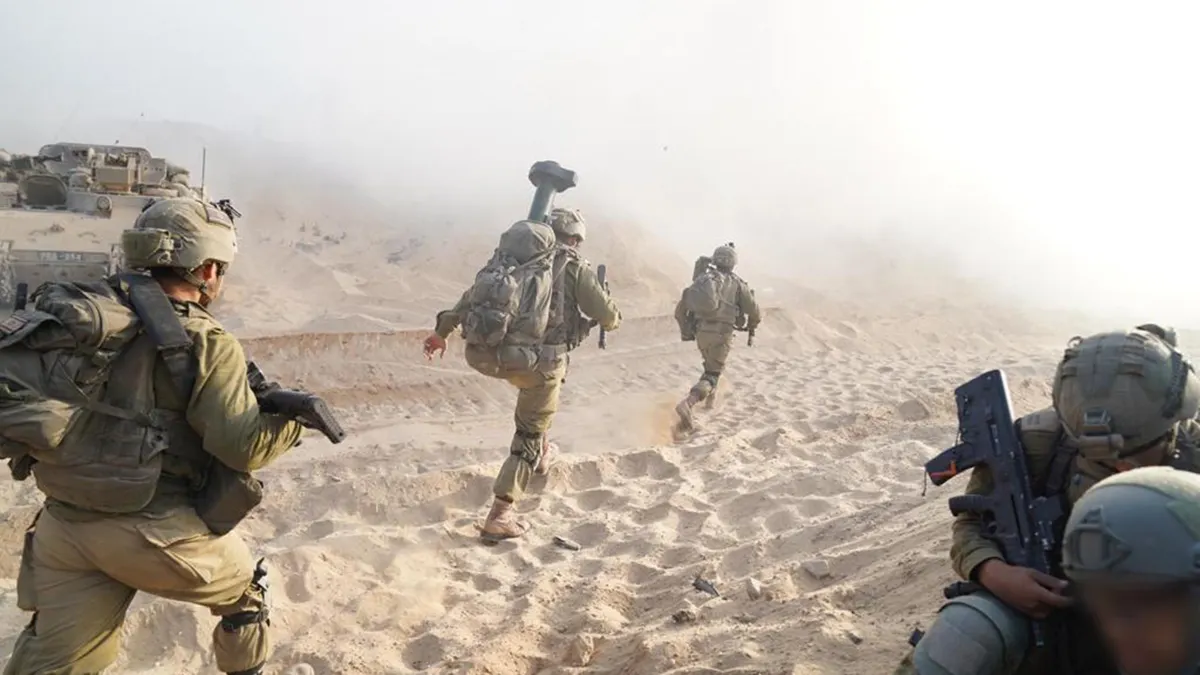
Israel has historically relied on war as a mechanism for expansion, using conflicts to increase its economic surplus. Following the June War, it gained control over new territories rich in strategic resources from Arab nations, which contributed to enhancing its military and economic capabilities.
Historically, the Zionist state has depended on war as a means of expansion, exploiting armed conflicts to achieve economic and strategic gains. In the June War of 1967, Israel managed to seize vast areas of land, including the Sinai Peninsula from Egypt and the Golan Heights from Syria, in addition to the West Bank and Gaza Strip. This control not only bolstered its military strength but also provided it with rich resources such as oil and water.
Details of the June War
During the June War, Israel was able to control territories that were more than three times its size before the war, adding significant strategic resources. The control of the Sinai granted it access to oil fields, while the Golan Heights provided a forward military position. Additionally, controlling water resources in the West Bank and the Jordan Valley contributed to enhancing Israel's water security.
Israel continues to utilize these resources to fund its military expenditures, raising questions about how this affects neighboring Arab countries. As tensions in the region escalate, Arab states find themselves in a difficult position, needing to confront the security and economic challenges imposed by Israeli policies.
Background & Context
The history of the Arab-Israeli conflict is filled with events that have shaped the region's landscape. Since the establishment of Israel in 1948, the region has witnessed a series of wars and conflicts that have led to radical changes in the geopolitical landscape. In this context, the June War of 1967 is considered a pivotal turning point, as it altered the balance of power in the region.
It is noteworthy that Arab states have repeatedly attempted to confront the challenges arising from Israeli policies, but they have faced significant difficulties in achieving their objectives. Arab cooperation in countering Israeli aggression has often been limited, allowing Israel to strengthen its power and influence.
Impact & Consequences
Israeli aggressive wars significantly affect regional stability, exacerbating humanitarian and economic crises in Arab countries. As Israeli military expenditures increase, pressures on Arab states to provide the necessary support to address these challenges also rise.
Moreover, the ongoing conflict creates an environment of instability, impacting economic and social development in the region. Many Arab countries are suffering from severe economic crises, rendering them unable to effectively confront security challenges.
Regional Significance
Israeli aggressive wars pose a direct threat to the national security of Arab states. As tensions escalate, Arab nations find themselves in urgent need of enhancing their defensive and economic capabilities. Under these circumstances, Arab cooperation becomes an urgent necessity to address common challenges.
In conclusion, Israeli aggressive wars remain a central issue in the Arab-Israeli conflict, affecting regional stability and increasing humanitarian crises. The current situation requires unified Arab action to confront these challenges and achieve security and peace in the region.