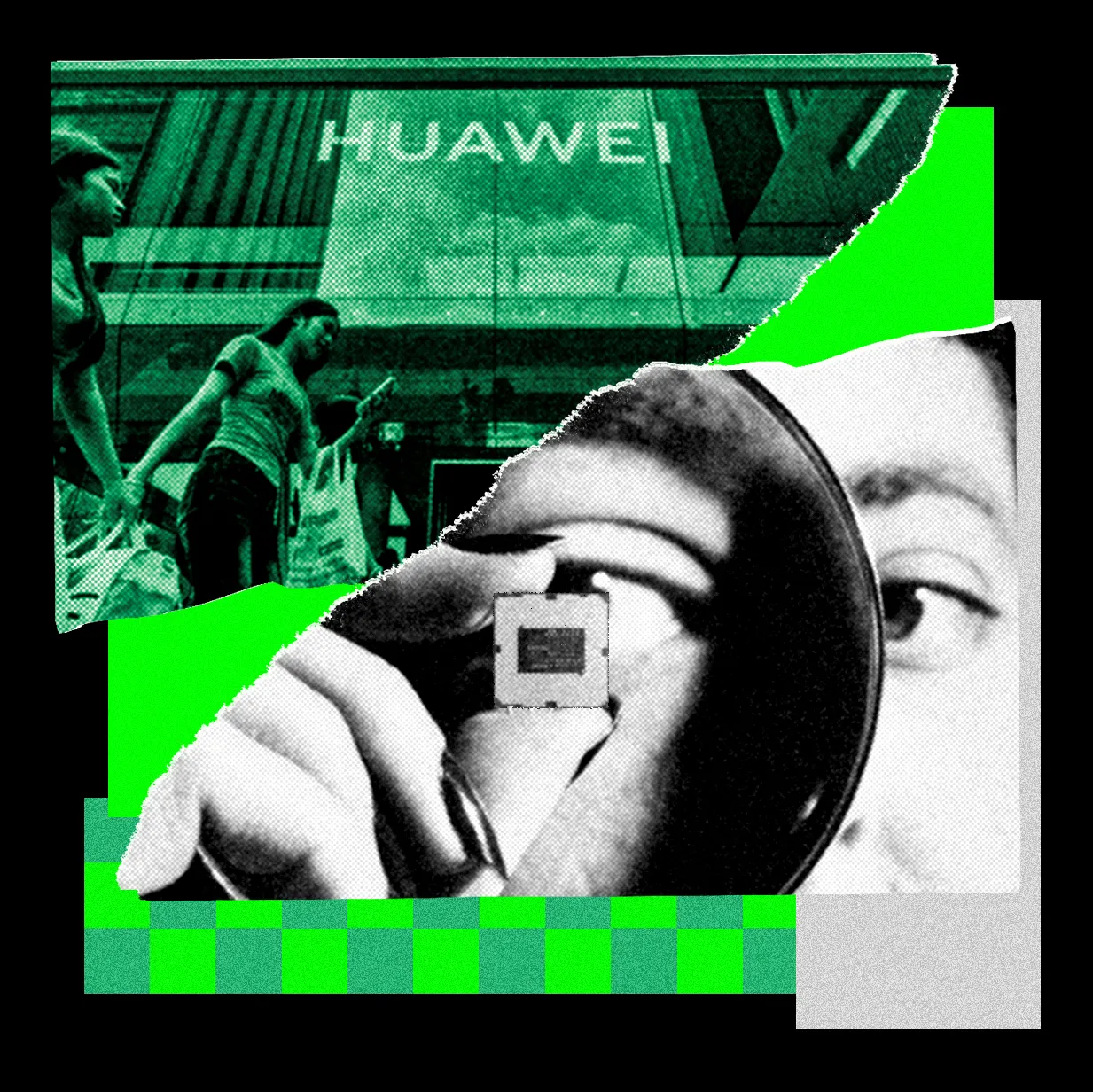
In a move that could reshape the landscape of the electronic chip industry, Chinese company Huawei has announced the development of a new approach to improve chip performance, which may help narrow the gap between Chinese chips and their Western counterparts in the coming years. Tingbo He, head of the chip design department at Huawei, stated that the company's engineers have discovered an innovative method focused on accelerating computational processes across chips, circuits, and entire computing systems.
This announcement was made during the IEEE International Symposium on Circuits and Systems held in Shanghai, where He confirmed that the company will demonstrate the effectiveness of this new approach, known as To Law, in the coming months. She indicated that Huawei plans to unveil a surprise before the winter of 2026, stating, "It's not just a continuation, but a significant leap forward."
Details of the Announcement
Huawei's new method goes beyond Moore's Law, which states that the number of transistors on a chip should double every two years. The chip industry faces significant challenges due to limitations on miniaturizing components, making it difficult to achieve further advancements. He emphasized that the company has found new ways to enhance chip performance through technologies such as LogicFolding, which reduces the time required to execute basic logical operations within the circuit.
Huawei is also striving to improve chip performance by considering electronic phenomena at the nanoscale, designing chips to work well together, and developing interconnects that facilitate communication between chips, which is vital for training large artificial intelligence models.
Background & Context
Historically, the chip industry has heavily relied on Taiwan, with TSMC being a leading company in this field. However, the restrictions imposed on Huawei by the United States, which prevent it from collaborating with TSMC, have forced the company to depend on the Chinese company SMIC, which utilizes older manufacturing technologies.
Estimates suggest that China is lagging more than five years behind the latest chip manufacturing technologies, raising questions about Huawei's ability to overcome these restrictions. Nevertheless, the recent announcement reflects the company's belief in its capacity to navigate these challenges.
Impact & Consequences
If Huawei succeeds in implementing this new approach, it could significantly reduce the technological gap between it and Western companies, potentially threatening American dominance in this sector. Some analysts have pointed out that the sanctions imposed on China may serve as a catalyst for innovation, enabling the country to build a more advanced chip industry.
However, doubts remain about the feasibility of this strategy, as some experts believe that Huawei may face limitations in how it can enhance performance solely through chip miniaturization, prompting it to rely on new technologies such as hybrid bonding and three-dimensional chip stacking.
Regional Significance
As reliance on technology and artificial intelligence increases in the Arab world, developments like these may influence investment strategies in technology across the region. Arab countries may seek to strengthen partnerships with Chinese companies to enhance their technological capabilities, especially given the growing competition in this field.
In conclusion, these developments in the electronic chip industry represent a significant opportunity to shift the balance of power in the global market, and they may have far-reaching effects on the global economy.