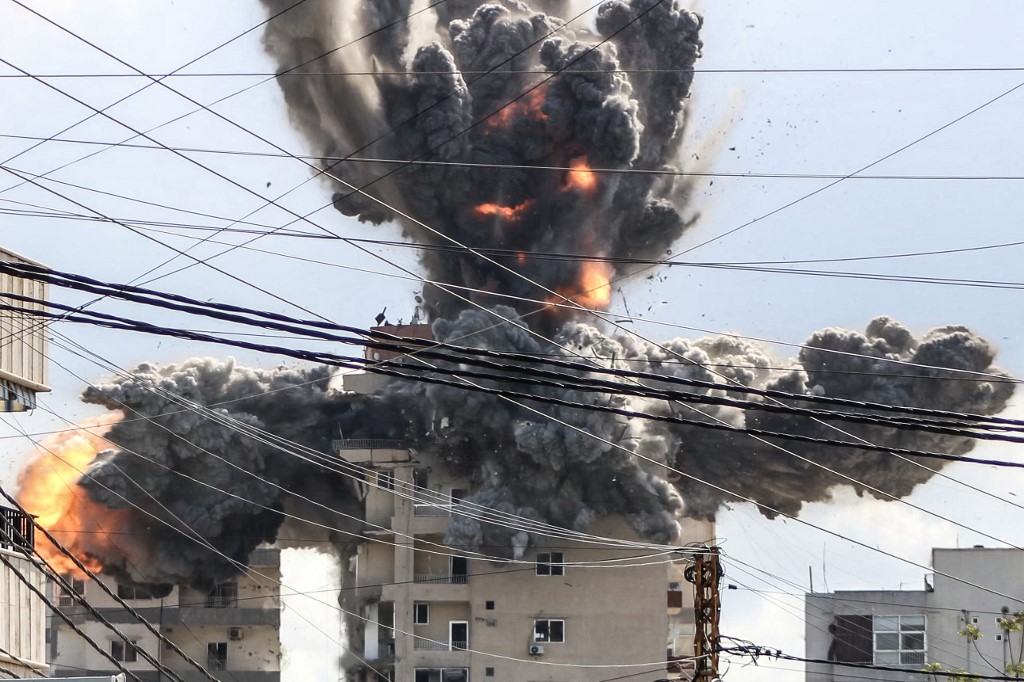
The Lebanese Ministry of Health announced that recent Israeli airstrikes on Beirut have resulted in the death and injury of hundreds of individuals. Health Minister Rakan Nasruddin stated in an interview with Al Jazeera that hospitals in the capital are under severe pressure due to the increasing number of casualties.
Nasruddin added that the situation in hospitals is extremely concerning, as they are overcrowded with injured individuals due to air raids targeting various areas of Beirut. He noted that ambulance teams are working tirelessly to transport the injured to hospitals, amidst a growing need for urgent medical care.
Details of the Incident
Earlier, Lebanese Prime Minister Nawaf Salam condemned the Israeli strikes, describing them as targeting innocent civilians. He affirmed that the Lebanese government will do its utmost to address the repercussions of these attacks, which have caused panic and chaos in the capital.
The Lebanese Red Cross reported via its X platform that 100 ambulances have been deployed to the targeted sites to transport the wounded to hospitals. Images circulated on social media depict harrowing scenes of the injured and the horrific aftermath of the airstrikes.
Background & Context
These attacks come amid escalating tensions between Lebanon and Israel, with the region experiencing heightened conflicts in recent months. Historically, Lebanon has been a battleground for multiple conflicts with Israel, resulting in significant human and material losses. The ongoing political and economic crises in Lebanon have exacerbated the humanitarian situation, making these attacks even more impactful on civilians.
It is worth noting that Lebanon is suffering from a crippling economic crisis, which complicates the provision of necessary healthcare for the injured. Many experts have warned that the continuation of these attacks could worsen the humanitarian conditions in the country.
Impact & Consequences
These attacks carry serious implications for the security and humanitarian situation in Lebanon. With the rising number of casualties, international reactions are expected to escalate, and some countries may intervene to pressure Israel to cease these attacks. Additionally, the situation could lead to greater military escalation in the region, threatening the stability of Lebanon and its neighboring countries.
Furthermore, these events may affect relations between Lebanon and other Arab countries, as pressures on Arab governments may increase to intervene or take clear stances regarding the situation in Lebanon.
Regional Significance
The ongoing events in Lebanon are part of a broader context of conflicts and tensions in the Arab region. With the increase in Israeli attacks, there is a pressing need for a unified Arab stance to address these violations. The situation in Lebanon could also impact the stability of neighboring countries, such as Syria and Palestine, necessitating urgent action from the international community to protect civilians.
In conclusion, the situation in Lebanon remains alarming, requiring an urgent response from the Lebanese government and the international community to protect civilians and ensure the provision of necessary healthcare for the injured.