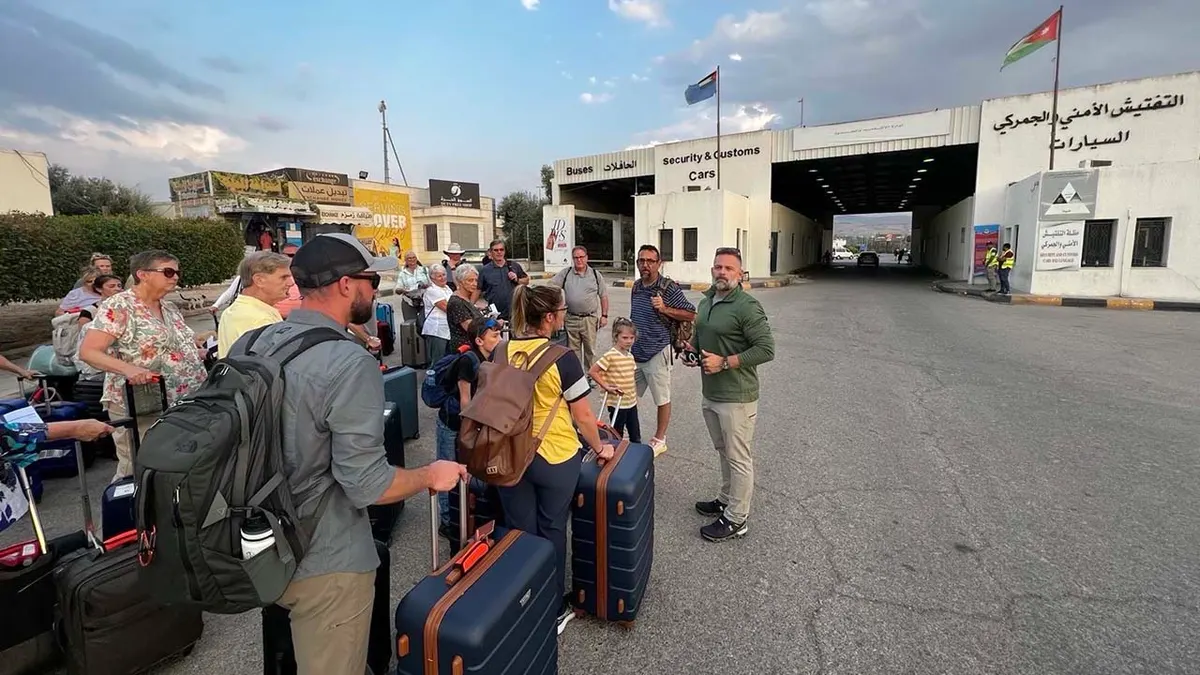
Hundreds of Israelis are stranded at King Hussein International Airport in Aqaba, southern Jordan, on Sunday, following the Jordanian government's decision to suspend certain flights for the Israeli airline Arkia. This decision has caused confusion among travelers who intended to return to their home country, leading to a gathering at the airport as they await clarifications regarding their status.
These events occur at a sensitive time, as Israel has closed Ben Gurion Airport in Tel Aviv due to missile and drone attacks from Tehran, which are considered a response to American and Israeli strikes targeting Iran since February 28. This military escalation reflects the increasing tensions in the region, complicating the situation for travelers.
Details of the Incident
In detail, Hebrew media reports indicate that the Jordanian government has decided to halt flights for the Israeli airline Arkia, resulting in the detention of hundreds of Israelis at Aqaba Airport. Travelers have reported difficulties in obtaining accurate information regarding alternative flight schedules, which has heightened their anxiety.
It is noteworthy that King Hussein International Airport is a major transit point for Israeli travelers, especially those heading to destinations in other countries. However, Jordan's decision to suspend flights highlights the political and economic tensions between the two nations.
Background & Context
Historically, Jordanian-Israeli relations have experienced numerous fluctuations, influenced by political and security developments in the region. Since the signing of the peace treaty between Jordan and Israel in 1994, there have been ongoing attempts to enhance cooperation between the two countries, yet recent events may prompt a reevaluation of these relations.
Recently, tensions have escalated between Iran and Israel, with the latter accusing Tehran of supporting armed groups in the region. These developments directly impact regional security, underscoring the need for diplomatic dialogue to resolve conflicts.
Impact & Consequences
The repercussions of this incident could be far-reaching, potentially affecting tourism and trade between Jordan and Israel. Continued tensions may lead to further actions by governments, complicating movement between the two countries.
Additionally, this situation could impact diplomatic relations between Jordan and Israel, as some bilateral agreements may be reconsidered. It is crucial to handle these issues cautiously to avoid exacerbating the situation.
Regional Significance
This event is part of a larger picture concerning security and stability in the Arab region. The tensions between Iran and Israel, along with the situation in the Palestinian territories, pose significant challenges for Arab countries. Any escalation in these crises could lead to negative repercussions on regional security.
In conclusion, this event highlights the importance of dialogue and cooperation among countries in the region, as current tensions could lead to undesirable outcomes if not addressed appropriately.