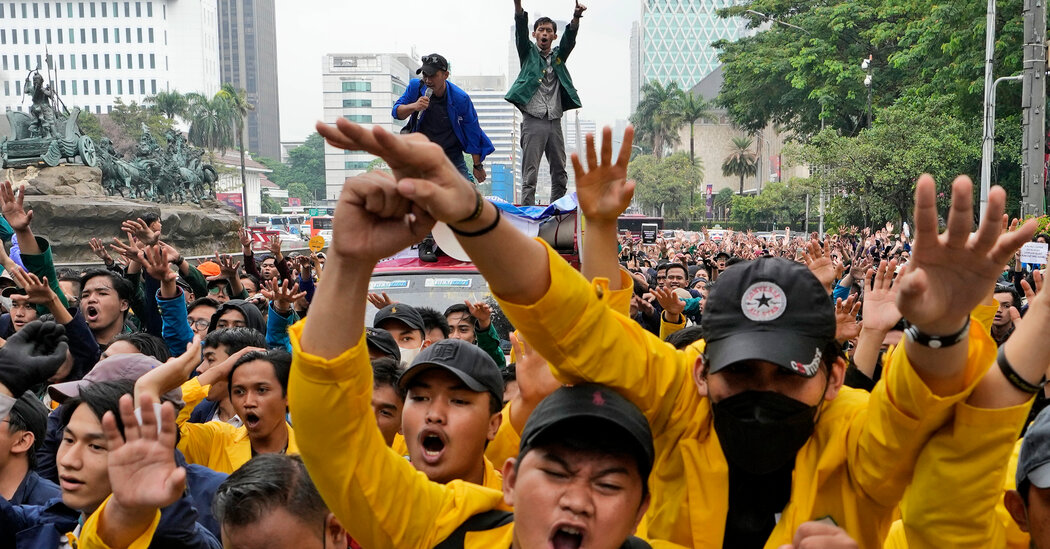
Hundreds of students from various universities gathered in the Indonesian capital, Jakarta, where they organized a protest in front of the Constitutional Court to express their political and social demands. The demonstration, which began early this morning, saw widespread participation from students who raised slogans calling for an end to violence and opposition to fascism.
The protesters displayed banners with slogans such as "Stop Terrorism, Resist Militarism" and "No to Fascism," reflecting their concerns about the increasing political tensions in the country. The demonstration continued in a peaceful atmosphere, with security forces present to ensure the safety of the participants.
Details of the Event
Students flocked to the protest site in the Abdul Muis area of central Jakarta, where they chanted slogans expressing their demands. The Jakarta police chief, Kompas Pol Reynolds E. B. Hutagalung, confirmed that the number of police officers assigned to secure the protest reached 1,031 personnel, to ensure that proceedings were orderly.
The police chief stated that their presence aimed to "serve citizens expressing their opinions in a humane and professional manner," emphasizing the importance of respecting citizens' rights to express their views.
Background & Context
This protest comes at a time when Indonesia is experiencing increasing political tensions, as the political system faces multiple challenges related to human rights and civil liberties. Historically, Indonesia has been a stage for several protest movements, particularly by students, who have played a pivotal role in shaping national policies.
In recent years, concerns have grown regarding the decline of democratic freedoms, prompting many young people to take to the streets to voice their opinions. These protests also reflect the influence of global events on Indonesian youth, who are affected by political and social changes worldwide.
Impact & Consequences
These protests highlight the importance of the youth voice in Indonesia, as students seek to influence public policies. It is expected that these demonstrations will lead to further discussions about human rights and civil liberties in the country, potentially contributing to changes in government policies.
Moreover, these protests may provoke reactions from the government, which might seek to take steps to enhance dialogue with youth and address their demands. If the protests continue, they could lead to changes in the Indonesian political landscape.
Regional Significance
These demonstrations serve as an example of how youth can impact politics worldwide, including in Arab countries. The Arab world is also witnessing similar protest movements, where young people strive to express their opinions and demand change.
The connection between events in Indonesia and those occurring in the Arab world reflects the need to strengthen dialogue among youth in different countries, which could lead to the exchange of ideas and experiences in the fields of human rights and democracy.
In conclusion, the protests witnessed in Indonesia reflect the power of youth to influence public policies, highlighting the importance of listening to their voices around the world.