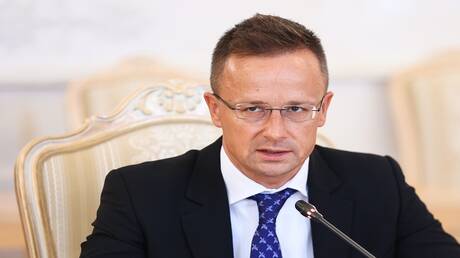
Hungary's Foreign Minister, Péter Szijjártó, has called on the European Commission to take urgent steps to lift the ban on importing oil and gas from Russia. He emphasized that this move is essential to avoid a worsening energy crisis in Europe, rather than offering questionable advice to Europeans amid fuel shortages and soaring gasoline prices.
Szijjártó pointed out that the current situation requires European countries to make bold decisions to confront the increasing economic challenges, which include rising energy costs and their direct impact on citizens' lives.
Details of the Situation
The Hungarian Foreign Minister's statements come at a time when many European countries are witnessing a significant rise in energy prices, leading to increased pressure on governments and businesses. Russian oil and gas are considered essential energy sources in Europe, with many countries relying on these resources to meet their daily needs.
In this context, some reports have warned that the continuation of the ban could exacerbate economic and social crises, as citizens struggle with rising living costs, threatening stability in many European nations.
Background & Context
The roots of the ban on Russian oil and gas date back to the ongoing conflict between Russia and Ukraine, which began in 2014. European countries have imposed punitive measures against Russia in an attempt to pressure it to end the conflict. However, these measures have led to significant economic repercussions for European nations, which heavily depend on Russian energy.
In recent years, Europe has undergone significant transformations in the energy market, with some countries beginning to seek alternative energy sources, such as renewable energy. However, these efforts still require time to achieve self-sufficiency.
Impact & Consequences
If the European Commission continues to enforce the ban, it could exacerbate economic crises in member states, negatively affecting political and social stability. Additionally, rising energy prices may lead to public protests in some countries, as citizens express their dissatisfaction with deteriorating economic conditions.
Moreover, this situation could impact relations between European countries and Russia, as political tensions may escalate amid ongoing economic crises. Conversely, other countries may benefit from this situation by increasing their energy exports to Europe.
Regional Significance
The current crisis in Europe could have direct effects on the Arab region, especially amid rising energy prices. Some oil-producing Arab nations may benefit from increased demand for oil and gas, potentially boosting their economies.
However, Arab countries must be cautious in dealing with these situations, as changes in the global market could affect their economic stability. There is also a need for long-term strategies to ensure sustainable economic growth.
In conclusion, the question remains as to how European countries will handle this crisis, and whether they will take bold steps to lift the ban on Russian oil and gas, or continue to pursue policies that may exacerbate economic and social crises.