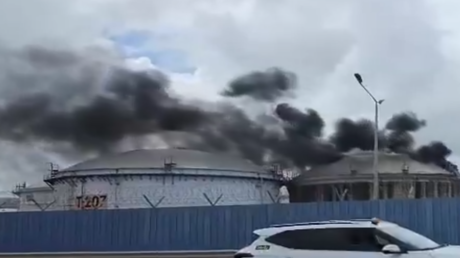
The refinery complex in Haifa, Israel, has suffered its second hit since the onset of the war, with flames erupting from a gasoline tank within the facility, causing direct injuries to several nearby residential buildings. This incident comes at a time of escalating tensions in the region, as mutual attacks between Israel and its adversaries continue.
The recent incident reflects the intensifying nature of the conflict, with videos circulated on social media showing flames rising from the complex, raising concerns among local residents. These events raise questions about safety in vital areas, especially with the increasing attacks targeting critical infrastructure.
Details of the Incident
Late last night, a fire broke out in a gasoline tank within the refinery complex in Haifa, leading to panic among residents. Several civilian injuries were reported, as emergency teams rushed to the site to extinguish the flames and provide assistance to the injured. This incident marks the second of its kind, as the complex was subjected to a similar attack just days earlier, highlighting the targeting of vital facilities in Israel.
These attacks occur within the ongoing conflict between Israel and its adversaries, reflecting a broader strategy aimed at undermining critical infrastructure. The situation has prompted discussions among security officials regarding the protection of such facilities, which are essential for the country's energy supply and overall stability.
Background & Context
The refinery complex in Haifa is one of the largest in Israel, playing a crucial role in the country's energy sector. Its strategic importance makes it a potential target during conflicts. The recent escalation in violence has seen a rise in attacks on infrastructure, which not only disrupts daily life but also poses significant risks to public safety.
In recent weeks, the region has witnessed a surge in hostilities, with both sides engaging in retaliatory strikes. The situation has drawn international attention, with calls for de-escalation and dialogue. However, the cycle of violence continues, raising fears of further attacks on critical infrastructure.
Impact & Consequences
The impact of the fire at the Haifa refinery is multifaceted. Firstly, the immediate injuries to civilians highlight the human cost of the ongoing conflict. Emergency services are stretched thin, responding to multiple incidents as tensions rise. Furthermore, the damage to the refinery could lead to disruptions in fuel supply, affecting transportation and essential services across the region.
In the longer term, the targeting of such facilities may lead to increased military responses from Israel, as the government seeks to protect its critical infrastructure. This could further escalate the conflict, resulting in a cycle of violence that is difficult to break. The local economy may also suffer as businesses face uncertainty and potential disruptions in supply chains.
Regional Significance
The events in Haifa are emblematic of the broader regional dynamics at play. The conflict has implications not only for Israel but also for neighboring countries, as instability can lead to spillover effects. The targeting of infrastructure raises concerns about the potential for wider conflict, as nations may feel compelled to intervene or support one side over the other.
Moreover, international stakeholders are closely monitoring the situation, as energy security is a critical concern for many nations. The refinery's operations are vital not just for Israel but for the stability of energy supplies in the region. Any significant disruption could have far-reaching consequences, prompting diplomatic efforts to address the underlying issues fueling the conflict.
In conclusion, the recent attack on the Haifa refinery complex underscores the precarious nature of the current situation in the region. As tensions continue to rise, the safety of civilians and the integrity of critical infrastructure remain at risk, necessitating urgent attention from both local and international actors.