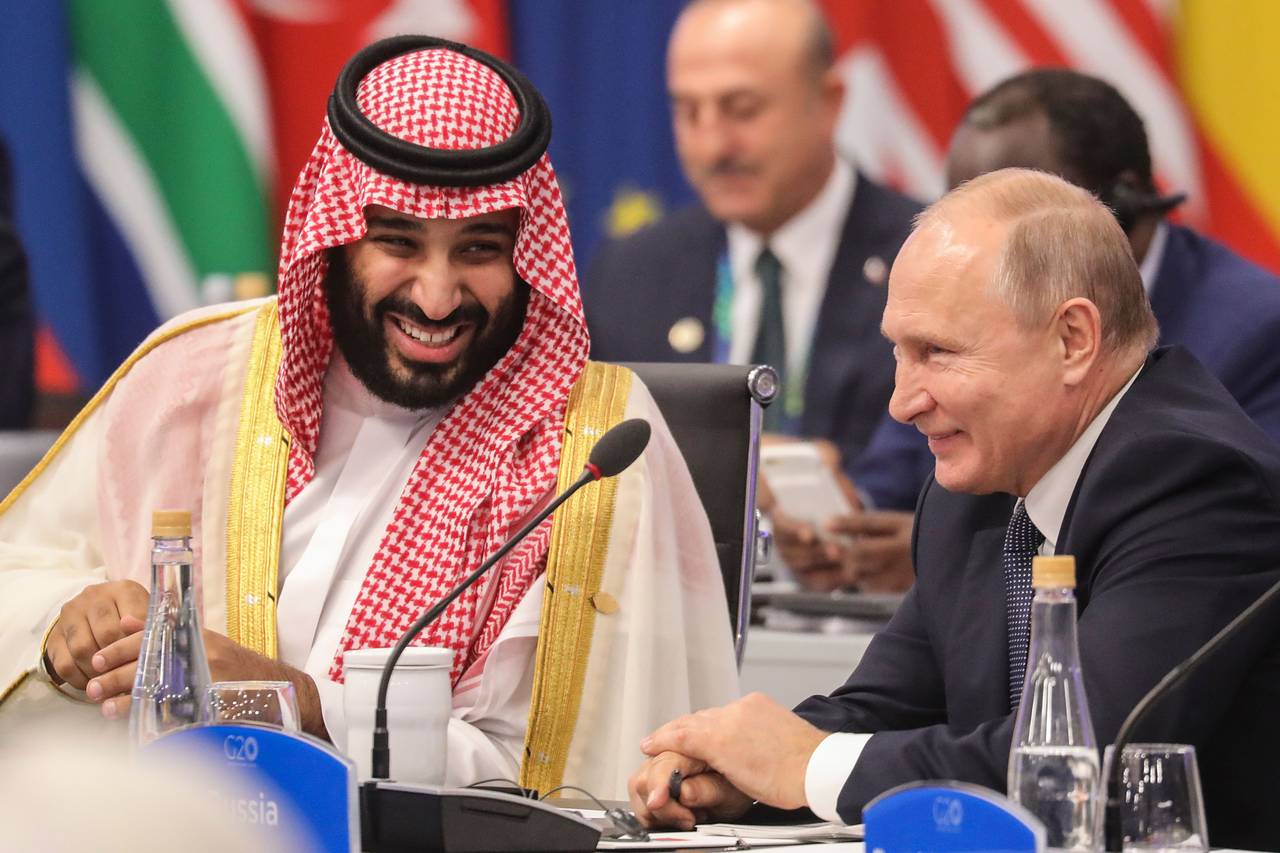
Russian President Vladimir Putin and Saudi Crown Prince Mohammed bin Salman confirmed during a phone call on Thursday that the ongoing crises in the Middle East greatly impact energy production and distribution, posing a threat to global energy security. This confirmation comes at a time when military and political tensions in the region are escalating, raising concerns about negative effects on global markets.
During the conversation, the two leaders discussed a range of issues related to the crisis in the Middle East, expressing deep concern over the deteriorating military and political situation, the increasing number of civilian casualties, and the damage to strategic infrastructure.
Details of the Discussion
The Kremlin reported in an official statement that Putin and bin Salman stressed the need to end hostilities immediately and to enhance political and diplomatic efforts to reach a long-term solution that respects the legitimate interests of all parties involved. They also highlighted the importance of cooperation among member states of the Organization of the Petroleum Exporting Countries (OPEC) and its partners, known as OPEC+, to stabilize global oil markets.
This cooperation comes at a sensitive time, as global markets face significant fluctuations in oil prices due to multiple crises in the region, affecting both consuming and producing countries' economies.
Background & Context
Historically, the Middle East has been a major center for oil production, with countries like Saudi Arabia and Russia possessing vast reserves of oil and gas. However, political and military crises, such as the conflicts in Syria and Yemen, have led to instability in production and distribution, negatively impacting global markets.
These crises are part of a broader context of geopolitical tensions, where major powers compete for influence in the region. This has increased risks to energy security, necessitating a coordinated response from both producing and consuming nations.
Impact & Consequences
The repercussions of the crises in the Middle East extend beyond the region, affecting global oil prices, which in turn impacts energy costs worldwide. Under these circumstances, emerging economies may be particularly affected, as they rely on importing oil at reasonable prices.
Moreover, instability in the region could lead to heightened tensions among major powers, potentially hindering international efforts to achieve long-term stability. Therefore, cooperation among oil-producing countries is vital to ensure market stability.
Regional Significance
In the Arab context, instability in the Middle East affects neighboring countries, many of which face economic challenges due to rising energy prices. Ongoing crises may also lead to an influx of refugees and increased social tensions.
Thus, enhancing cooperation among Arab nations and oil-producing countries is essential to maintain regional stability and achieve sustainable development.