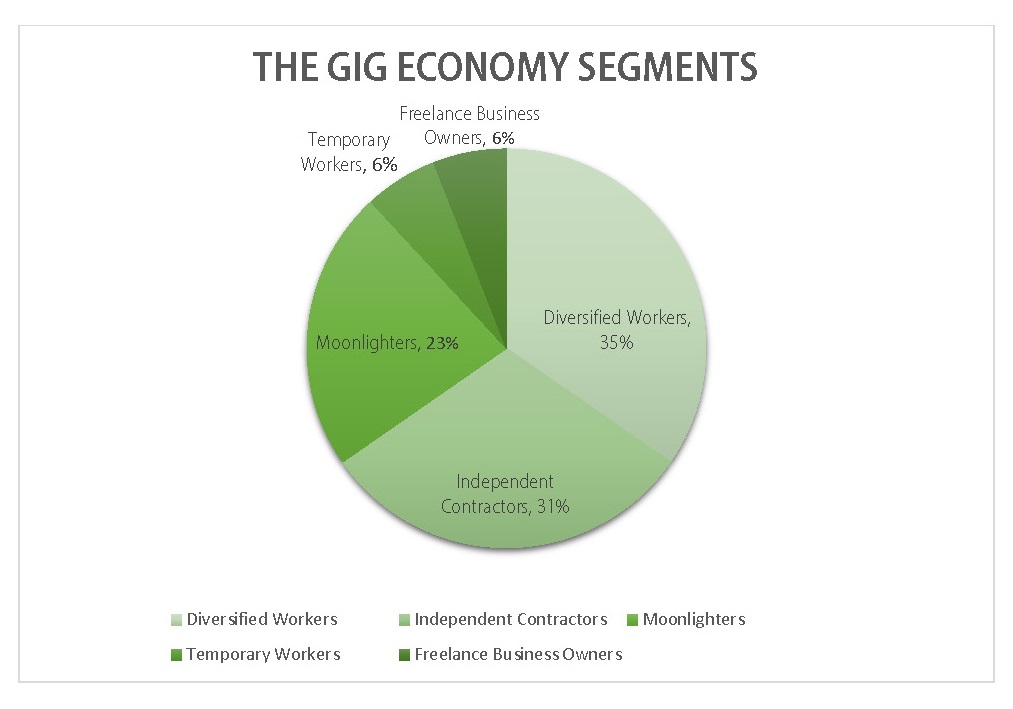
The free economy in the United States, whether in high or low-wage jobs, continues to support consumption, but the pressing question is: how long will this trend last? Reports indicate that the increasing number of self-employed individuals, whether in high or low-income jobs, plays a pivotal role in maintaining consumption levels across the country.
The number of freelancers in the United States is rising significantly, as many choose to work independently rather than in traditional jobs. This trend is not limited to the youth; it also encompasses various age groups, reflecting a shift in work patterns and the economy.
Details of the Trend
Data indicates that the free economy has become an integral part of the American economy, providing job opportunities for many individuals seeking financial independence. However, these workers face significant challenges, such as financial instability and the absence of social benefits typically provided by traditional employment.
At the same time, these freelancers contribute to boosting consumption by offering diverse services and products that meet market needs. With the increasing reliance on the digital economy, freelance platforms like Uber, Lyft, and Freelancer have become part of the daily lives of many Americans, reflecting significant changes in how people work and live.
Background & Context
Historically, the American economy has undergone radical transformations since the beginning of the 21st century, with economic crises leading to changes in the labor market. Following the global financial crisis of 2008, many individuals began seeking alternatives to traditional employment, resulting in a rise in the number of self-employed workers.
Technological advancements have also accelerated this trend, making freelance platforms more popular and user-friendly. This shift has not been confined to the United States; it has extended to many countries worldwide, reflecting a global transformation in the nature of work.
Impact & Consequences
The free economy significantly impacts the macroeconomy, contributing to increased consumption and economic growth. However, this trend raises questions about sustainability, as many self-employed individuals rely on unstable income.
The lack of social protection for workers in this sector may exacerbate the economic conditions for many, threatening the financial stability of households. Therefore, the greatest challenge lies in how to balance support for the free economy while providing necessary protections for its workers.
Regional Significance
While the American economy faces challenges related to the free economy, Arab countries are also grappling with similar issues. With rising unemployment in some nations, many Arab youth are beginning to seek freelance opportunities as an alternative to traditional jobs.
This trend could foster innovation and entrepreneurship in the region, but it also requires government support to provide a suitable working environment and social protection for workers in this sector. Thus, studying American experiences may offer valuable lessons for Arab countries on how to address the challenges of the free economy.
In conclusion, the question remains: will the free economy continue to support consumption in the United States, or will the challenges it faces lead to radical changes in this model?