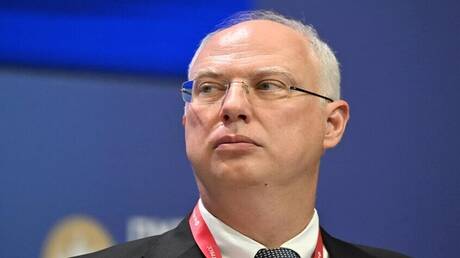
Kirill Dmitriev, the special representative of the Russian president for investment and economic cooperation with foreign countries, has disclosed profound impacts of the ongoing conflict surrounding Iran on the future of the European Union. Dmitriev asserted that this conflict will reshape economic and political relations within the European bloc, imposing new challenges on member states.
Amid rising tensions in the Middle East, the European Union faces increasing pressure to adapt to geopolitical changes. The conflict surrounding Iran, which involves issues such as the Iranian nuclear program and Tehran's support for militias in the region, appears to have direct implications for European policies.
Event Details
Dmitriev pointed out that the conflict surrounding Iran is not merely a regional issue but has global repercussions. The escalating tensions could lead to rising energy prices, impacting the European economy, which heavily relies on energy imports from the Middle East. Furthermore, any military escalation could threaten the security of navigation in the Strait of Hormuz, a vital corridor for oil transport.
Moreover, the conflict may exacerbate the refugee crisis, as the number of people fleeing conflicts in the region is expected to rise, placing additional pressures on European countries already facing migration challenges.
Background & Context
Historically, relations between Iran and the European Union have been volatile. In recent years, European countries have sought to maintain the nuclear agreement with Iran despite the United States' withdrawal from it. As tensions escalate, it has become clear that Europe needs to reassess its strategy towards Tehran.
The historical backdrop of the conflict involves the role of major powers in the region, with the United States, Russia, and China competing for influence. This competition has complicated the situation, making it difficult for the European Union to take a unified stance.
Impact & Consequences
It is anticipated that tensions surrounding Iran will lead to changes in European policies towards the Middle East. Member states may be forced to make difficult decisions on how to engage with Iran, whether through imposing new sanctions or seeking dialogue.
These developments could also affect European relations with Gulf countries, as European nations aim to strengthen their economic and security partnerships. At the same time, escalation could lead to increased European investments in renewable energy sectors as an alternative to Iranian oil.
Regional Significance
For the Arab region, the conflict surrounding Iran poses a significant challenge. Arab countries, especially those sharing borders with Iran, may find themselves in a difficult position between supporting Western policies or trying to maintain good relations with Tehran.
Additionally, any military escalation could worsen humanitarian crises in the region, increasing civilian suffering. Therefore, Arab nations need to coordinate their efforts to face these challenges.
In conclusion, Dmitriev's statement indicates that the conflict surrounding Iran is not merely a regional issue but part of a larger picture concerning security and stability in Europe and the Middle East. European and Arab countries must collaborate to address these complex challenges.