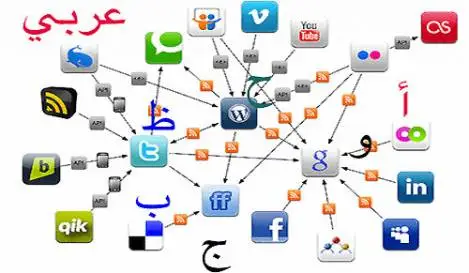
Social media applications are becoming increasingly important in Arab societies, serving as a primary tool for communication and information exchange. These platforms reflect the social and cultural transformations occurring in the region, making them a vital subject for study and analysis.
Platforms such as Facebook, Twitter, and Instagram are among the most prominent, used daily by millions to engage with current events and share opinions. These applications have proven their ability to influence public opinion, especially during political and social crises faced by some Arab countries.
Event Details
In recent years, the Arab region has witnessed a notable increase in the use of social media applications, with studies showing that the percentage of users in some countries exceeds 80% of the total population. This widespread usage reflects individuals' desire to express their opinions and share their daily experiences.
These applications include multiple features, such as instant messaging, photo and video sharing, and live broadcasting, making them effective tools for disseminating information rapidly. As the number of users increases, these platforms have also become arenas for political and social discussions, where news and information are circulated instantly.
Background & Context
Historically, social media applications began to emerge in the early 2000s, and over time, they have become an integral part of individuals' daily lives. In the Arab world, political events such as the Arab Spring in 2011 marked a turning point, as these applications were widely used to organize protests and disseminate information.
The usage of these applications varies from country to country, with cultural and political factors playing a significant role in how individuals interact with them. In some countries, these platforms are seen as a means of expressing opinion, while in others, they may face censorship or restrictions on their use.
Impact & Consequences
Social media applications significantly impact Arab societies, contributing to shaping public opinion and guiding discussions on social and political issues. They also provide a platform for individuals to express their opinions freely, enhancing the culture of dialogue and debate.
However, these applications also raise concerns about the spread of misinformation and fake news, requiring users to be more aware and cautious when consuming information. Additionally, there are issues related to privacy and security, as users' data may be vulnerable to breaches or misuse.
Regional Significance
Social media applications are an essential part of daily life in the Arab world, facilitating communication between individuals and communities. As their usage increases, there is a growing need to develop strategies to address the challenges they pose, such as protecting privacy and combating misinformation.
Ultimately, social media applications remain a double-edged sword, capable of being a tool for positive change or a means of spreading chaos. It requires users to be conscious and aware of the challenges and opportunities these platforms present.