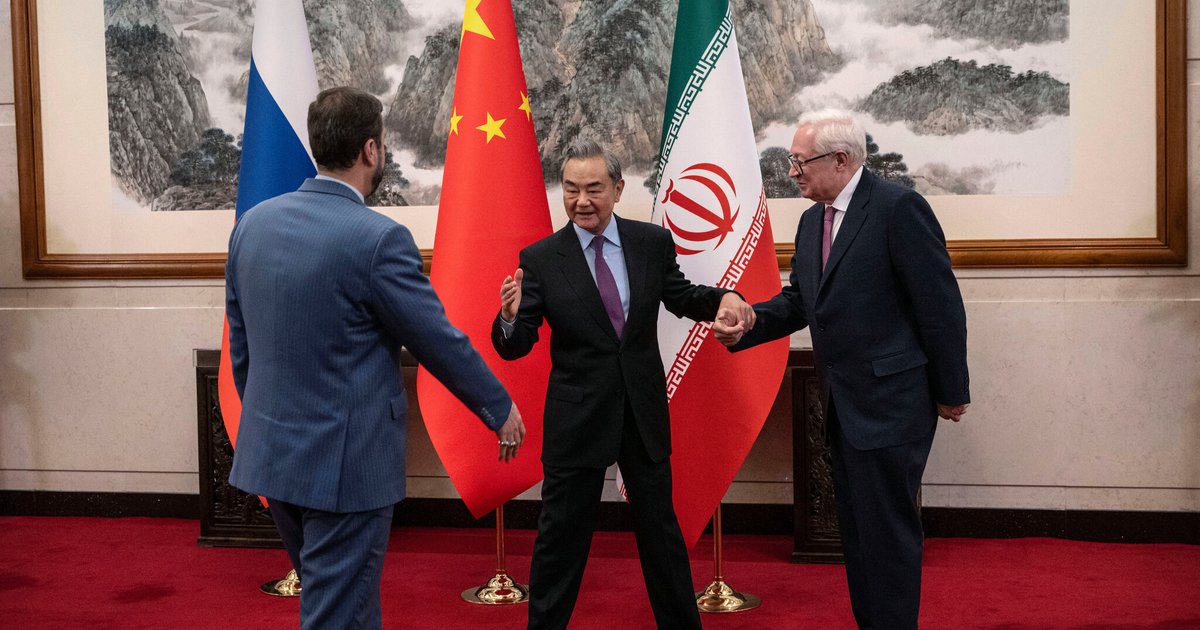
Questions are increasing regarding the positions of Iran's traditional allies, China and Russia, since the outbreak of the U.S.-Israeli war against Iran on February 28. Given the serious economic implications of the war, it appears that the trilateral alliance is facing new challenges that require reassessment.
A report by Asma Mohammed on Al Jazeera highlighted the transformations affecting Tehran's traditional alliance with Beijing and Moscow, as each party seeks to protect its economic and strategic interests amid changing circumstances.
Details of the Event
China condemned the U.S.-Israeli strikes on Iran, calling on all parties to cease military operations and resort to dialogue. It emphasized the need to respect Tehran's sovereignty and territorial integrity in accordance with the United Nations Charter. In contrast, Russia proposed a diplomatic initiative aimed at containing the crisis through dialogue channels.
The Chinese presence at both diplomatic and political levels is accompanied by its efforts to maintain its interests, especially in light of the increasing economic challenges it faces. Beijing has sought to conclude agreements with Tehran that allow its vessels to pass through the Strait of Hormuz, while maintaining its supply line, although this may be at a low level.
Background & Context
China has not provided any military actions to support Iran, as there is no reliable information regarding direct military support. According to available data, China's support is limited to political and technical frameworks. However, U.S. sources reported that the sanctioned Chinese company SMIC supplied equipment for chip manufacturing to entities linked to the Iranian military, indicating a level of technical cooperation.
As for Russia, its position is more complex, as it has established military and political relations with Iran that have strengthened in recent years. Cooperation between the two countries includes areas of armament and drone technology, leading to a transformation of their relationship into a strategic partnership that extends to energy, transportation, and defense technology.
Impact & Consequences
The Al Jazeera report indicates that cooperation between Tehran and Moscow is taking on a greater strategic character, as coordination occurs in the Belt and Road Initiative to connect Russian ports on the Caspian Sea with Gulf ports, thereby reducing dependence on corridors dominated by Western countries.
Western reports speak of the transfer of drone-related technology to Iran, enhancing targeting accuracy. Reports also indicate regular Russian intelligence support for Iran, raising questions about the extent of Russia's commitment to its official stance.
Regional Significance
Russia faces increasing challenges in its war on Ukraine, making direct engagement in another front risky. However, Russia may seek to indirectly benefit from the current situation to find solutions for marketing its oil, which is besieged by sanctions.
In conclusion, the trilateral alliance between Iran, China, and Russia remains under pressure from geopolitical changes, raising questions about the sustainability of this alliance under current circumstances.