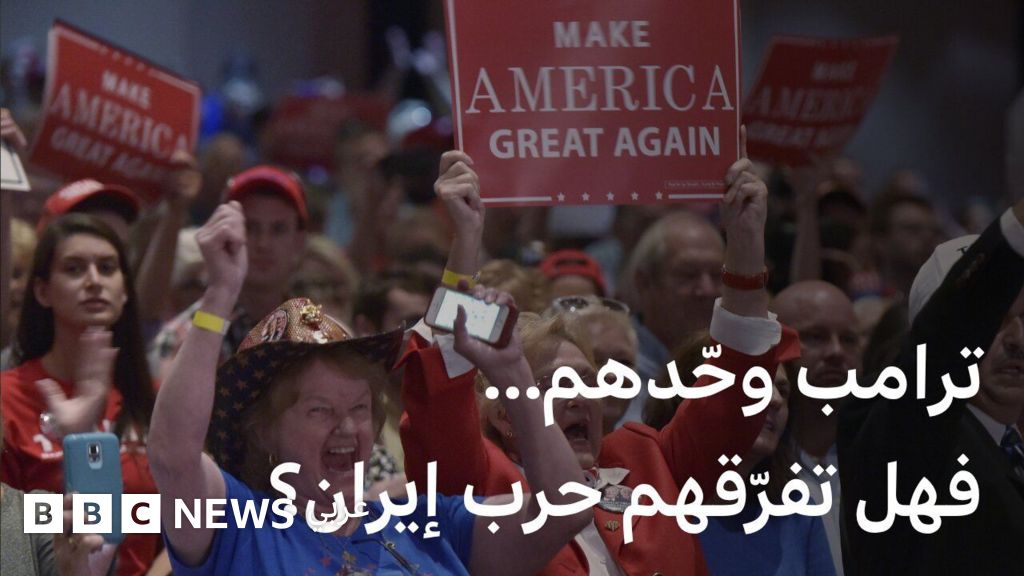
Current developments indicate a clash between the traditional American slogans: 'America First' and 'America Stands with Israel'. A potential war with Iran could unveil new influences on U.S. domestic politics, particularly affecting former President Donald Trump's support base.
For decades, American politicians have embraced these two slogans in parallel, with the former reflecting a focus on U.S. national interests, while the latter expresses a traditional commitment to Israel. However, a potential military escalation with Iran may put these principles in direct conflict, raising questions about how this will affect Trump's support.
Details of the Current Situation
Amid escalating tensions between the United States and Iran, concerns are growing about how this potential war might impact U.S. domestic politics. Trump, who enjoys a strong support base, may find himself in a difficult position if political circumstances require him to take stances that contradict one of the slogans. Will he continue to support Israel at the expense of American interests? Or will he lean towards reinforcing the 'America First' slogan?
Recent statements from U.S. officials suggest an increasing readiness for escalation against Iran, which could have significant repercussions on the political landscape. At the same time, polarization within the Republican Party is growing, with varying opinions on how to handle Iran.
Background & Context
Historically, U.S.-Iranian relations have been tense since the 1979 Islamic Revolution. Since then, the United States has pursued a strict policy towards Iran, including imposing economic and military sanctions. However, American support for Israel has always been a fundamental part of U.S. foreign policy, making it challenging to reconcile these two slogans under current circumstances.
In recent years, we have witnessed an escalation in tensions, particularly after the U.S. withdrawal from the Iranian nuclear deal in 2018. This move heightened animosity between the two countries, complicating the ability of American politicians to maintain a balance between supporting Israel and U.S. interests.
Impact & Consequences
If war breaks out with Iran, it could lead to radical changes in the American political landscape. Trump's support may be significantly affected, as some of his supporters might abandon him if they feel that the war contradicts their interests. There are also concerns that military escalation could lead to negative economic repercussions, impacting upcoming elections.
Furthermore, a war with Iran could provoke strong reactions from the international community, potentially increasing U.S. isolation on the global stage. This situation could affect Trump's ability to advance his foreign policy and increase pressure from his political opponents.
Regional Significance
In the regional context, a war with Iran could exacerbate conditions in the Middle East. Many Arab countries, which are directly affected by the tensions between the United States and Iran, may find themselves in a difficult position. War could lead to increased instability in the region, negatively impacting security and the economy.
Moreover, military escalation could provoke reactions from Iran-backed armed groups in the region, intensifying conflict. This could worsen humanitarian crises in affected countries, such as Iraq and Syria, and increase civilian suffering.
In conclusion, a potential war with Iran seems likely to place American politicians in a difficult position, as they must reconcile their national interests with commitments to their allies. At the same time, the effects of this war could extend beyond American borders, impacting stability in the Arab region.