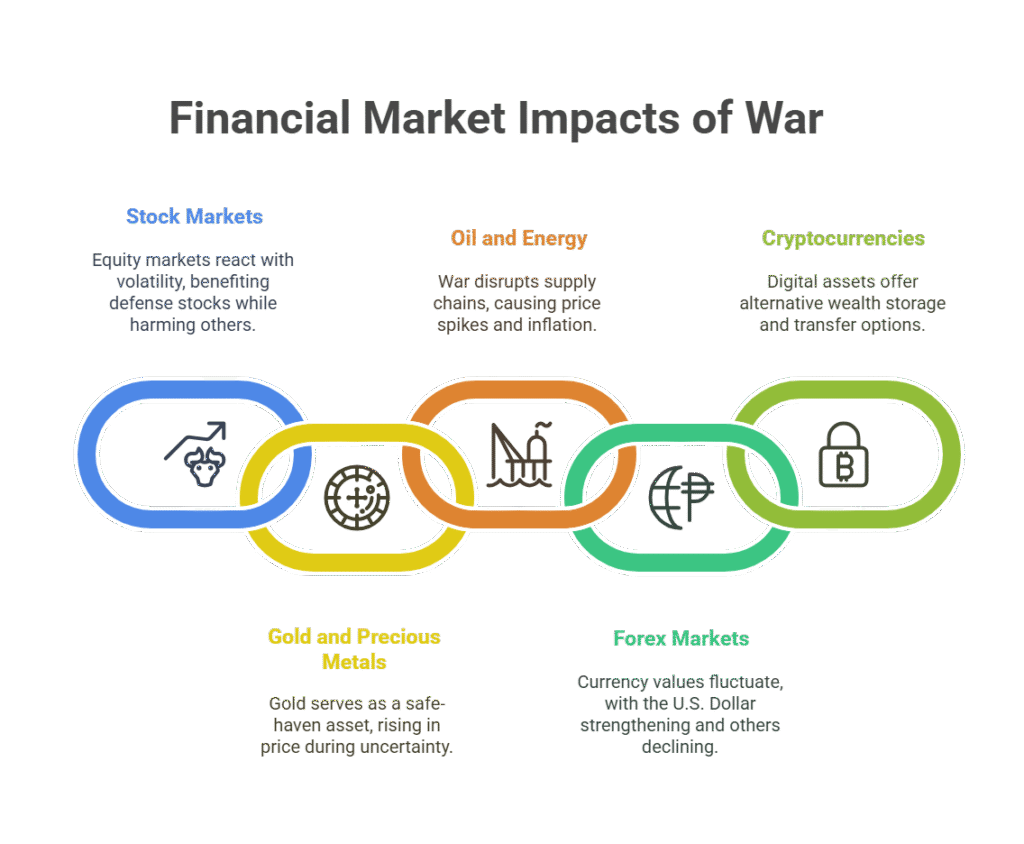
Reports indicate that financial markets are significantly affected by global events, including wars. In such circumstances, investors are advised to exercise patience and avoid hasty decisions. When markets are disrupted, as in times of conflict, waiting may be the best option for achieving future returns.
Historically, financial markets have experienced significant fluctuations due to wars and conflicts. For example, in the aftermath of the terrorist attacks on September 11, 2001, markets saw sharp declines, but after some time, they returned to record notable increases. This highlights the importance of exercising patience during crises.
Event Details
Financial markets are directly affected by geopolitical events, as conflicts can lead to increased economic uncertainty. While investors may rush to sell assets out of fear of losses, a careful analysis of the situation may reveal new investment opportunities. For instance, wars may increase demand for certain goods, providing opportunities for investors who make informed decisions.
Recently, global financial markets have experienced notable fluctuations due to conflicts in various regions around the world. These events raise concerns among investors, leading to declines in stock indices. However, history shows that markets often recover after a period of time, making it essential for investors to remain patient.
Context and Background
Historically, wars and conflicts have impacted financial markets in multiple ways. For example, during World War II, markets experienced significant fluctuations but also saw a recovery after the conflict ended. This pattern is repeated in many modern conflicts, where crises lead to a temporary decline in markets, followed by a period of recovery and growth.
Political events, such as elections or changes in government policies, also play a crucial role in determining market trends. Investors who closely monitor these events can benefit from sudden shifts in the market.
Consequences and Impact
Studies confirm that investors who make quick decisions during crises often face greater losses. It is important for investors to remember that financial markets are volatile, and exercising patience can lead to positive long-term outcomes. Instead of being swayed by emotions, investors should focus on a careful analysis of economic conditions.
Moreover, global events directly impact the local economy. Changes in global markets can lead to cascading effects on the local economy, making it essential for investors to stay informed about global developments.
Impact on the Arab Region
In the Arab region, financial markets are significantly affected by political and economic events. Conflicts in some Arab countries, such as Syria and Libya, have led to a substantial decline in local markets. However, exercising patience and investing at the right times can provide good opportunities for investors.
Additionally, political and economic stability in some Arab countries can attract foreign investments, contributing to the strengthening of financial markets. Therefore, understanding global and local dynamics is vital for investors in the region.
In light of current circumstances, it is important for investors to exercise patience and avoid making hasty decisions. History proves that financial markets recover after crises, making it essential to have a long-term vision when making investment decisions.