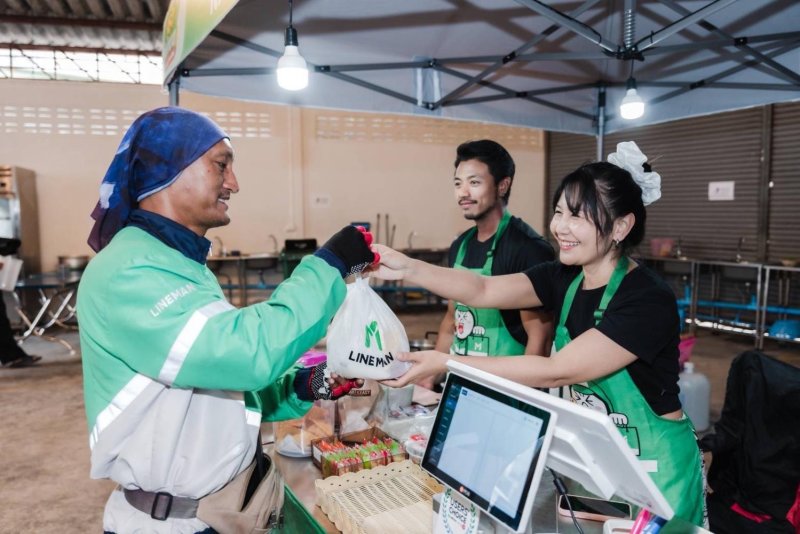
Line Man Wongnai is preparing to face a potential energy crisis by imposing additional delivery fees on its services if fuel prices rise by 9-10 baht. This comes at a time when growth in the food delivery market in Thailand is expected to slow down, with forecasts indicating that growth may drop to 15% instead of the usual 20% annually.
The company expects that online food delivery services will account for about 20% of the 900 billion baht food and beverage market this year. Despite the challenges, the company aims to outpace market growth and maintain profitability, while exploring the possibility of listing on U.S. or Hong Kong financial markets by 2027.
Event Details
Yood Chinsubakol, the CEO of Line Man Wongnai, stated that the company's performance in the first quarter of the year exceeded expectations. However, the war and instability in fuel prices are causing prices to rise. He noted that they are preparing for the worst-case scenarios, where delivery fees may be imposed on users if fuel prices increase by an additional 9-10 baht, due to its impact on operations and drivers.
The company is monitoring food prices, and some restaurants have already started raising their prices due to increased ingredient costs. Yood also mentioned that customer traffic in restaurants has declined, as consumers are reducing their dining out.
Background & Context
Line Man Wongnai is considered one of the leading food delivery companies in Thailand and has seen significant growth in recent years. However, global economic challenges, including rising fuel prices due to geopolitical conflicts, are significantly impacting this sector. Restaurants that rely heavily on foreign tourists, especially from the Middle East and parts of Europe, may suffer from a decline in visitor numbers.
In contrast, restaurants that focus on affordable options and cater to local residents seem more adaptable to these conditions. Yood pointed out that demand for food delivery services remains strong, as consumers view it as a necessity, helping to offset the decline in customer traffic at restaurants.
Impact & Consequences
The company expects to continue outperforming market growth, driven by increased order frequency and an expanding user base, despite rising competition from companies like Grab and Shoppy Food. Yood indicated that the company's goal for a public listing in 2027 remains intact, considering that any delays depend solely on market conditions and valuation.
The company's revenues have surpassed 20 billion baht, achieving full profitability for the second consecutive year, excluding payment services that are still in the investment phase. Additionally, the company is not under pressure to raise funds for survival, granting it greater flexibility in making strategic decisions.
Regional Significance
This news is significant for the Arab region, as rising fuel prices can affect the cost of living in many Arab countries. The decline in tourism may also impact restaurants and hotels that rely on foreign visitors, necessitating new strategies to adapt to these changes.
In conclusion, Line Man Wongnai remains in a strong position to face challenges, but it needs to continue innovating and adapting to changing conditions to ensure its sustainability in a competitive market.