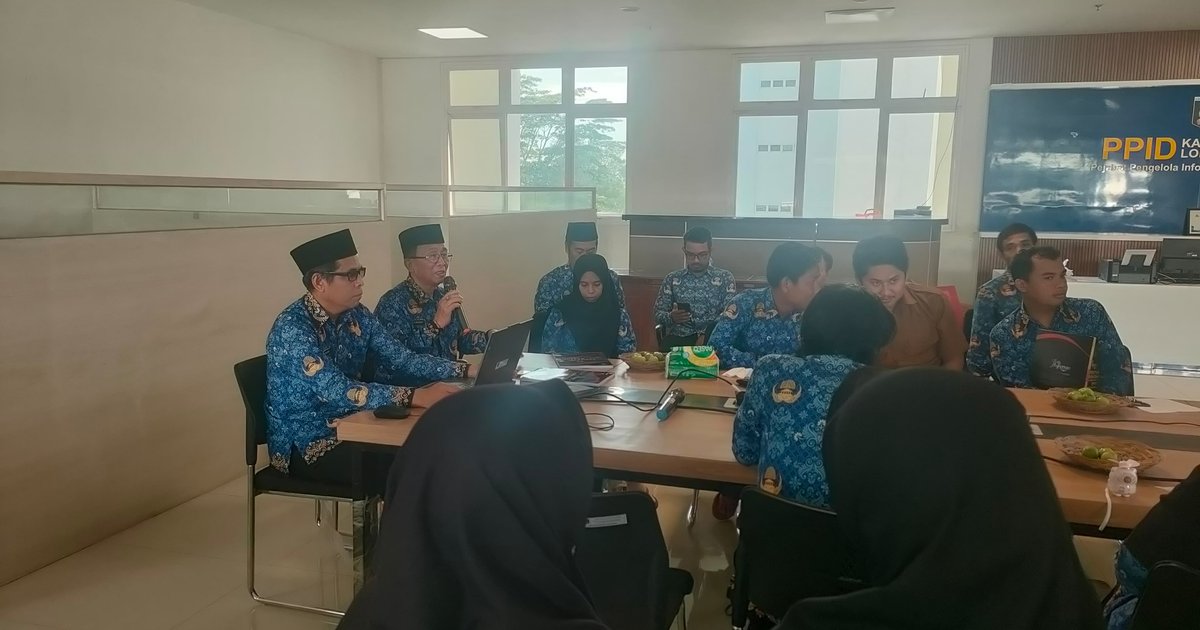
The Central Lombok Regent, Lalu Patul Bahari, has announced the commencement of a work-from-home (WFH) policy for local government employees, in accordance with directives from the central government. This policy will take effect starting this month, reflecting a new direction towards enhancing government work efficiency.
Patul Bahari indicated that the local government received a letter from the Indonesian Minister of Home Affairs, Mohammad Tito Karnavian, outlining how government employees will carry out their duties through a mix of work-from-office (WFO) and work-from-home (WFH) arrangements. He clarified that this policy will not apply to all employees; senior staff (Echelon II) will continue to work from the office, while the work-from-home policy will be implemented for regular employees.
Details of the Initiative
This step is part of the government's efforts to enhance the efficiency of government work, with Patul Bahari confirming that the implementation of work-from-home will not affect the delivery of public services. He noted that essential services, such as those provided in hospitals, will continue to operate as usual without any interruptions.
Minister Mohammad Tito Karnavian mentioned in his letter that the work-from-home policy will be applied every Friday, allowing employees the opportunity to adapt to this new system. This approach aims to promote a digital culture in government work, facilitating the transition to a technology-driven government system.
Background & Context
The work-from-home policy is considered one of the positive outcomes of the COVID-19 pandemic, leading to a reevaluation of traditional work methods in many countries. Numerous governments worldwide have adopted this policy as a means to enhance productivity and reduce congestion in offices.
In Indonesia, this move aligns with the government's efforts to improve public services and promote digital transformation. In recent years, there has been an increase in the use of technology across various sectors, which has accelerated the digital transformation process in the country.
Impact & Consequences
The work-from-home policy is expected to improve the efficiency of government work and increase employee satisfaction. Additionally, this policy may contribute to reducing operational costs for offices, enabling the government to allocate more resources towards enhancing public services.
Furthermore, this initiative could encourage greater use of technology in government work, thereby enhancing the government's ability to provide more effective and timely services to citizens.
Regional Significance
Indonesia's experience in implementing the work-from-home policy could serve as a model for Arab countries, where many governments face similar challenges in improving government work efficiency. Such policies may contribute to advancing digital transformation in the region, helping to enhance public services and better meet citizens' needs.
In conclusion, the work-from-home policy represents an important step towards improving government work in Central Lombok, and it may have positive effects on efficiency and job satisfaction. It is crucial for governments to continue exploring new ways to enhance performance and deliver services to citizens.