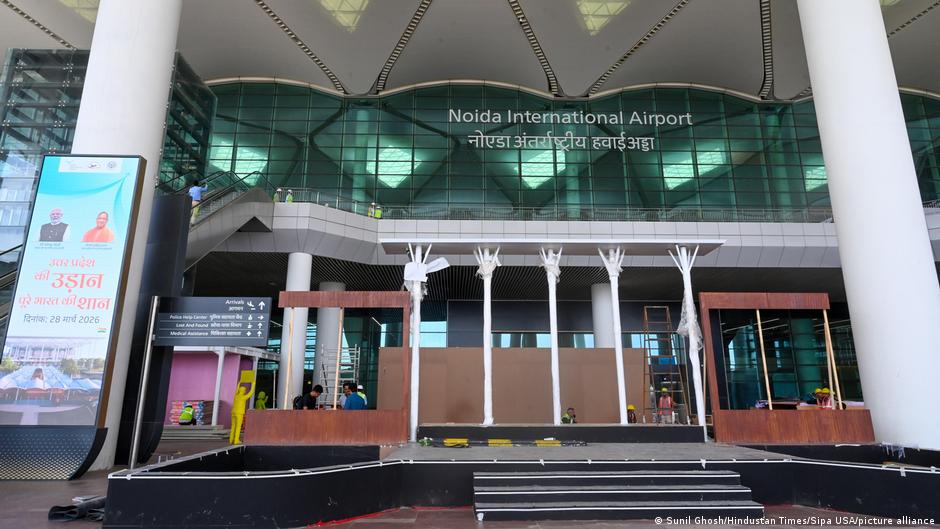
Indian Prime Minister Narendra Modi today inaugurated the first phase of the Noida International Airport, the second of its kind serving the capital New Delhi. The airport is located in the Jewar area of Uttar Pradesh and is expected to accommodate around 12 million passengers annually in its first phase, with projections of increasing that number to 70 million upon the project's full completion.
The first phase of the project costs approximately $1.2 billion and spans 7,200 acres. This initiative is part of the Indian government's vision to enhance air transport infrastructure and is considered a significant step towards improving the country’s capacity to handle increasing air traffic.
Event Details
Noida International Airport is part of a larger plan aimed at establishing 100 new airports in India over the next decade. The Indian government aims to increase the number of airports in the country to between 350 and 400 airports by the year 2047, compared to the current 163 airports. This expansion reflects the rapid growth of the Indian aviation sector, which has seen a significant increase in passenger numbers in recent years.
The government is also working to provide financial support to airlines to operate flights on unprofitable routes, with $1.07 billion allocated for this purpose. These measures aim to ensure the sustainability of air transport services in remote areas and enhance connectivity between major cities.
Background & Context
Historically, the aviation sector in India has experienced remarkable growth, making the country one of the fastest-growing aviation markets in the world. In recent years, investments in airport infrastructure have significantly increased, contributing to improved travel experiences for both citizens and tourists.
India is considered one of the largest aviation markets globally, with expectations that the number of passengers will exceed 500 million annually by 2030. This growth necessitates continuous improvements in airport infrastructure to meet the rising demand.
Impact & Consequences
The inauguration of Noida International Airport is a strategic move that enhances India's ability to accommodate increasing air traffic, contributing to the local economy by boosting tourism and trade. Additionally, this project will create new job opportunities in the region, further promoting economic development.
Moreover, the development of airport infrastructure reflects the Indian government's commitment to improving the quality of life for citizens by facilitating access to air transport services. This project is expected to enhance connectivity between major cities and remote areas, easing the movement of people and goods.
Regional Significance
India is a strategic partner for many Arab countries, with strong trade and cultural ties. The development of the aviation sector in India may open new avenues for cooperation between India and Arab nations, particularly in tourism and trade.
Furthermore, increased air traffic between India and Arab countries could enhance investment and trade opportunities, benefiting Arab economies. In light of global economic challenges, strengthening economic relations between India and Arab nations is a crucial step towards achieving sustainable development.