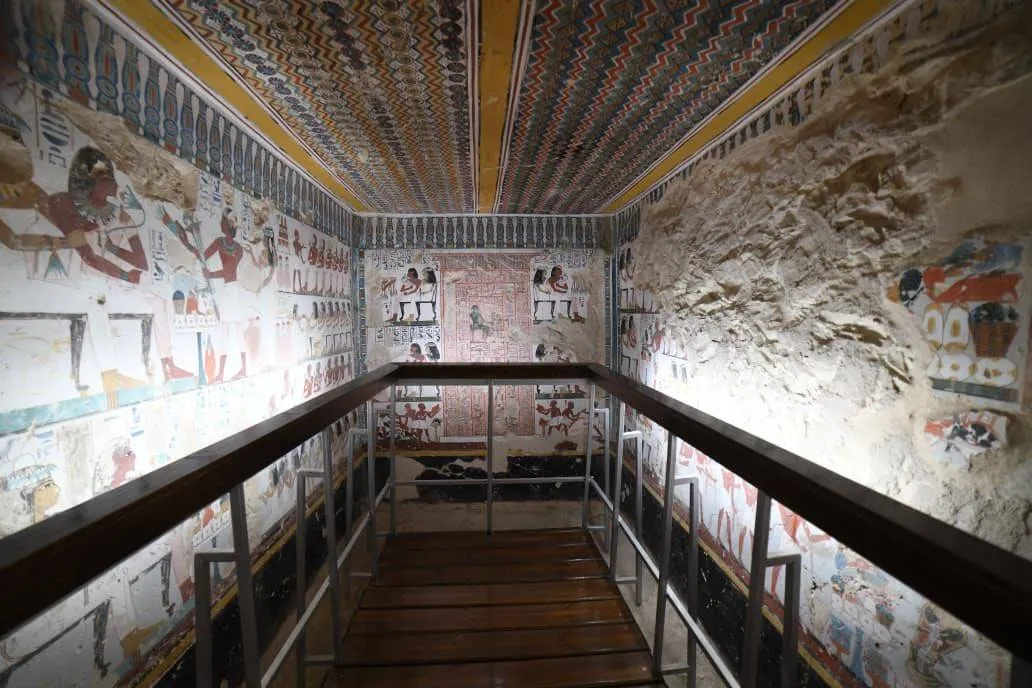
The Egyptian Ministry of Tourism and Antiquities inaugurated the tombs of Amenhotep known as 'Rabouya' (TT416) and his son 'Samut' (TT417) in the Khoha area of the West Bank in Luxor on Thursday, following the completion of restoration work and improvements to the surrounding site. This opening is part of the ministry's efforts to make archaeological sites accessible to visitors.
These tombs date back to the New Kingdom; the tomb of 'Rabouya' belongs to the reign of King Thutmose III, while the tomb of 'Samut' dates to the reign of King Thutmose IV. The tombs are characterized by their architectural style shaped like the letter 'T', which is a common pattern for noble tombs in the Eighteenth Dynasty.
Event Details
The tombs contain a distinguished collection of scenes that reflect daily life in ancient Egypt, including agriculture, harvesting, bread-making, pottery, winemaking, fishing, and bird hunting. They also feature funerary scenes depicting the transport of the sarcophagus on a sled and the transfer of funerary furniture to the tomb in the presence of deities.
The Egyptian Minister of Tourism and Antiquities, Sherif Fathy, expressed pride in the opening of the tombs, emphasizing that the preservation and maintenance of antiquities are among the ministry's top priorities. He considered the restoration project for the tombs to be a "long-term work journey" that began in 2015.
Background & Context
The tombs of Thebes are among the most important archaeological sites in the world, reflecting ancient Egyptian civilization and its rich history. This area has witnessed numerous archaeological discoveries that have contributed to a deeper understanding of daily and religious life during that era.
The Egyptian Ministry of Tourism and Antiquities aims to enhance Egypt's status as a global destination for Egyptology studies, which requires continuous development of the tourism and hotel sectors. The minister pointed out the importance of collaboration with the private sector to improve the visitor experience at archaeological sites.
Impact & Consequences
The opening of the tombs represents an important addition to the archaeological attractions in Luxor and reflects the efforts of the Egyptian government to preserve cultural heritage. This opening may contribute to attracting more tourists, thereby boosting the local economy and creating new job opportunities.
Moreover, the reopening of the tombs after restoration allows researchers and visitors to read the artistic details and funerary inscriptions more clearly, which contributes to enhancing studies related to the Theban necropolis and the evolution of burial rituals.
Regional Significance
This step is part of broader efforts to preserve cultural heritage in the Arab region, where many countries seek to promote cultural tourism. Preserving and developing antiquities can contribute to enhancing cultural identity and elevating the status of countries in the global tourism arena.
In conclusion, the inauguration of the tombs of Amenhotep and Rabouya is an important step towards promoting cultural tourism in Egypt and reflects the government's commitment to preserving cultural heritage for future generations.