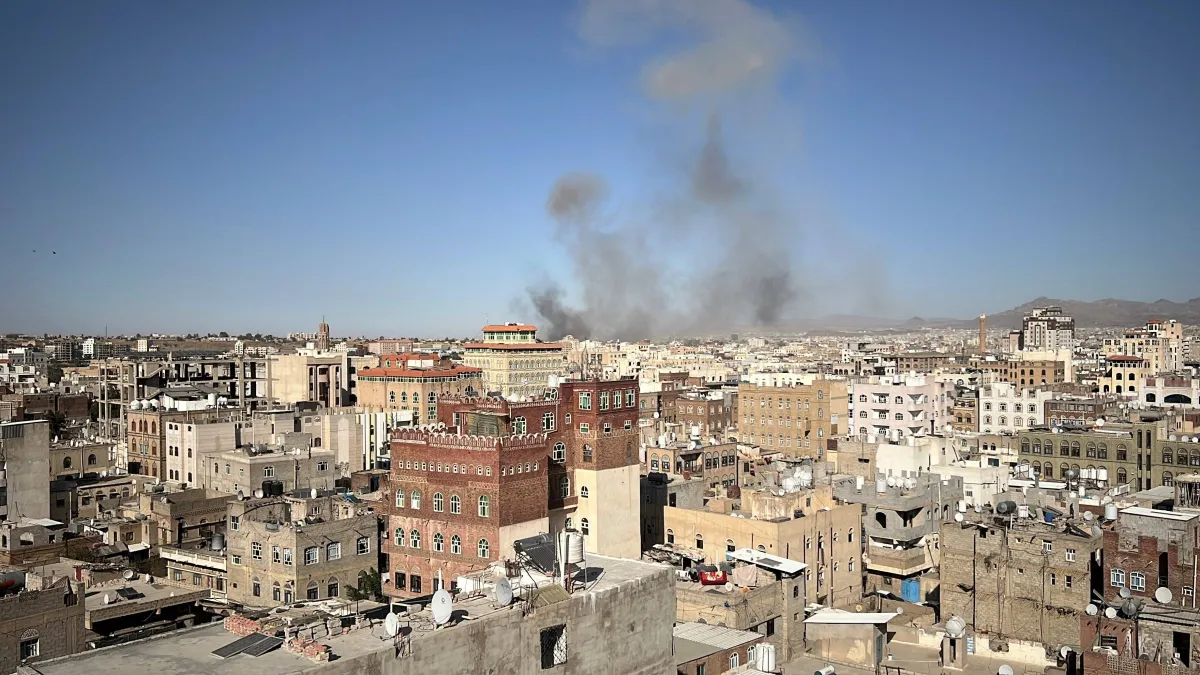
The Houthi group has announced its engagement in the war in support of the Iranian regime, leading to heightened anxiety and tension in the Yemeni capital, Sana'a, and other cities under its control. Millions of residents are living in difficult conditions, facing complex security and economic scenarios.
In the streets of Sana'a, signs of anxiety are evident in the details of daily life. The streets have become less crowded, and market activity has noticeably declined, with many residents preferring to stay close to their homes. Although there has not yet been a widespread wave of displacement, local testimonies indicate individual movements of families starting to leave neighborhoods near sensitive sites.
Details of the Event
Residents of Sana'a are living in a state of silent readiness, stockpiling food and providing additional amounts of water, while preparing alternative plans in case the situation deteriorates. Residents fear that the Houthis' joining to defend Iran will lead to further suffering, especially since millions of Yemenis have been living in deteriorating conditions for years due to the coup and ongoing war.
The capital's residents have expressed their rejection of these movements, which may provoke new military strikes that could affect what remains of the infrastructure, indifferent to their suffering. Observers warn that the Houthis' involvement in the war could place Sana'a and other cities under military threats from powers like the United States or Israel, especially if the pace of the group's operations continues to be linked to developments in the regional conflict.
Context and Background
In the context of the escalating regional war between Iran on one side and the United States and Israel on the other, the Houthis have entered the fray by announcing their military intervention in support of Tehran. This intervention, which was not surprising given the group's ties to the Iranian Revolutionary Guard, opens the door to deep field and political transformations within Yemen.
These events coincide with the United Nations' decision to end its mission to support the Hodeidah agreement, reinforcing estimates of a return to armed conflict on the western coast front. There are also growing fears that the Houthis may attempt to close the Bab al-Mandab Strait, reflecting an expansion of pressure on vital maritime corridors.
Consequences and Impact
Analysts confirm that the Houthis have placed themselves in a difficult equation, as they seek to strengthen their position within an Iran-led axis, but they are aware that excessive escalation may provoke harsh military responses. Current fears are not limited to the military aspect but also include internal measures that may involve arrests or restrictions on residents under accusations of collaborating with "enemies."
If the Houthis continue their involvement in the war at a high pace, the situation in Yemen may head towards a more complex phase. Living and economic pressures are increasing, and scenarios remain open to multiple possibilities, heightening anxiety among the population.
Impact on the Arab Region
Regional and international concerns are rising over the escalation of Houthi activities, as these developments may destabilize the region. Experts indicate that the Houthis' involvement in the war reflects their close ties to Iran, posing a significant challenge to Arab national security.
In conclusion, Yemen appears to be at a critical juncture, with increasing internal and external tensions, necessitating urgent actions from the international community to resolve the Yemeni crisis before conditions worsen further.