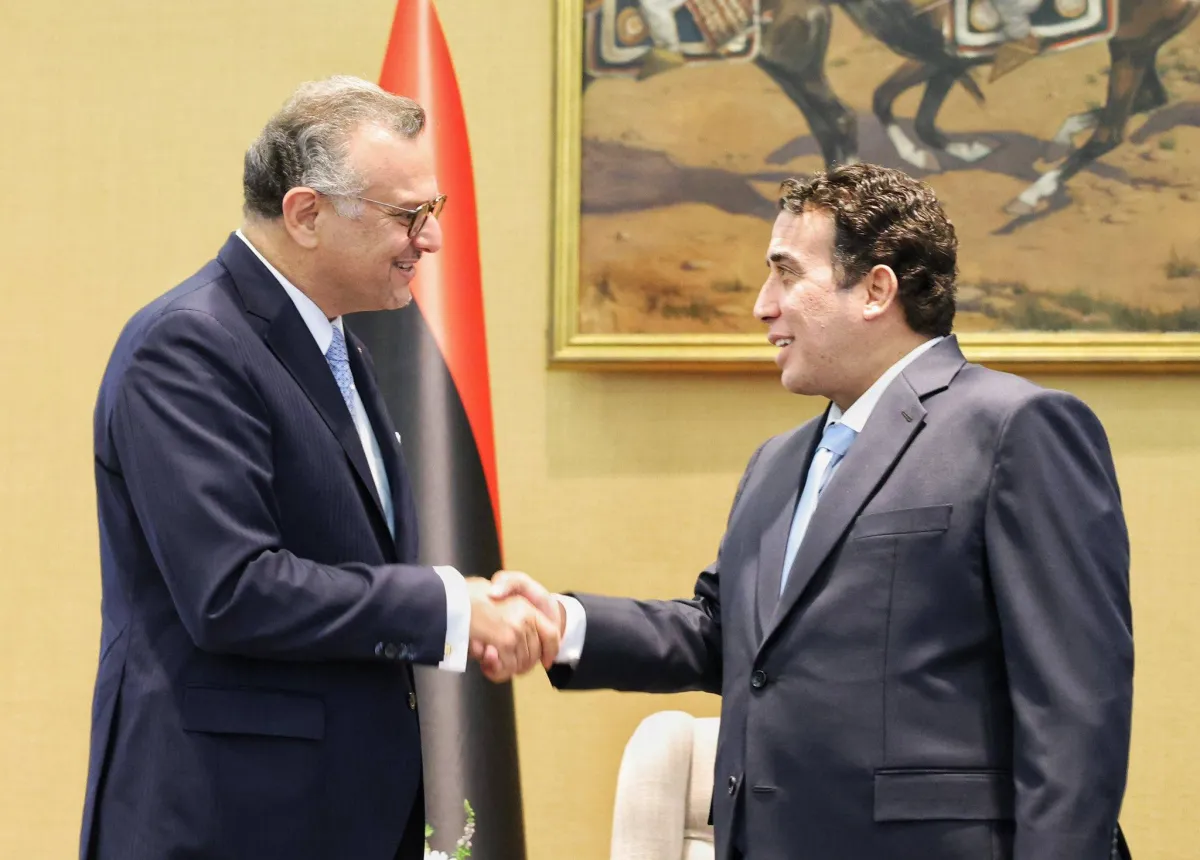
Libya is experiencing rising tensions regarding the U.S. role in managing its political crisis, with accusations that Washington is adopting a pragmatic approach focused on economic interests at the expense of efforts to resolve the escalating political deadlock.
The "National Consensus Bloc" within the High Council of State expressed its disapproval of what it described as the "suspicious moves" of U.S. African Affairs Advisor, Musad Boulis, indicating that his interventions in Libya carry implications and contexts that raise concerns, in addition to conflicts of interest and corruption suspicions.
Details of the Event
In its statement, the "Consensus Bloc" affirmed that external engagement with the crisis, particularly the U.S. role, no longer aims to find a sustainable solution but has shifted to an economic deal-making logic, especially concerning the oil sector. These statements raised questions about the ability of Libyan parties to convince Washington to change its policies in light of the current political division.
Saad Ben Sharada, a member of the High Council of State, considered that his bloc's statement reflects widespread feelings among Libyans towards Boulis's management, which focuses on bilateral deals in the oil sector, harming the interests of the Libyan people. Ben Sharada questioned the progress Boulis has made in addressing the political division and paving the way for elections.
Context and Background
Libya is experiencing a duality of power, with two governments competing for authority; the "National Unity Government" led by Abdul Hamid Dbeibeh in the west, and another government appointed by the parliament and supported by the commander of the "National Army" Khalifa Haftar in the east. Boulis has played a pivotal role in concluding massive partnership agreements between the Libyan Oil Corporation and American companies, which has sparked further criticism.
In this context, Ben Sharada ruled out the possibility of Washington changing its policies in the near future, asserting that his bloc will continue to denounce these deals and reveal their repercussions, which could lead to the postponement of the electoral entitlement.
Consequences and Impact
The head of the Libyan-American Coalition, Faisal Al-Fitouri, acknowledged the widespread discontent with Boulis's management, pointing out that his marginalization of other Libyan institutions reflects a lack of consideration for the acute sensitivities of Libyan society. Al-Fitouri argued that part of the discomfort stems from the differing perceptions of Boulis as a diplomat and businessman.
Al-Fitouri also noted that Boulis's repeated meetings with Saddam Haftar and Ibrahim Dbeibeh reflect Washington's desire to address the Libyan file unilaterally, away from the UN mission, which has weakened the latter's role in resolving the crisis.
Impact on the Arab Region
The repercussions of this crisis extend beyond Libya's borders, reflecting greater challenges faced by countries in the region. External interventions, especially from major powers, could impact the stability of neighboring countries, necessitating the need for national solutions that address foreign interventions.
In conclusion, the most important question remains: Will the Libyan parties be able to unite and propose alternative national solutions, or will external interventions continue to influence the fate of the country?