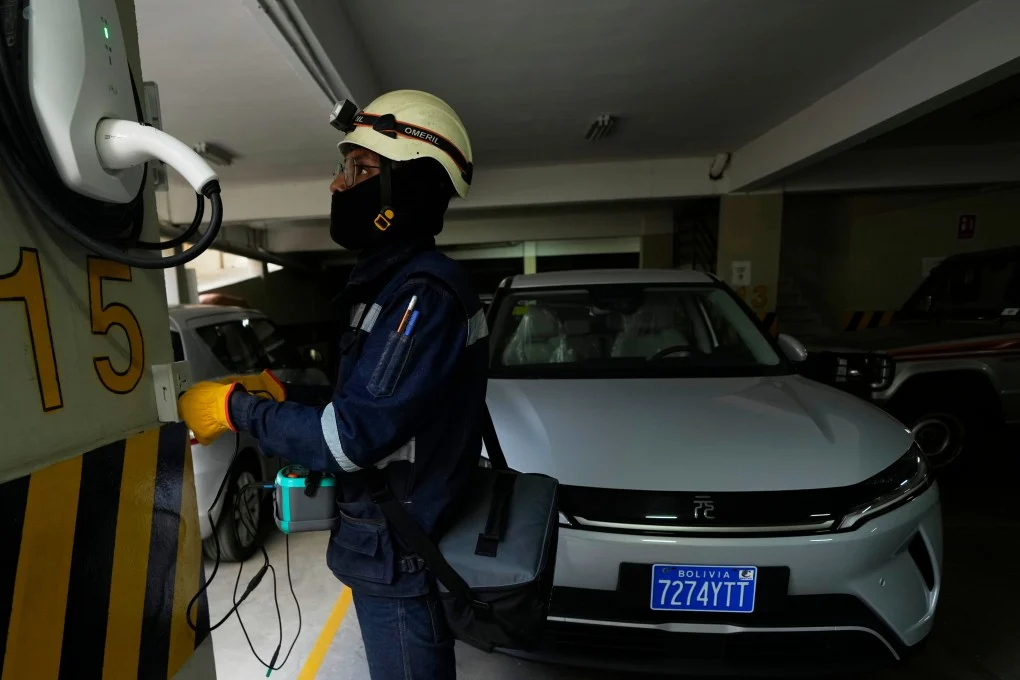
Amid the growing crises facing Bolivia, particularly the shortage of fuel and soaring prices, artisan Simon Huanca took a bold step by importing a Chinese electric car. At 53 years old, Huanca lives in El Alto, the highest city in Bolivia, and uses his car to transport his family and the alpaca wool for his textile workshop.
Huanca did not stop at importing the car; he also installed a special charger in his garage to facilitate the charging process, especially given that there are only three public charging stations serving the vast area of El Alto.
Details of the Event
This initiative comes at a time when citizens in Bolivia are suffering from a severe fuel shortage, leading to unprecedented price increases. Huanca serves as a role model, demonstrating how individuals can adapt to difficult circumstances through innovation and the use of modern technology.
Electric cars are becoming an attractive option amid the current crises, providing a sustainable solution for transportation and reducing reliance on traditional fuel. However, challenges remain, such as the lack of charging stations and the necessary infrastructure to support this transition.
Background & Context
Historically, Bolivia has faced numerous economic and political crises, but the current fuel crisis is one of the most impactful on citizens' lives. In recent years, fuel prices have significantly increased, negatively affecting the local economy and exacerbating the suffering of families.
The Bolivian government is striving to promote the use of alternative energy, but significant challenges persist, including a lack of investment in the infrastructure needed to support electric vehicles.
Impact & Consequences
Huanca's experience illustrates how crises can lead to innovation and positive change. If the demand for electric cars continues to rise, it could result in a significant shift in the automotive market in Bolivia, potentially contributing to a reduction in dependence on traditional fuel.
However, this transition requires strong government support and infrastructure development, including increasing the number of charging stations and providing incentives for citizens to adopt this technology.
Regional Significance
Bolivia's experience could serve as an important lesson for Arab countries facing similar energy challenges. As pressures on traditional energy resources increase, electric cars may become a future option for many Arab nations.
Some Arab countries are already seeking to enhance the use of renewable energy, indicating the potential for a similar transformation in the region.
Huanca's experience highlights the importance of innovation in facing crises and demonstrates how technology can make a difference in the lives of individuals and communities.