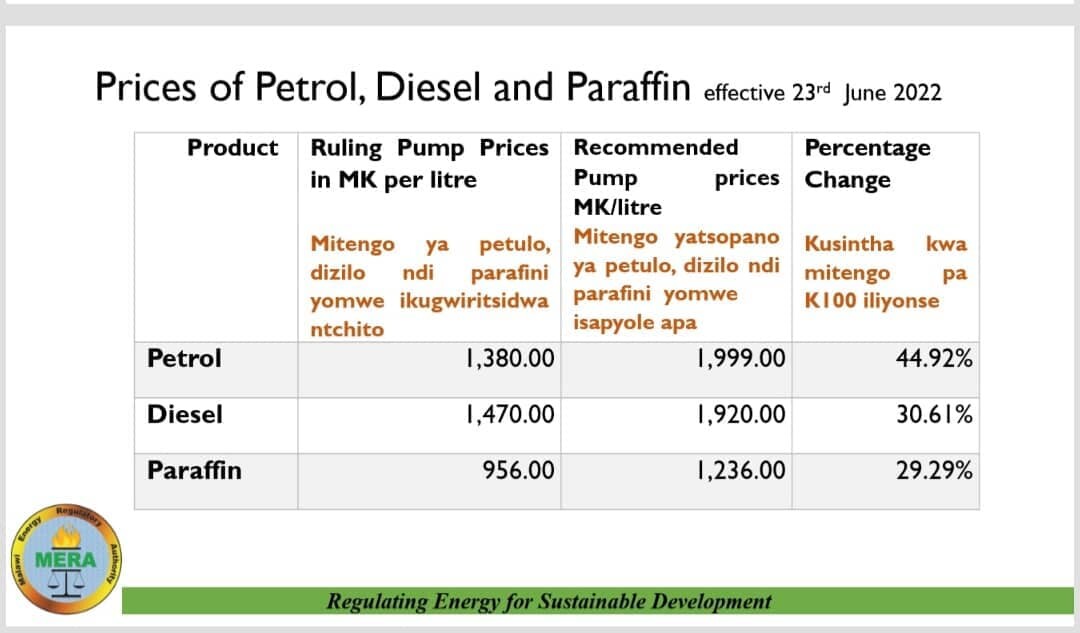
The government of Malawi has announced a rise in gasoline prices to 6,672 kwacha (equivalent to $3.86) per liter, which is more than triple the prices that drivers in the United States are experiencing. This increase comes amid rising global oil prices due to the ongoing conflict in Iran and its impact on the energy market.
This move is part of the government's efforts to address the economic challenges facing the country, as Malawi grapples with rising living costs and the effects of war on the prices of essential goods. This increase has raised concerns among citizens who rely on fuel for their daily lives.
Details of the Event
Reports indicate that fuel prices in Malawi have risen significantly in recent weeks, exacerbating the financial burdens on citizens. This decision followed consultations with relevant stakeholders, where the government confirmed that the increase is necessary to ensure the continuity of fuel supplies in the country.
This decision comes at a sensitive time, as the global economy is experiencing significant fluctuations due to geopolitical conflicts, directly affecting oil prices. Analysts have pointed out that this increase could lead to negative impacts on the local economy, especially given the difficult economic conditions the country is currently facing.
Background & Context
Historically, Malawi has faced numerous economic crises, heavily relying on agriculture and trade. However, the current increase in fuel prices reflects the global challenges that affect all countries, particularly those dependent on oil imports. The conflict in Iran is one of the main factors influencing oil prices, causing instability in the region and market fluctuations.
In recent years, there have been attempts to improve the economic situation in Malawi, but ongoing challenges such as corruption and weak infrastructure hinder these efforts. With rising fuel prices, the government may face increased pressure to provide effective solutions for its citizens.
Impact & Consequences
The increase in fuel prices is expected to have negative effects on various economic sectors in Malawi. Rising transportation costs may lead to increased prices for essential goods, further burdening citizens. This increase may also impact the tourism sector, which relies on the easy movement of visitors.
Moreover, rising fuel prices could lead to higher inflation rates, increasing the financial burdens on households. Under these circumstances, the government may face greater pressure from citizens to demand relief measures.
Regional Significance
Arab countries are also affected by fluctuations in oil prices, as the region is one of the largest oil producers in the world. Therefore, conflicts in areas like Iran impact global oil prices, reflecting on the economies of Arab nations. The price increase in Malawi may be an indicator of broader effects in global markets, warranting attention from Arab countries.
In conclusion, the rise in fuel prices in Malawi reflects the global economic challenges faced by many nations. It is crucial for the government to adopt effective strategies to address these crises and provide support to citizens amid difficult circumstances.