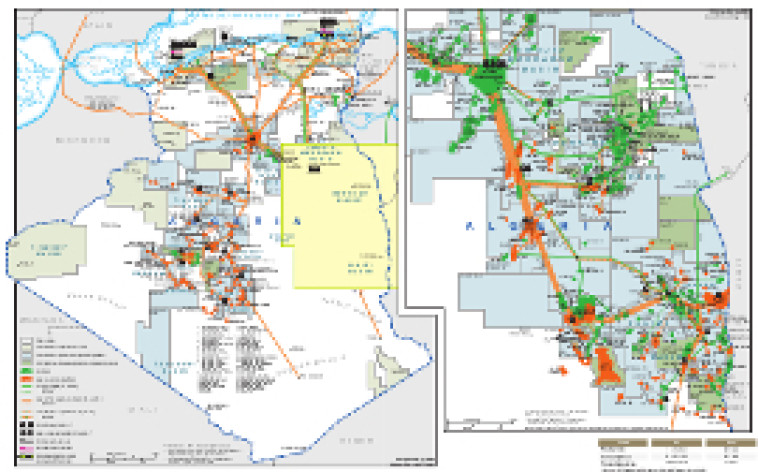
Algeria is witnessing a remarkable return to the forefront of global energy markets, with an increasing demand for natural gas due to disruptions linked to Iran and the closure of the Strait of Hormuz. These circumstances have cast heavy shadows over global oil and gas movements, prompting many countries to seek more stable alternatives, positioning Algeria as a key option.
In this context, Italian Prime Minister Giorgia Meloni visited Algeria, where she announced Rome's desire to enhance cooperation to increase gas supplies and expand partnerships in the energy sector. Spanish Foreign Minister José Manuel Albares also visited Algeria, discussing plans to expand natural gas supplies via the Medgaz pipeline by up to 10%. This diplomatic activity may include a potential visit from Spanish Prime Minister Pedro Sánchez, alongside Portuguese efforts to strengthen cooperation.
Details of the Developments
The interest in Algeria is not limited to European partners but has extended to those outside the continent. Vietnamese Prime Minister Pham Minh Chinh held a phone call with his Algerian counterpart, Saïf Ghareb, discussing ways to support energy security in Vietnam, particularly in the oil and natural gas sectors.
According to data from the Energy Research Unit, Algerian liquefied natural gas exports rose by 41% month-on-month in March 2026, reaching 938,000 tons, compared to approximately 667,000 tons in February. Algerian shipments were distributed among six major countries, with France leading the list at 347,000 tons, followed by Turkey with 337,000 tons.
Background & Context
Economist Ahmed Haidousi believes that the increasing demand for Algerian gas reflects the country's return to its traditional position in the European market amid global supply disruptions. He notes that developments in the Middle East are pushing Algeria, particularly Sonatrach, to regain its share in the international market.
Haidousi emphasizes that this surge does not represent a strategic shift as much as a return to a historical position that Algeria held decades ago when it had a significant share in the European market, benefiting from a network of relationships and long-term contracts with countries like Italy and Spain.
Impact & Consequences
International economic development consultant Abdul Rahman Hadef points out that Algeria has repositioned itself within the global energy map by increasing its production capacities and accelerating investments in the oil and gas sectors. He confirms that demand is no longer limited to Europe but has extended to Asian markets such as South Korea and China.
Hadef adds that the notable rise in LNG exports reflects Algeria's ability to capitalize on the international situation and increase supply rates, benefiting from the readiness of its energy facilities. Economics professor Fares Habash asserts that Algeria remains a strategic and reliable partner in the energy sector, with an annual export capacity exceeding 40 billion cubic meters of natural gas.
Regional Significance
Algeria aims to increase its production from 132 billion cubic meters currently to 200 billion cubic meters by 2027, as part of ambitious exploration and investment programs. Despite positive indicators, there are real challenges regarding Algeria's ability to meet the rising demand in the short term.
Experts confirm that Algeria has the necessary potential and investment programs to meet global demand, but the immediate response remains relatively limited, requiring a delicate balance between export commitments and ensuring internal energy security.